
Last updated November 15, 2026
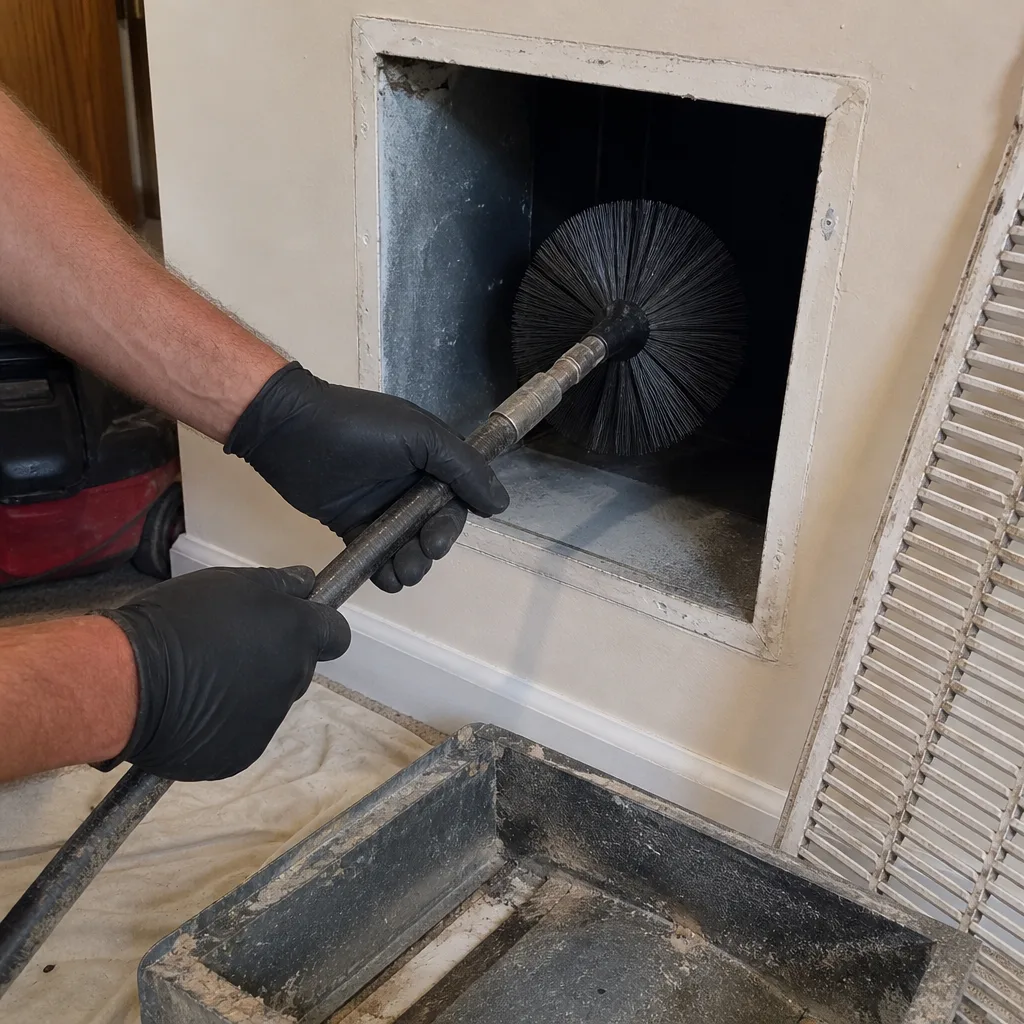
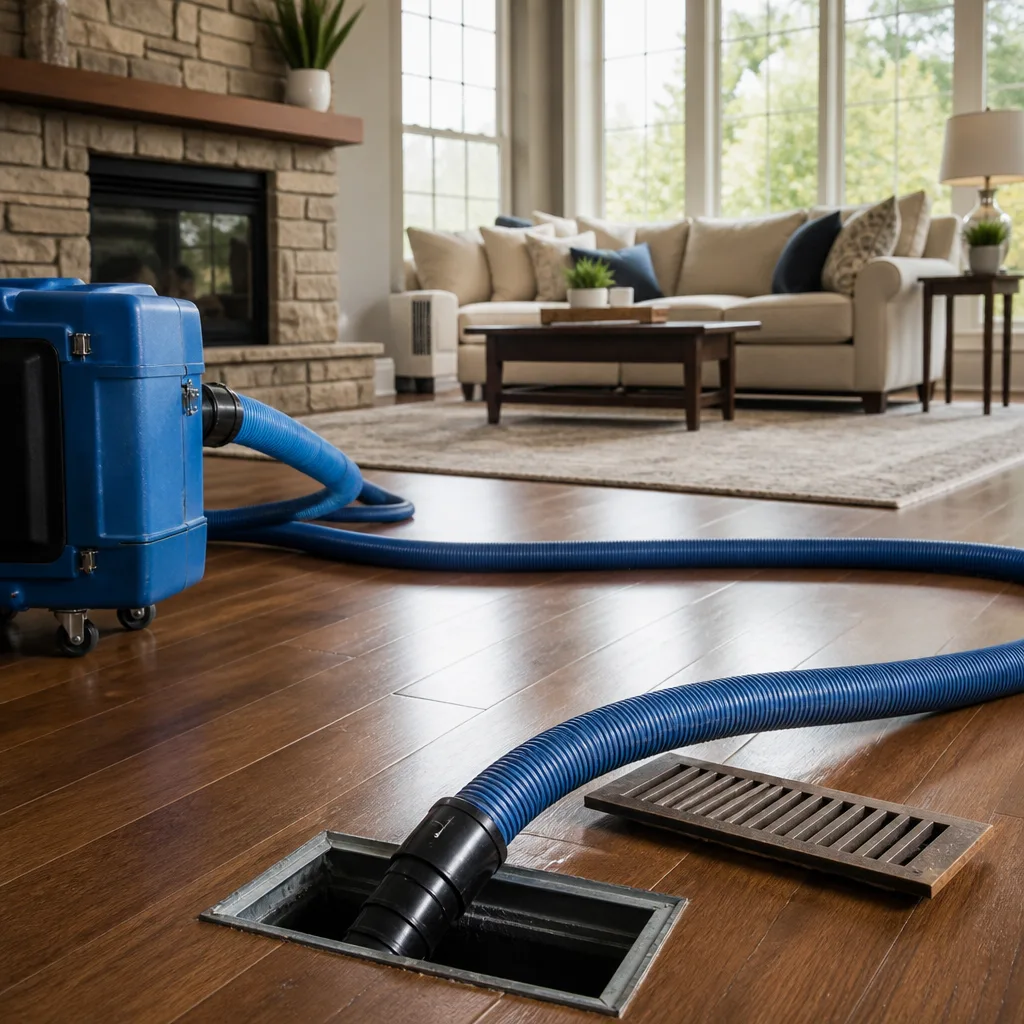 Whole-home duct cleaning
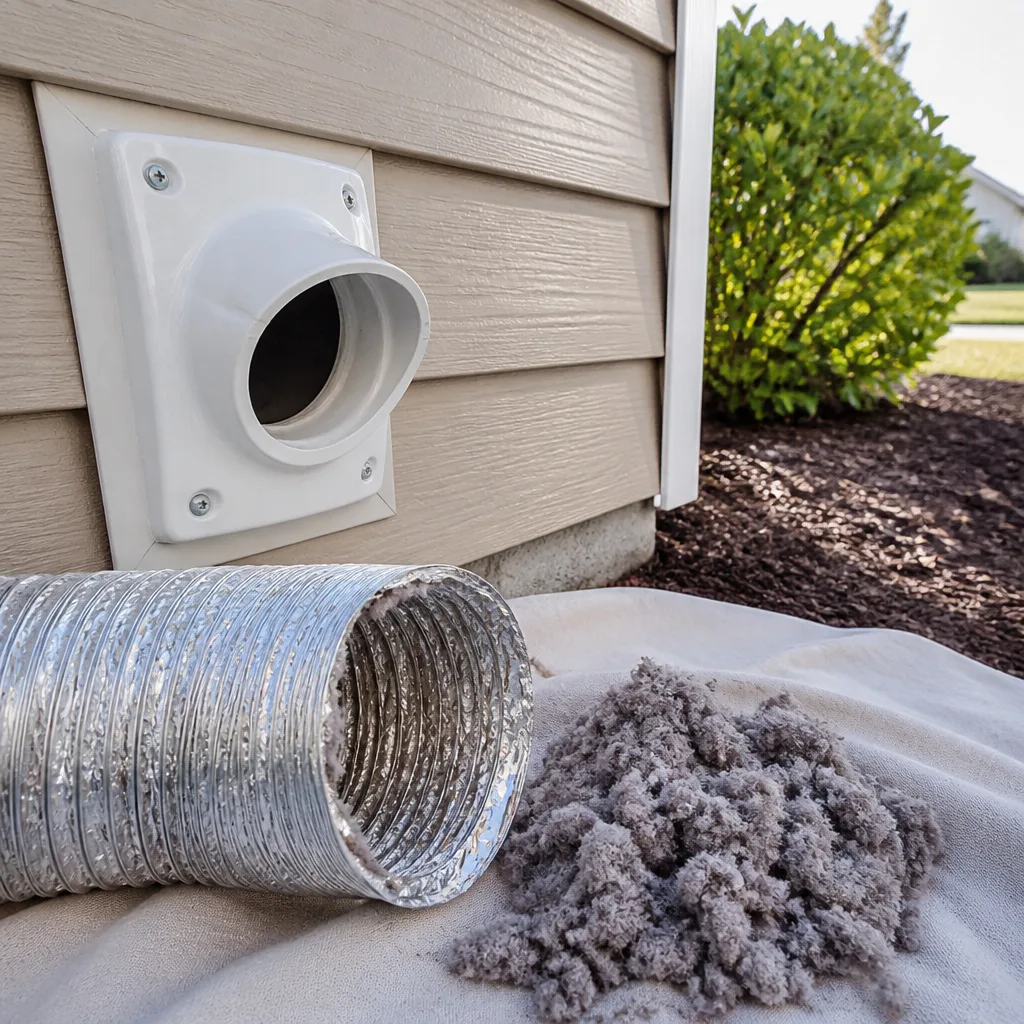 Dryer vent cleaning
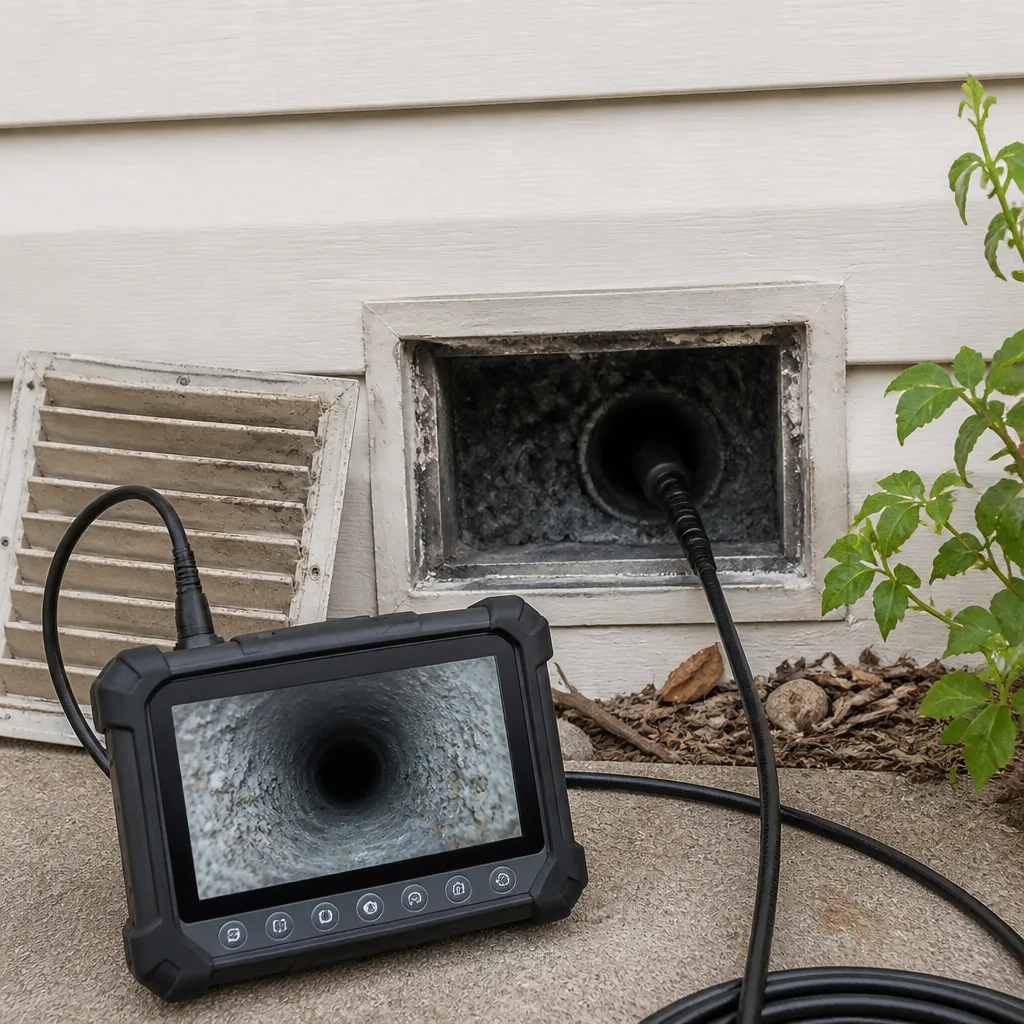 Camera inspection
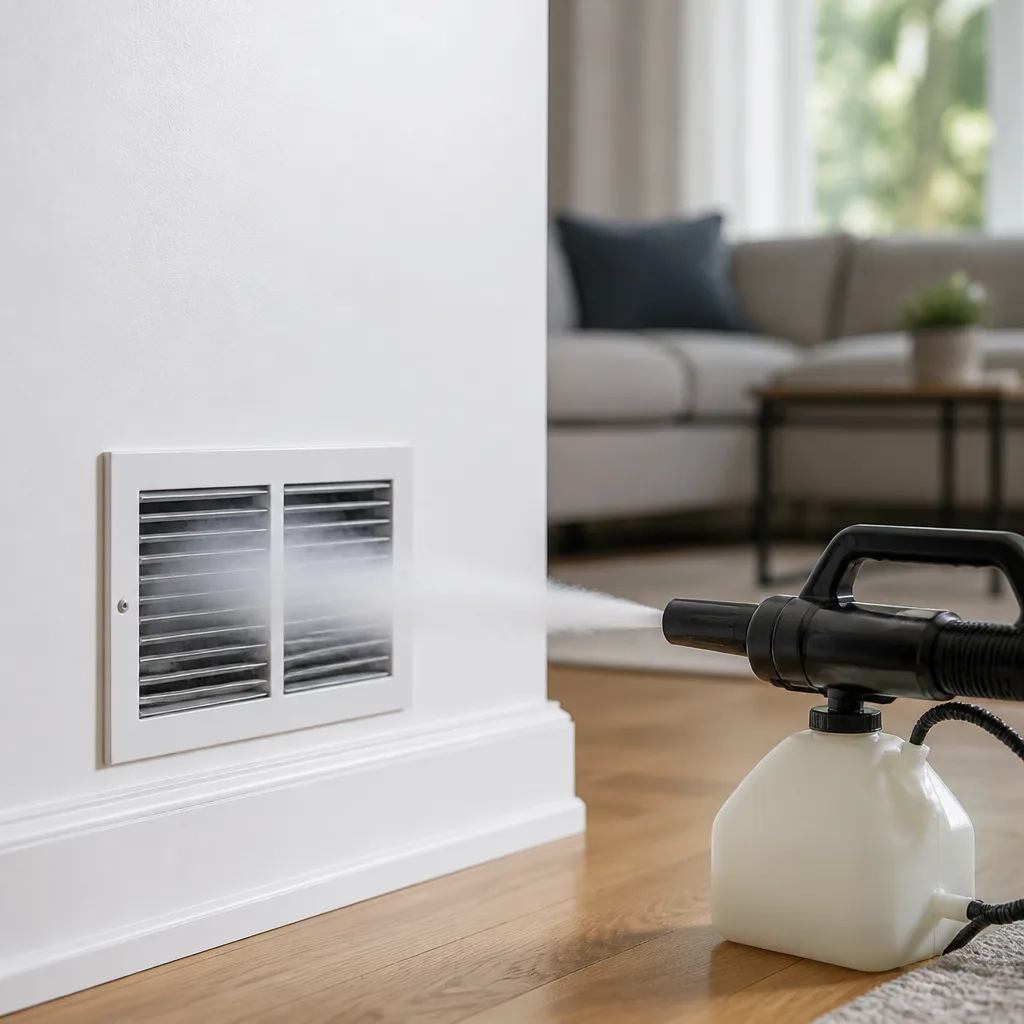 Sanitizing & deodorizing
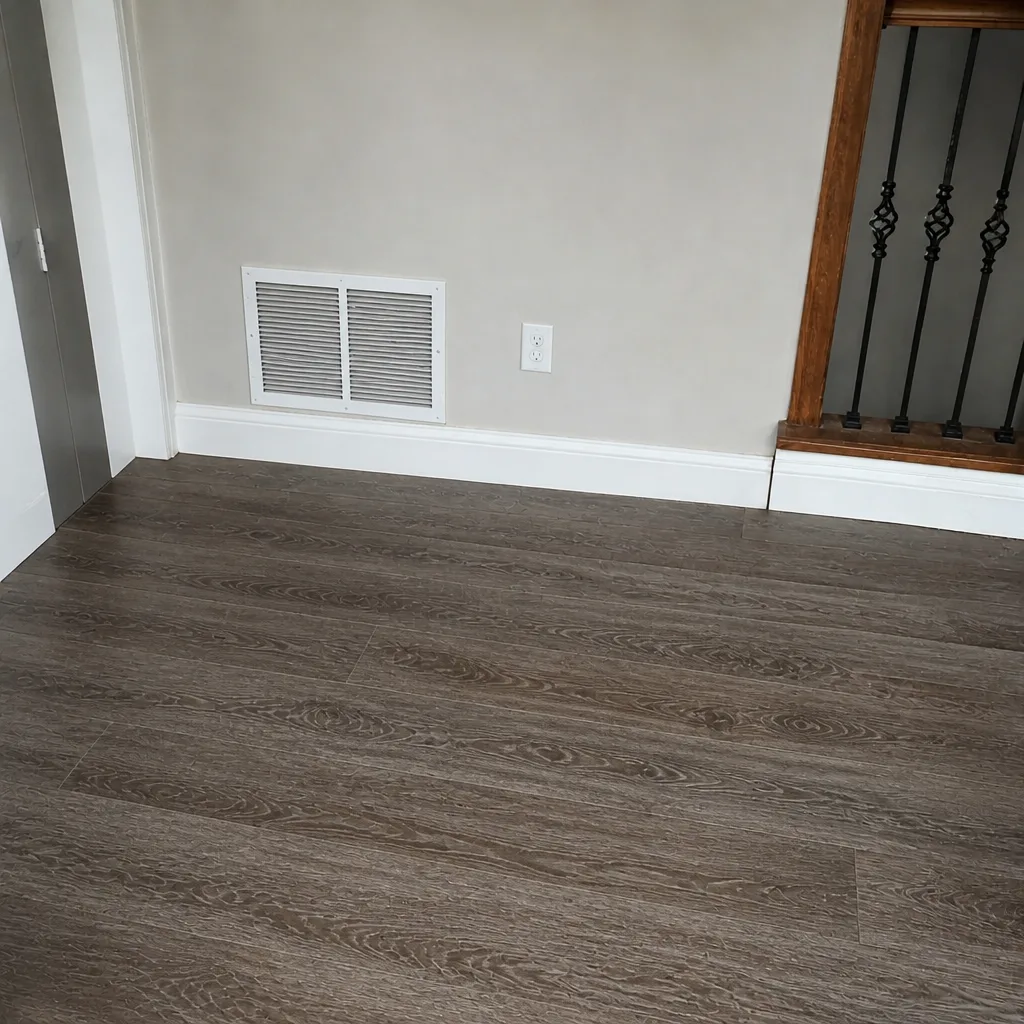
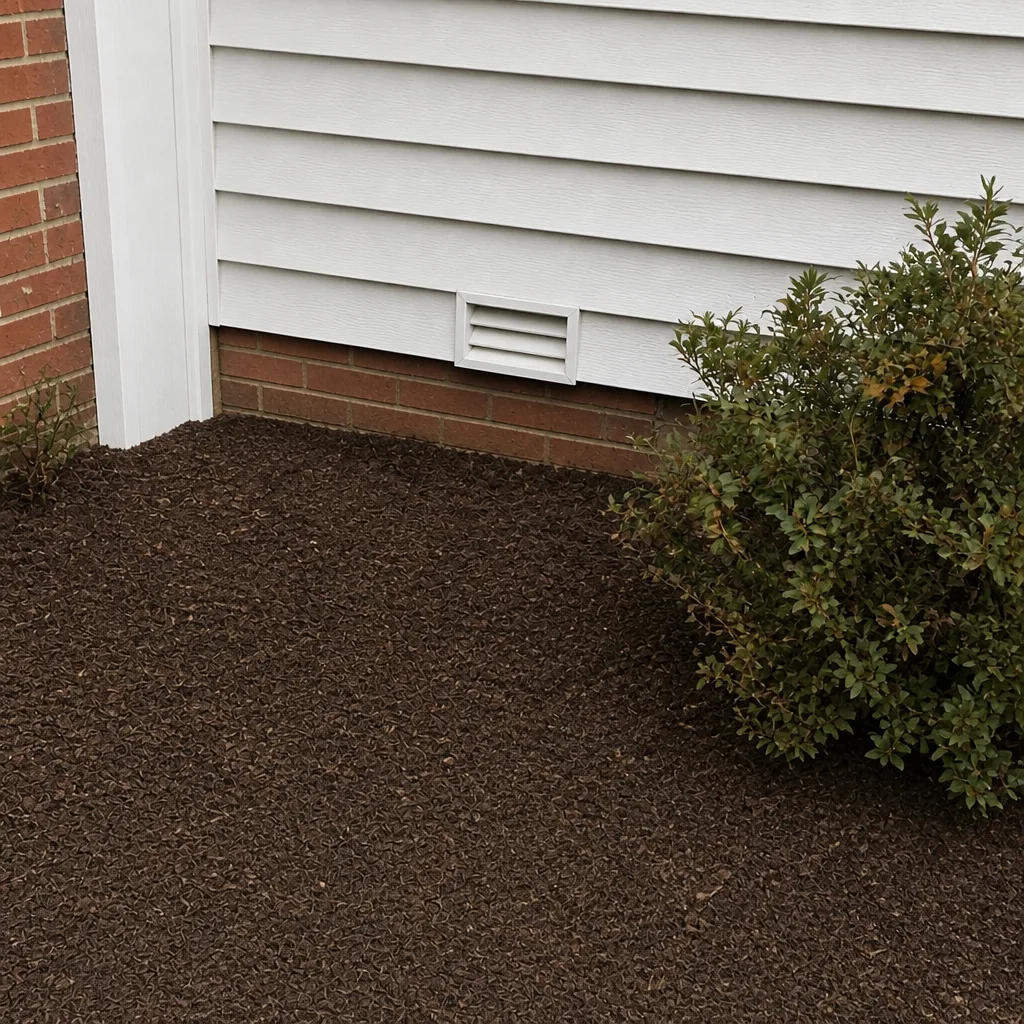
Whole-system duct and dryer vent check with before-and-after photos - you see exactly what came out of your vents
That "$99 whole-house special" is a bait ad - the real number appears once they are in your hallway, or the "clean" is a shop-vac at the register. We photograph the inside of your ducts before and after instead.
The Complete Guide to Air Duct Cleaning in High Point
A shop-vac with a length of hose is not duct cleaning. It’s theater. The vacuum pulls a little loose dust off the metal nearest the register, the technician tells you the air smells fresher, and the debris that was actually stuck to the duct walls stays exactly where it was. The difference between that cosmetic pass and a genuinely clean system comes down to one thing most guides never mention: negative-pressure containment. Without it, agitation just moves debris around.
This guide maps what a real duct cleaning job looks like in High Point, from the return grille to the supply register. You’ll learn how the equipment works, why our clay-heavy soil and humid summers load ducts faster than drier climates do, how trunk lines differ from branch runs and plenums, and what a legitimate inspection should show you before anyone touches a brush. By the end you’ll know what to ask, what to watch for, and how to tell a thorough job from a quick one.
Styles & brands we work with
- Whole-home duct cleaning
- Dryer vent cleaning
- Camera inspection
- Sanitizing & deodorizing
Quick Answer
Professional air duct cleaning in High Point uses a negative-pressure collection unit to put the whole duct system under vacuum, then agitates debris from every trunk, branch run and plenum with rotary brushes and air whips so it travels to the collector instead of into your rooms. A proper job includes a camera or visual inspection first, sealed return and supply openings, and before-and-after photos of your own ductwork. It usually takes a few hours for a typical High Point home and is priced per system, not per vent.
Table of Contents
- Why High Point Ducts Load Differently Than You’d Expect
- How Negative-Pressure Containment Actually Works
- Trunk Lines, Branch Runs and Plenums: Why Each Needs a Different Approach
- What a Legitimate Inspection Looks Like Before the Work Starts
- The HVAC Components Next to Your Ducts That Affect the Result
- A Step-by-Step Walk Through the Air Path
- What Air Duct Cleaning Costs in High Point
- When Cleaning Reveals Damage You Can’t Ignore
- Dryer Vent Cleaning: The Other Duct in Your Home
- Common Mistakes to Avoid
- When to Call a Professional
- Frequently Asked Questions
Why High Point Ducts Load Differently Than You’d Expect
High Point sits in a part of North Carolina where the soil holds a lot of clay, and that has a downstream effect homeowners rarely connect to their air quality. Clay-heavy ground drains slowly. After a summer storm, the ground stays damp far longer than sandy soil would, which keeps the outdoor humidity high right through the cooling season. Your HVAC system pulls that moist outside air into the return, and moisture makes dust stick to duct walls instead of drifting through.
Compare that to a dry climate. In Phoenix or Albuquerque, dust in the duct system stays powdery and much of it keeps moving until it reaches the filter. Here in High Point, the particulate that enters the return duct has a tendency to cling. Once it clings, it builds. That sticky film of dust, pollen and lint becomes the anchor layer for the next season’s accumulation. In our experience, duct systems in High Point and the surrounding Piedmont can reach a visible loading point faster than the same system would in a drier region.
Two more local factors matter:
- Long cooling seasons. The system runs for months, so the blower moves a large volume of air through the same passages. More air moved means more filter bypass and more particulate that never reaches the filter.
- Older housing stock near downtown. Several High Point neighborhoods have homes with original sheet-metal ductwork that’s been recoated, patched or sealed over the decades. Those older joints leak, and a leaking return duct pulls attic or crawlspace air straight into the system.
- Construction and renovation dust. High Point has steady renovation activity, and drywall dust from a remodel can travel the entire duct system if the returns aren’t sealed off during the work.
The practical takeaway: in High Point, you don’t wait for a visible dust plume at the register. The clay-influenced humidity means the loading builds quietly on the duct walls first.
How Negative-Pressure Containment Actually Works
Here’s the core idea, and it’s the one most cleaning guides leave out entirely. If you agitate dust inside a duct without putting the system under vacuum first, the blower, the room pressure or even the technician’s own brush will push that dust out into the living space. You’ve cleaned the duct and dirtied the room. Negative-pressure containment flips the flow so everything travels toward the collection unit.
A professional-grade collection unit, like the Nikro systems we run, works by pulling a strong vacuum on the duct system while the system itself is shut down. The unit connects at a strategic point, often the main trunk or a large return, and creates a pressure differential across the whole ductwork. Because air always moves from higher pressure to lower pressure, debris loosened anywhere in the system is drawn toward the collector rather than toward the rooms.
The sequence, step by step:
- System off and sealed. The HVAC equipment is shut down so the blower can’t fight the vacuum. Supply registers and returns are taped or covered to prevent backflow into rooms.
- Collection unit connected. The vacuum is tied into the duct system at a large-diameter connection point, usually through a plenum or main trunk.
- Pressure differential established. The collector pulls the entire duct network into negative pressure, so the whole system is working toward the vacuum, not against it.
- Agitation begins. Rotary brushes, air whips and specialized heads are fed through each run, loosening the stuck layer so the airstream carries it to the collector.
- Containment maintained throughout. Openings stay sealed, and the collector runs continuously until every run is worked.
- Verification. The technician inspects the cleaned runs, often with a camera, and shows you the before-and-after condition of your own ducts.
This is why professional equipment matters more than the promise on a coupon. A consumer vacuum can’t hold a whole residential duct system at negative pressure. The Nikro and Rotobrush tooling we use is built for exactly this job, and the Rotobrush air duct cleaning systems are a recognized standard in the professional indoor air quality industry.
Trunk Lines, Branch Runs and Plenums: Why Each Needs a Different Approach
A duct system isn’t one uniform pipe. It’s a tree, and each part of the tree holds debris differently, which means each part needs different agitation. A technician who runs the same brush through every section is guessing.
Trunk lines are the large main runs that carry the bulk of the air from the air handler. Because they’re big, the airflow is slower and the dust settles more across the bottom of the duct. Trunk lines call for large rotary brush heads and strong airflow to break up the settled layer along the base and walls.
Branch runs are the smaller ducts feeding individual registers. They’re narrower, so debris tends to gather at bends and at the takeoff where the branch meets the trunk. Flex duct branches in particular need gentler rotary heads and air whips so the inner liner isn’t damaged. We use specialized flexible whips that work the contours without tearing the lining.
Plenums are the boxes at the air handler, both the return plenum and the supply plenum. These accumulate the heaviest debris because they sit right next to the blower and the coil, and they often have the most complicated geometry, with transitions and turning vanes that a standard brush can’t reach. Agitation here often calls for hand tools and compressed-air whips working alongside the main vacuum connection.
Because the plenum is where the vacuum usually ties in, it also gets the most concentrated pull. That makes it a telling place to inspect. In our experience, a plenum that’s clearly clean after the work is a good sign the rest of the system got the same treatment.
What a Legitimate Inspection Looks Like Before the Work Starts
The inspection is where you learn whether you need a cleaning at all. A proper inspection happens before anyone unrolls a hose, and it tells the technician, and you, what the inside of the system actually looks like.
There are two ways to look:
- Visual only. The technician removes a register or opens an access panel and shines a light down the duct. This shows the nearest several feet and hints at what’s downstream, but it can’t see around corners or reach deep into branch runs.
- Camera scope. A small camera on a flexible rod is fed through the ductwork so the technician can see the interior of trunk lines, around bends and inside the plenums. This is what lets an inspector tell cosmetic surface dust from actual settled accumulation.
A legitimate inspection in High Point should also check:
- The condition of the return grilles and filters (a filter that’s collapsing or bypassing is feeding dust straight into the system).
- Access to the plenums, which sometimes requires cutting an access panel and resealing it afterward.
- Signs of moisture, rust or biological growth, especially in homes near the damp, clay-heavy areas of the city.
- Whether the ductwork is rigid metal, flex, or a mix, because the cleaning method and the brush heads depend on it.
Ask to see the camera images before the work starts, and ask for before-and-after photos of your own system afterward. Duct Cleaning High Point works on the principle of showing you what we find rather than telling you. That’s the honest version of this step.
The HVAC Components Next to Your Ducts That Affect the Result
Cleaning the ductwork and ignoring the equipment at the other end of it is like washing a floor and leaving the mud in the doorway. Three components sit adjacent to the ducts, and their condition directly shapes what the ducts look like next season.
The evaporator coil. The A-coil sits in the air handler and is one of the most important surfaces in the whole system. A dirty coil restricts airflow, and when airflow drops, the system runs longer and pushes less air through the ducts. Debris captured on the coil also means less of it reaches your filter. Cleaning the ducts without at least noting the coil’s condition leaves the job half-audited.
The blower wheel. The blower pulls air through the return and pushes it out the supply. Its blades collect dust the same way a fan does, and a heavily loaded blower wheel moves less air and can become unbalanced. If the blower is caked, a duct cleaning will help but won’t restore full airflow on its own.
The drain pan. This sits under the coil and collects condensate. In a humid High Point summer, that pan sees a lot of water, and if it’s dirty or draining poorly it can become a moisture source right next to the ductwork. A technician doing a thorough job will at least flag the pan’s condition.
The tools connect here, too. Duct Cleaning High Point installs and services Honeywell and Aprilaire indoor air quality products, so the job can move from cleaning the duct system into a broader air quality plan: filtration, humidity control and fresh-air management. The point isn’t to upsell. It’s that a clean duct system stays clean longer behind a properly sized, well-fitting filter.
A Step-by-Step Walk Through the Air Path
Follow the air and you’ll understand the whole job. Air enters through a return, travels the return duct to the air handler, passes the filter and the coil, gets pushed into the supply plenum and out through the branch runs to each register. A real cleaning covers the entire path, not just the registers you can see.
- Survey and inspection. Camera or visual inspection of the system, confirmation of duct materials, and identification of problem areas.
- Containment setup. Registers and returns sealed, collection unit connected, and the system shut down to establish negative pressure across the duct network.
- Return-side cleaning. Every return run and grille is worked with rotary brushes and air whips, with debris drawn toward the collector.
- Supply-side cleaning. The supply plenum, trunk and branches are worked individually, with appropriate brush heads for each duct size and material.
- Agitation of the plenums. The transition boxes near the air handler get hand-tool and compressed-air work to reach the geometry a brush can’t.
- Adjacent components noted. Coil, blower and drain pan are checked, and any issues are documented.
- Verification and photos. Cleaned runs are inspected, and before-and-after photos of your own ducts are provided.
- Reassembly and cleanup. Access panels resealed, registers reinstalled, and the site left as we found it (or cleaner).
On the equipment side, the combination that matters is the collection unit plus the agitation tooling. We run Rotobrush air duct cleaning systems and Nikro equipment, and for jobs involving contamination control we deploy Abatement Technologies filtration and negative-air-pressure equipment. These tool names aren’t decoration. They’re the difference between a system held at negative pressure and a hose that’s mostly for show.
What Air Duct Cleaning Costs in High Point
Air duct cleaning in High Point usually runs somewhere between $300 and $600 for a typical whole-home system, with lighter one-system jobs starting near $250 and larger or heavily loaded systems reaching $800 or more. The written estimate sets the final price, and that estimate is free.
Pricing in this market is typically set per system, not per vent. That difference matters, because per-vent pricing lets a contractor start with a low figure and then charge for every register, which can produce a much larger invoice than you expected.
Typical estimated ranges in the High Point area:
- Standard single-system home: $300 – $450
- Larger home, multiple systems or heavy loading: $450 – $800
- Light-commercial or complex duct layouts: quoted per job after inspection
- Dryer vent cleaning: quoted per job, priced separately from air duct work
- Duct repair: quoted after inspection, since the scope depends on the damage found
These are estimates, not promises, and the final figure depends on how many systems, how much ductwork, and what condition the ducts are in. One flat price per system is agreed before work starts. Before-and-after photos of your own ducts confirm what was done. And the estimate is free, so you can find out where your system actually stands before committing.
When Cleaning Reveals Damage You Can’t Ignore
Cleaning a damaged duct system without repairing it is a short-term fix. Once a duct is opened up and inspected, the technician often finds problems that cleaning alone can’t solve. Leaking joints, disconnected sections, torn flex liner and crushed runs all let air escape or pull unwanted air in. A clean system that leaks isn’t doing its job.
Air duct repair is a standalone service for exactly this reason, and it’s one many duct-cleaning competitors skip. It addresses structural problems rather than surface dust:
- Loose or separated joints that let conditioned air leak into the attic or crawlspace while pulling unconditioned air into the system.
- Torn or collapsed flex duct where the inner liner is unsealed or the core is crushed.
- Crushed or undersized runs that strangle airflow to distant rooms.
- Disconnected branch runs that deliver no air to a register at all.
Here’s why this matters more in High Point than in a dry town. Leaky return ductwork in an attic pulls in extra humidity from the damp air, and that humidity gets multiplied by the clay-heavy summers. A leak that would be a minor efficiency issue elsewhere becomes a moisture and air quality issue here. Our work on air duct cleaning often turns up a repair candidate, and that’s a good thing to find, because it means the problem is identified and can be fixed.
Dryer Vent Cleaning: The Other Duct in Your Home
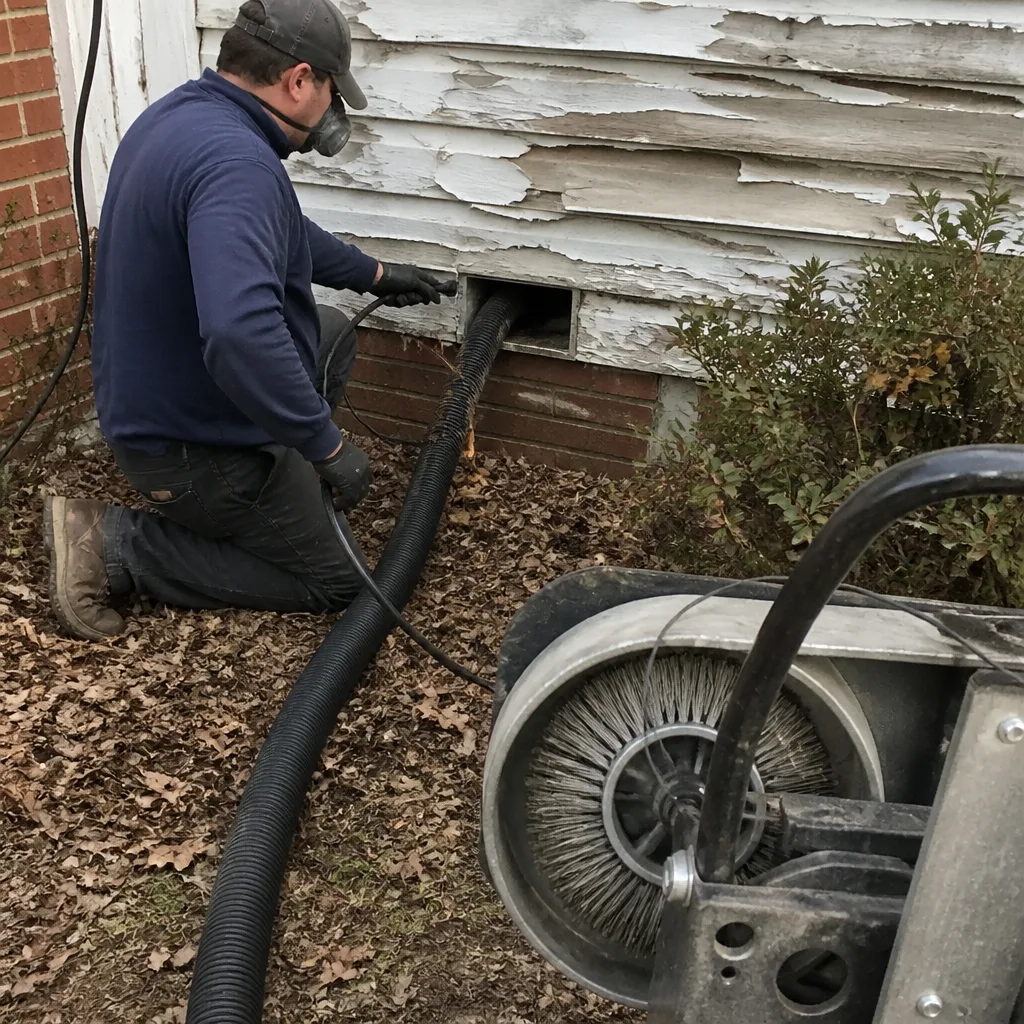
Every home in High Point has a second duct system that most people forget: the dryer vent. It isn’t an HVAC duct and it doesn’t carry conditioned air, but it’s a safety system. Lint that builds up in a dryer vent is a fire fuel, and a restricted vent also makes the dryer run longer and work harder, wasting energy with every load.
This deserves the same equipment attention as air duct work. Dryer vent cleaning is a dedicated service here, not an afterthought, and it uses the same professional-grade tooling to clear the full run from the dryer connection to the exterior vent hood. That includes the flex behind the dryer, the rigid run through the wall and the transition fittings, which are often where lint packs in tightest.
Why treat it seriously? A dryer vent that’s restricted is a genuine fire hazard and a routine maintenance item that’s too easy to postpone. Cleaning it is one of the few home services that addresses both fire safety and energy use in the same visit. We cover the full process separately in our dryer vent cleaning page, and it’s worth reading if you’ve never had yours checked.
Common Mistakes to Avoid
- Hiring on price alone and letting them skip the inspection. A company that quotes before it looks at your system is guessing, and its low number often grows once the hose is out. Insist on a camera or visual inspection first.
- Accepting per-vent pricing. Per-vent pricing lets a company start small and add charges at every register. Whole-system pricing, agreed before work begins, gives you a single number to plan around.
- Skipping containment. A cleaning without negative-pressure containment and sealed openings just redistributes dust into the rooms. Ask how the contractor holds the system under vacuum before you book.
- Ignoring the dryer vent. People clean the HVAC ducts and forget the dryer vent for years. It’s a fire risk and an energy drain, and it deserves its own appointment in High Point homes.
- Cleaning without repairing. If the inspection finds leaking joints or torn flex, cleaning alone leaves the problem in place. Duct repair is the logical next step when damage is found.
- No proof of the work. Ask for before-and-after photos of your own ducts. A contractor who can’t show you the difference is asking you to trust a process you can’t see.
- Closing off the system for a renovation and forgetting it. A remodel in High Point can push drywall dust through the whole system if the returns aren’t sealed during the work. Have the ducts checked after any major renovation.
When to Call a Professional
Some situations clearly call for a trained technician rather than a consumer tool. Call a professional if you’ve just finished a major renovation or moved into a home with unknown duct history. Call if anyone in the house has persistent allergy or respiratory symptoms, or if you notice visible dust streaks at the registers, uneven airflow between rooms, or a musty smell when the system kicks on. Call if the ducts are older sheet-metal runs that are leaking, torn or disconnected, since that’s repair territory, not cleaning. And call if a moisture issue near the ductwork has ever been flagged, because our humid summers can turn a small leak into a bigger problem.
Duct Cleaning High Point offers free estimates in High Point. Call (888) 804-6957. We answer 24/7. Fast dispatch from 7am to 7pm, Sunday through Friday.
Frequently Asked Questions
Air duct cleaning in High Point typically costs between $300 and $600 for a typical whole-home system, with lighter jobs starting around $250 and larger or heavily loaded systems reaching $800 or more. The written estimate sets the final price, and it’s a single flat price per system agreed before work begins. Call (888) 804-6957 for an exact quote. Estimates are free.
Most homes in High Point do well with a cleaning every few years, and some never need it at all if the filter is maintained and the ductwork is clean. Homes with pets, recent renovations, smokers, or a history of moisture issues usually need it more often. The honest answer is that a proper inspection, not a calendar, should decide. Call (888) 804-6957 and we’ll inspect your system before recommending a cleaning.
Low quotes usually come from companies that skip parts of the job: no negative-pressure containment, no camera inspection, no plenum work, per-vent pricing that grows after the fact, or a vacuum that can’t hold the system under pressure. The base price looks small because the work behind it is small. A professional job with real containment and full access takes time and professional-grade equipment. Call (888) 804-6957 for a whole-system estimate.
Ask for before-and-after photos of your own ducts. A thorough job gives you images of the cleaned trunk lines, plenums and branch runs, plus a camera or visual inspection for verification. If a contractor can’t show you the results, ask why. Duct Cleaning High Point shows you what we find. Call (888) 804-6957 for a free estimate.
It can, yes. High Point’s humid summers and clay-heavy soil keep the outdoor air moist, and that moisture lets dust, pollen and lint cling to duct walls instead of staying powdery and moving to the filter. That sticky layer builds up faster here than in drier climates, which is why a camera inspection is worth doing. Call (888) 804-6957 and we’ll tell you what your system shows.
Yes. Dryer vent cleaning and air duct repair are both standalone services, not add-ons. A dryer vent is a fire and energy hazard, and duct repair addresses leaking or damaged ductwork that cleaning alone can’t fix. If the inspection turns up damage, repair is the logical next step. Call (888) 804-6957 for a free estimate in High Point.
The Bottom Line
Air duct cleaning in High Point comes down to a process, not a promise. Negative-pressure containment pulls debris toward the collection unit instead of into your rooms. Appropriate agitation for trunk lines, branch runs and plenums reaches the parts of the system a single brush can’t. A proper inspection shows you what’s there before anyone starts. And proof of the work, in the form of before-and-after photos of your own ducts, is what separates a real cleaning from a cosmetic pass. Our humid summers and clay-heavy soil make loading build quietly, so honest inspection and full-system cleaning matter more here than in drier places. Professional-grade equipment, a free estimate, and one flat price per system agreed in advance: that’s the standard to hold any contractor to.
Ready to see what’s in your ductwork? Call (888) 804-6957 for a free estimate. We answer 24/7. Fast dispatch from 7am to 7pm, Sunday through Friday. Visit Duct Cleaning High Point to learn more about our air duct cleaning, dryer vent cleaning and duct repair work across High Point.
Written by the team at Duct Cleaning High Point.
See the difference
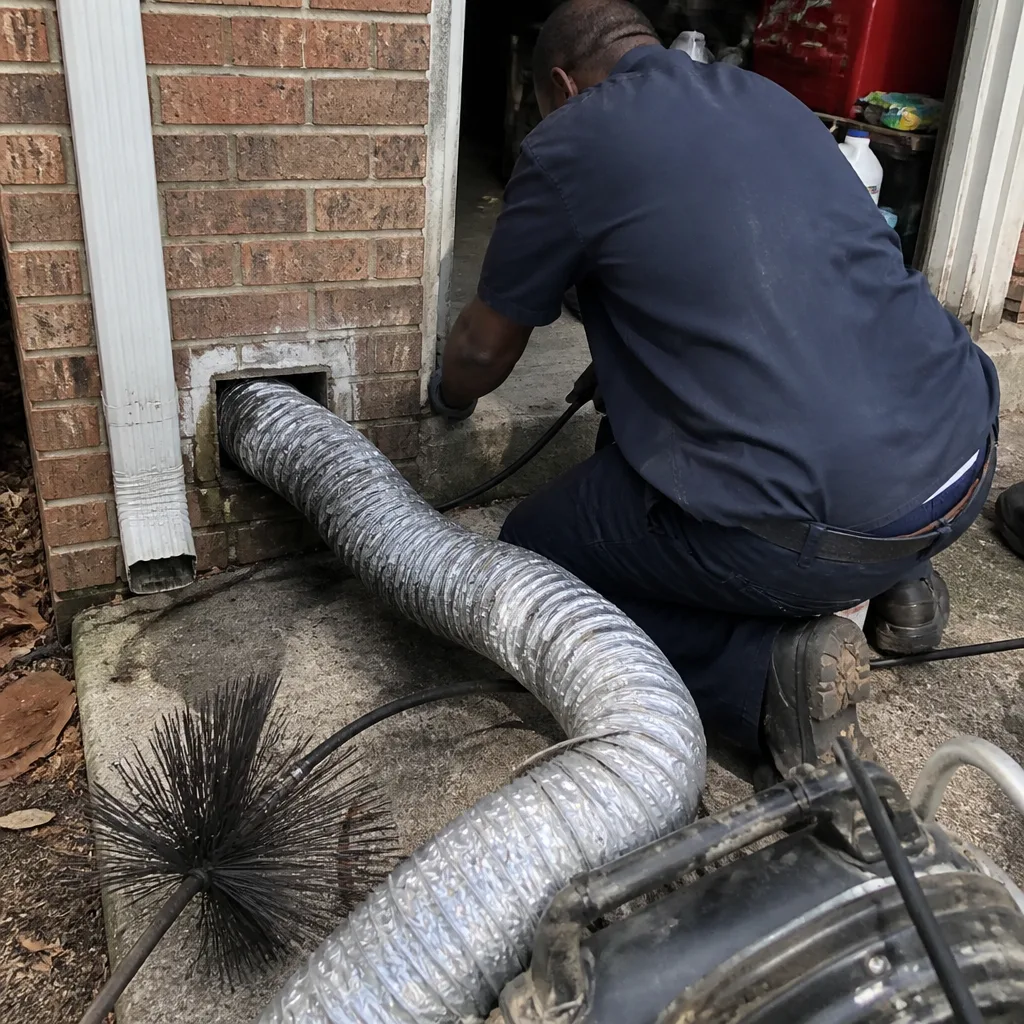 Before
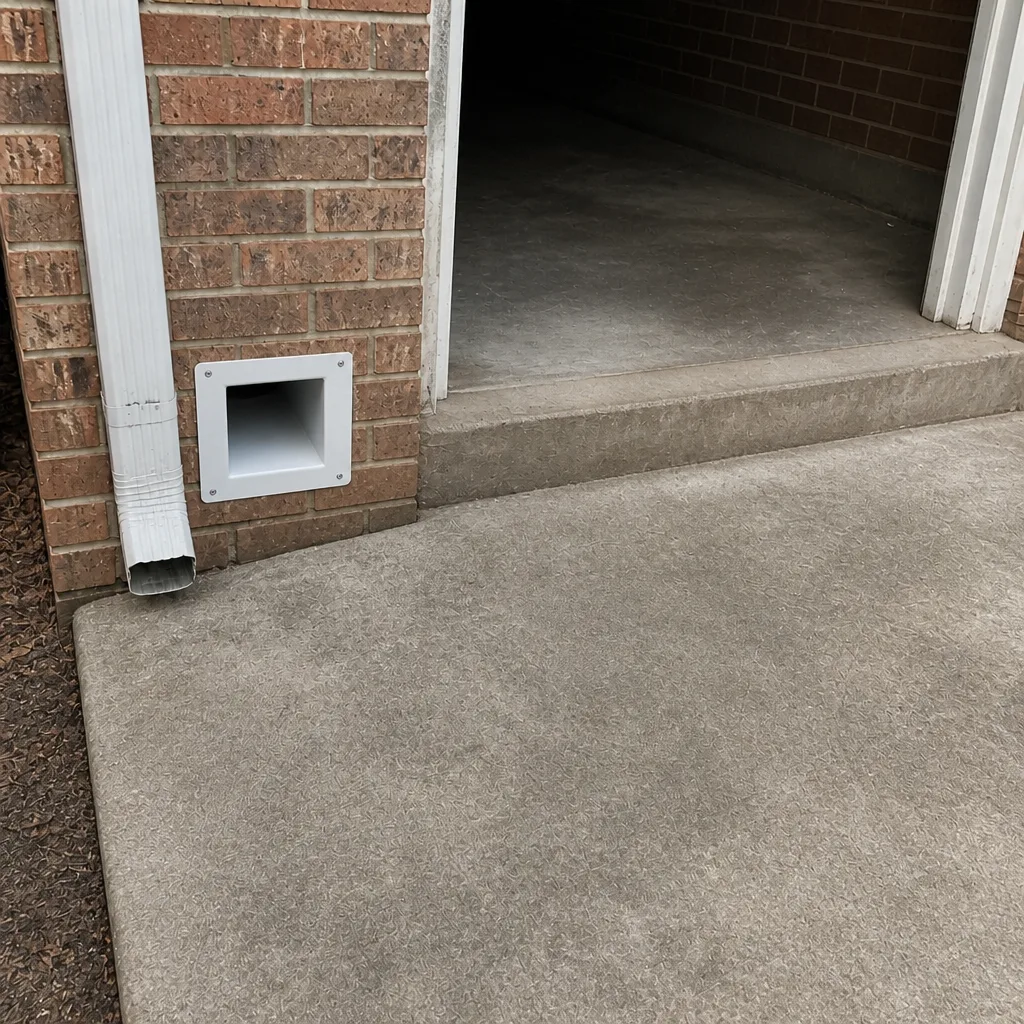 After
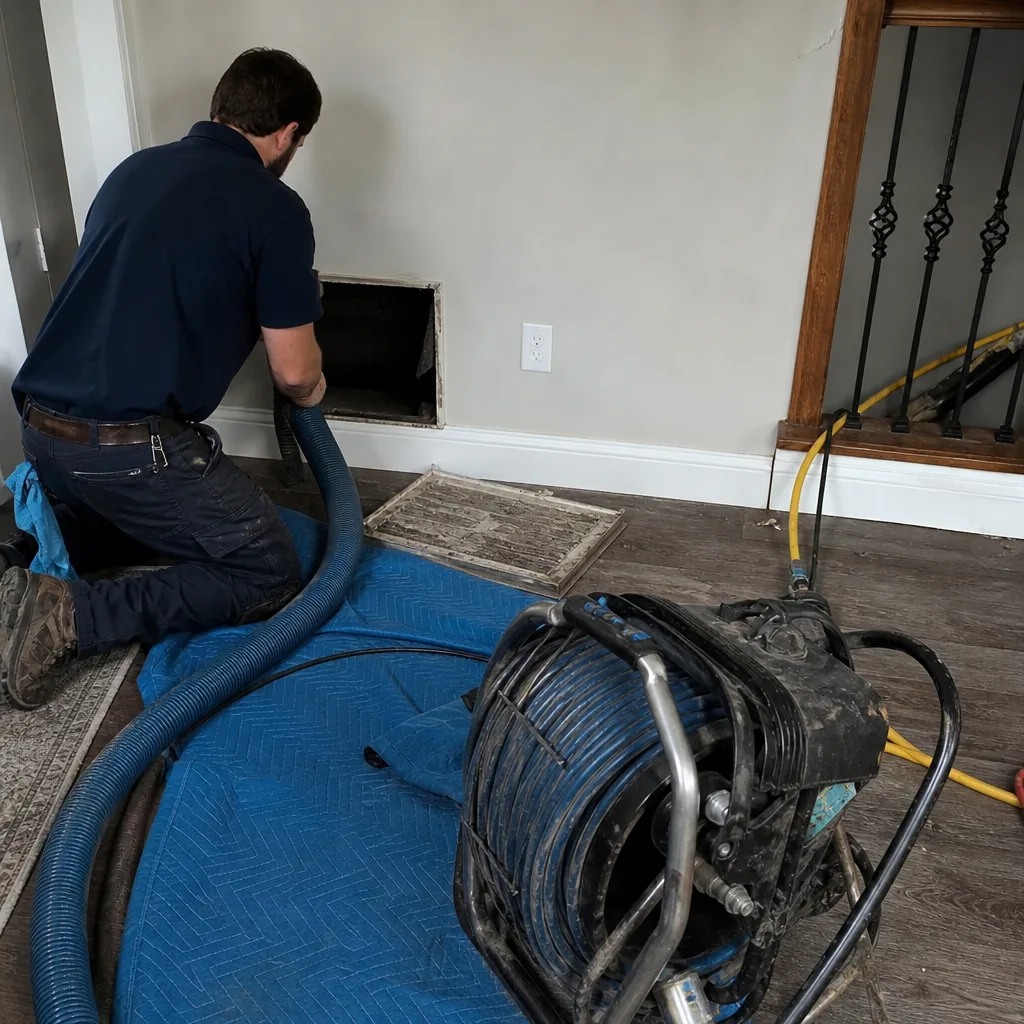 Before
 After
 Before
 After