
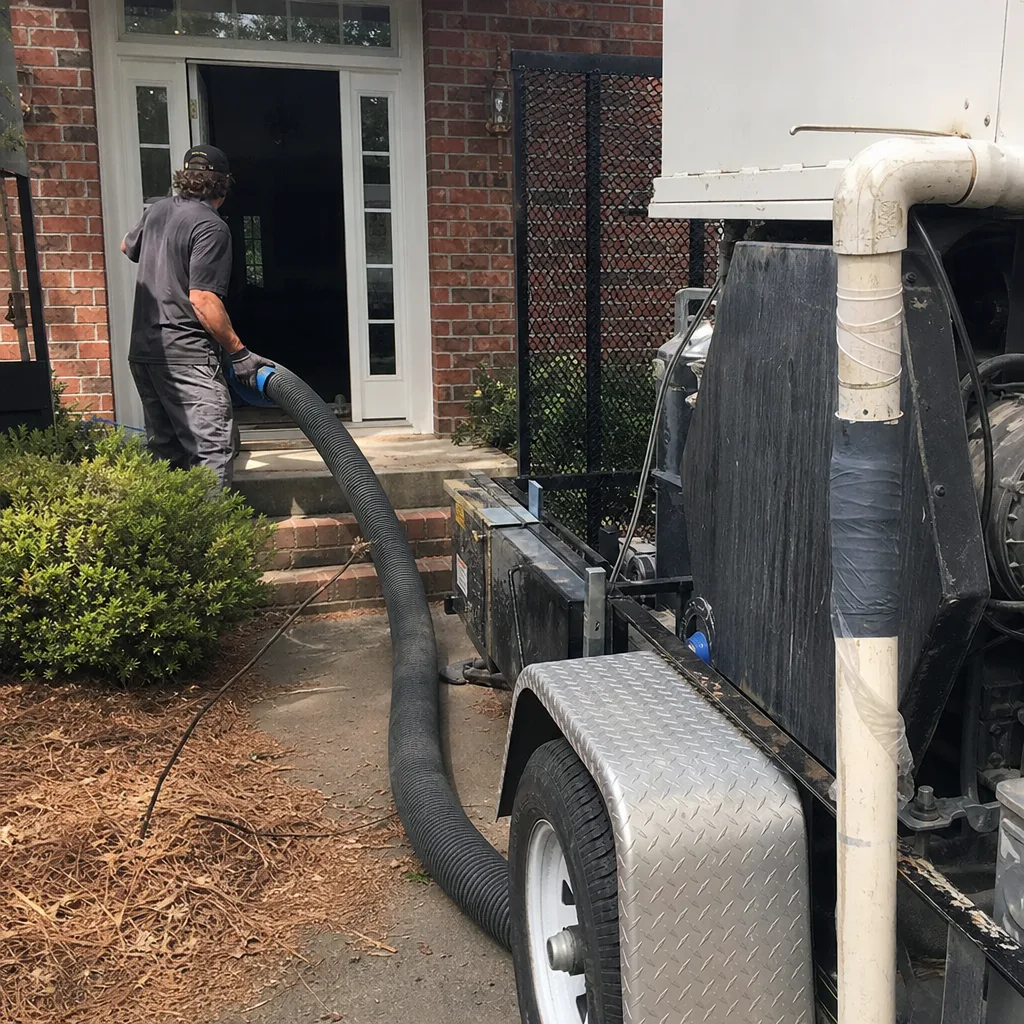
Last updated November 15, 2026
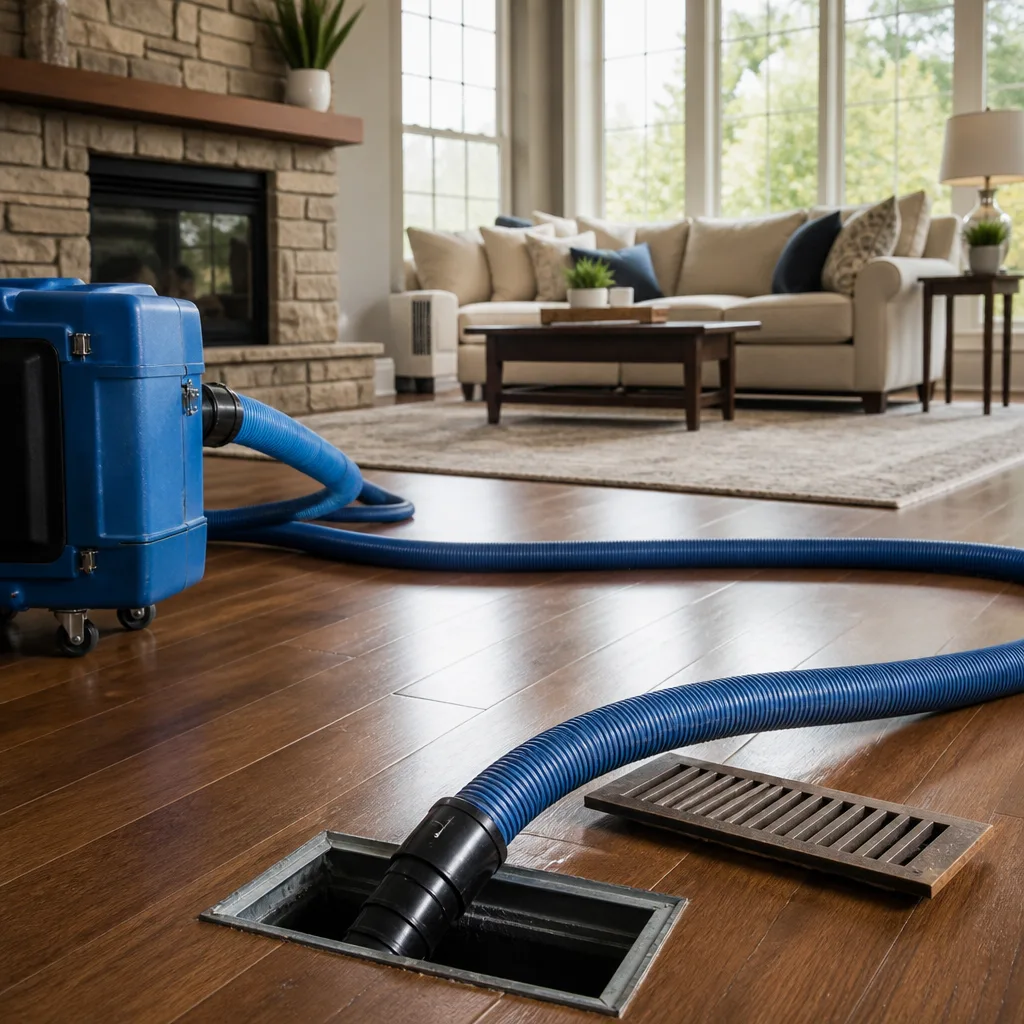 Whole-home duct cleaning
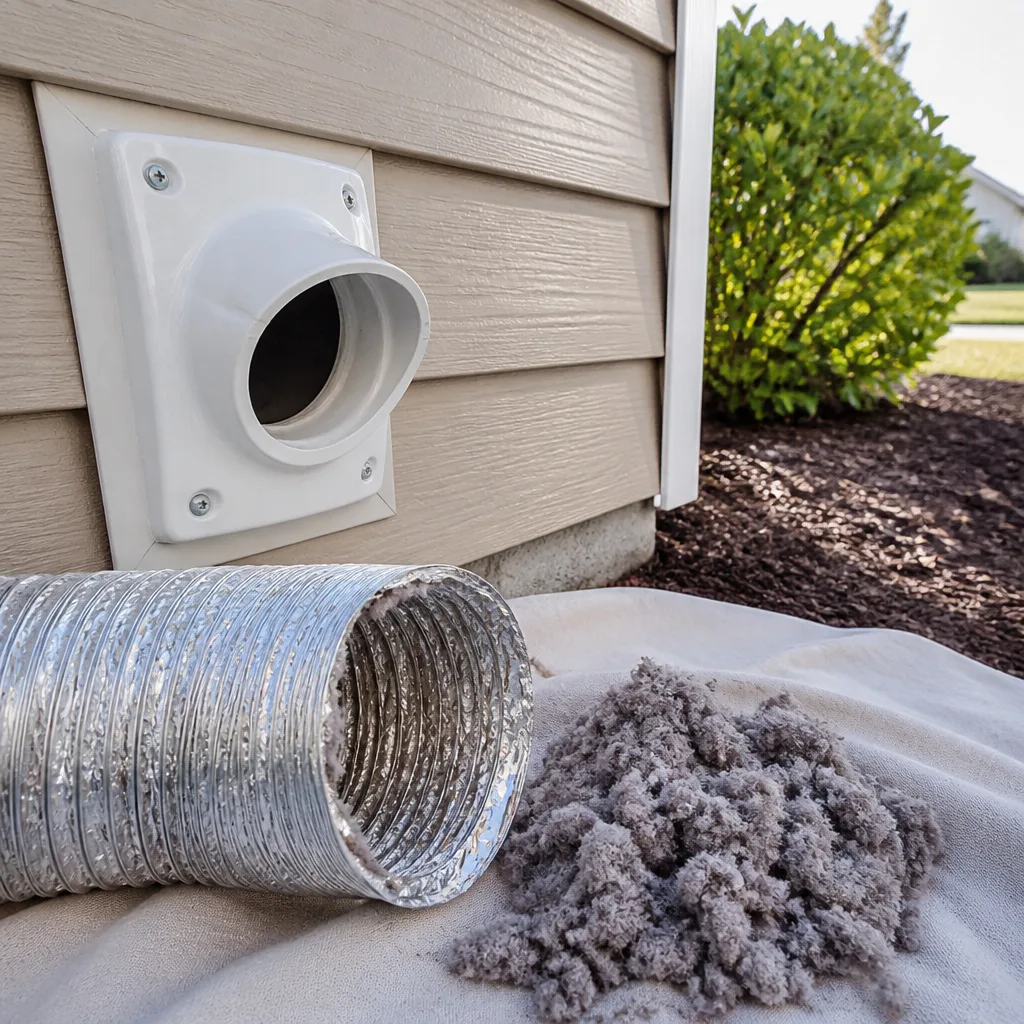 Dryer vent cleaning
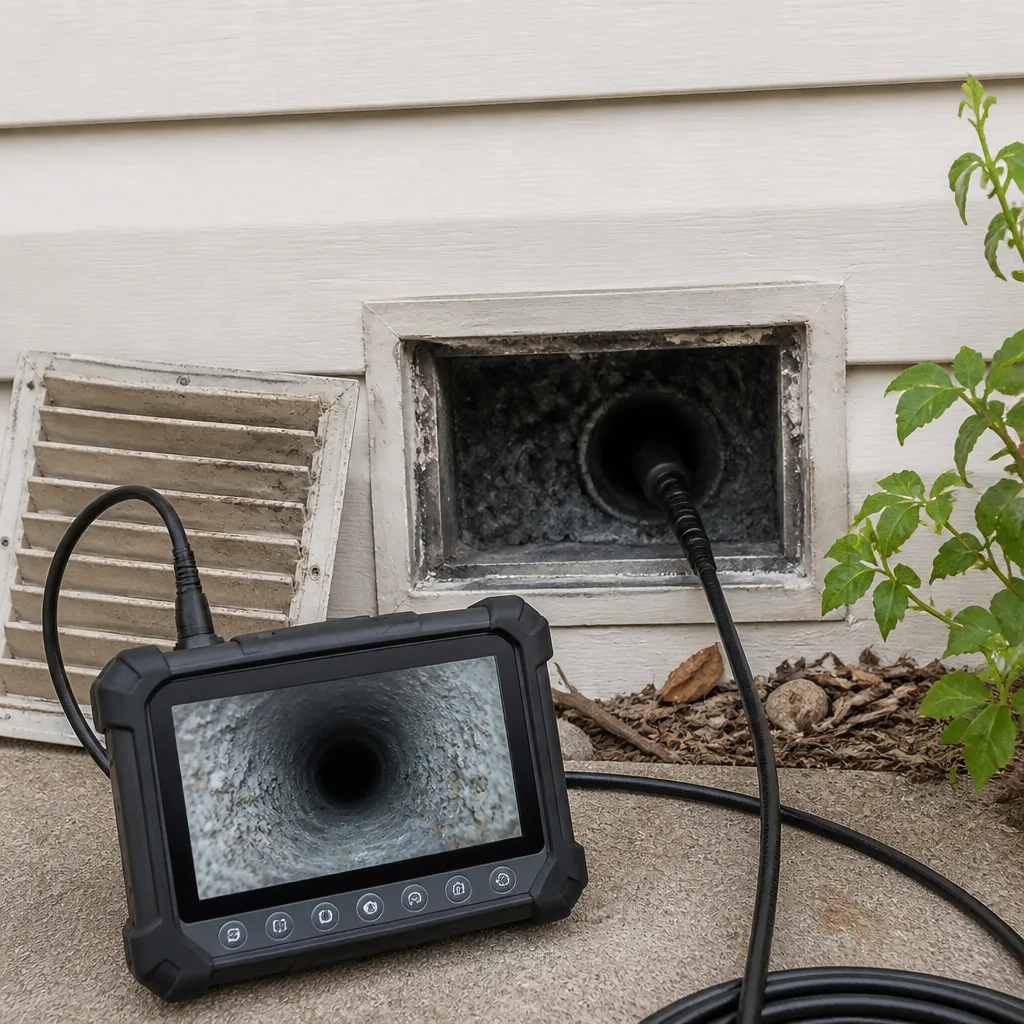 Camera inspection
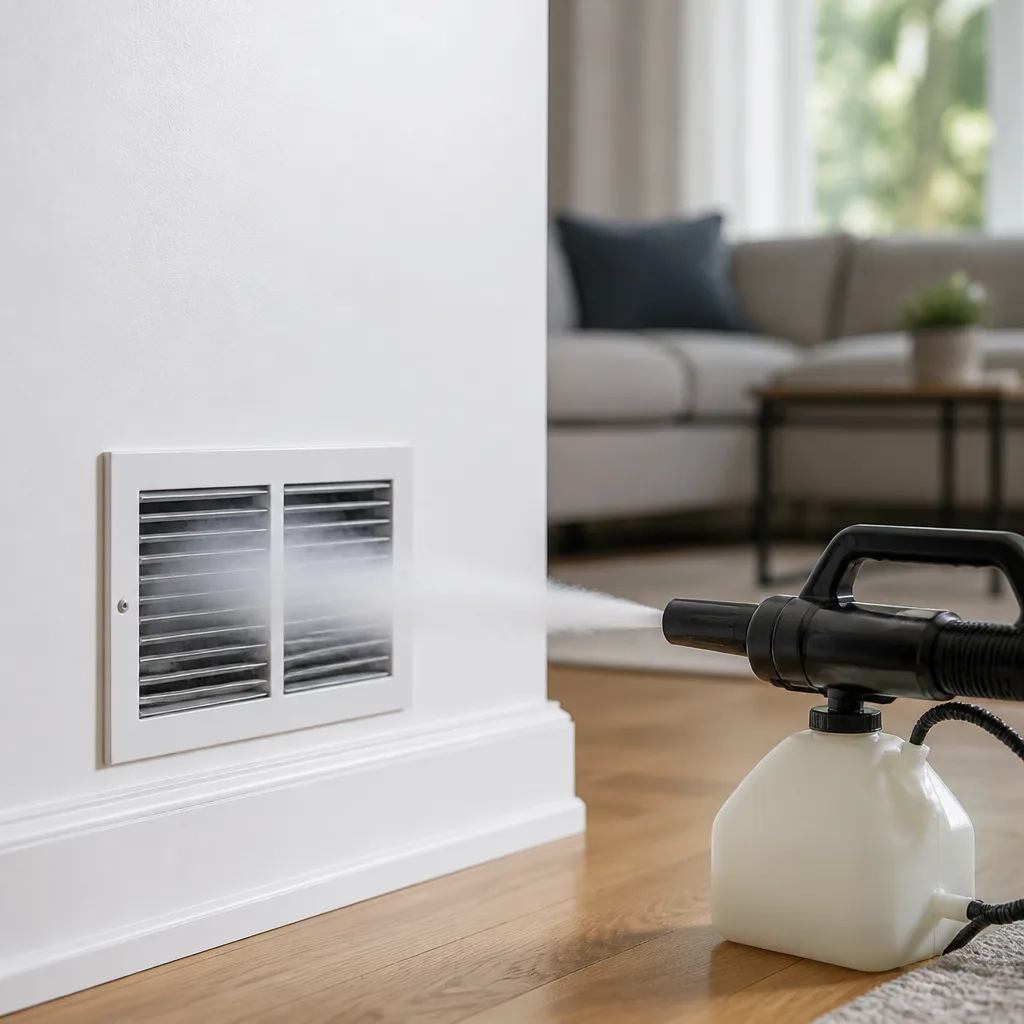 Sanitizing & deodorizing
Whole-system duct and dryer vent check with before-and-after photos - you see exactly what came out of your vents
That "$99 whole-house special" is a bait ad - the real number appears once they are in your hallway, or the "clean" is a shop-vac at the register. We photograph the inside of your ducts before and after instead.
Choosing the Right Air Duct Cleaning Brand: A Buyer’s Guide for High Point
Most buyers in High Point start with brand names. They see a national company’s logo, a coupon in a mailer, or a sponsored listing and assume the brand itself guarantees the work. It doesn’t. In the duct cleaning trade, the brand name on the invoice tells you almost nothing about the system your ducts will actually meet. What matters is the collection and agitation equipment in the technician’s hands and whether that technician knows which tool fits your ductwork. This guide teaches you to evaluate the equipment behind the logo, ask better questions, and recognize a thorough job before you book one.
Quick Answer
The right air duct cleaning brand in High Point isn’t the one with the biggest ad budget or the most recognizable franchise sign. It’s the one that runs professional-grade rotary contact brushing (Rotobrush or Nikro systems) paired with HEPA-filtered negative-pressure collection, matches that equipment to your duct type, and can describe in specific terms how they’d clean a flex duct run in a crawlspace. Brand names don’t clean ducts. Trained technicians running the right tools do.
Styles & brands we work with
- Whole-home duct cleaning
- Dryer vent cleaning
- Camera inspection
- Sanitizing & deodorizing
Table of Contents
- Equipment Tiers: What Separates One Contractor from Another
- The National Franchise Advantage: A Myth in Mid-Sized Markets
- How to Evaluate Technician Qualifications
- Generalist HVAC Companies vs. Dedicated Duct Cleaning Specialists
- The Flex Duct Crawlspace Test: A Concrete Evaluation
- Questions to Ask Before You Book
- Why High Point Homes Present Specific Duct Challenges
- Red Flags and Green Flags in Written Estimates
Equipment Tiers: What Separates One Contractor from Another
The duct cleaning industry clusters into roughly three equipment tiers, and the tier a contractor operates from tells you a lot about what a job will look like. Truck-mounted air sweep systems push high volumes of air through the ductwork to loosen debris. They work fast and are popular with large fleets because they can cover more homes in a day. But high-volume air without physical contact with the duct wall leaves a lot behind. It’s a puff of dust, not a cleaning.
The second tier, and the one we operate from, uses portable negative-pressure units combined with rotary contact brushing systems such as Rotobrush or Nikro. A rotary brush physically travels the length of the duct and agitates the entire inner surface while HEPA-filtered negative pressure pulls the dislodged material into a sealed collection chamber. That combination matters. Agitation without collection just redistributes dust into the air. Collection without agitation leaves the settled layer on the walls. Both together remove what’s actually in the duct.
The third tier is contamination control equipment such as Abatement Technologies units, used when the job goes beyond routine dust. Negative air pressure with filtration is the tool for situations where the contamination load is heavier than typical residential buildup, and it’s also the equipment you want when a technician is opening ductwork rather than just cleaning through a grate.
Which tier fits which job
- High-volume air sweep: Fast, low contact, best as a supplement to agitation, not a replacement for it.
- Rotary contact brushing with HEPA negative pressure: The right approach for most occupied residential duct systems, especially where dust, pet hair, or debris has visible accumulation.
- Negative air contamination control (Abatement Technologies): Warranted for heavier soil loads, post-remediation situations, or light-commercial systems where cross-contamination risk is higher.
In our experience on High Point jobs, the equipment conversation separates serious contractors from tagalong operators faster than any review site. Ask what machine will be in your driveway. A specialist will name it without hesitation. A generalist will change the subject. If you’re ready to see how this plays out in practice, get a free estimate from Duct Cleaning High Point.
The National Franchise Advantage: A Myth in Mid-Sized Markets
National franchise duct cleaning brands don’t run their own crews in most of the country. In mid-sized markets like High Point, they subcontract heavily to independent operators who buy the brand’s marketed leads. That operator may run excellent equipment. It may also run whatever equipment was cheapest to acquire when they signed on. The brand name on the invoice doesn’t change the answer to the question you actually care about: who shows up, with what tools, and how carefully do they work?
We’re not saying every franchise operation is poor. We’re saying the brand tells you nothing predictive. In our experience working alongside High Point property managers, the franchise problem surfaces most often when a homeowner compares two quotes and finds the fine print differs wildly from the sales pitch. The brand charged for a premium promise and once the crew arrives, the scope narrows to what the local operator is actually equipped to do.
What to check before you trust a franchise claim
- Ask whether the company you’re calling will send its own employees or a subcontracted team.
- If they subcontract, ask what equipment brand and model the dispatched crew uses.
- Ask whether the same technician will perform the pre and post inspection of your ductwork.
- Confirm the written estimate is issued by the entity actually doing the work.
- Ask for before-and-after photographs of the duct interiors, not just the ceiling grates.
A local specialist answering those questions directly beats a national brand that can’t. That’s true in High Point as much as anywhere. For a deeper look at what air duct cleaning actually involves on a residential job, our service page gets into the step-by-step.
How to Evaluate Technician Qualifications
Equipment without trained hands underperforms. The technician running the rotary brush needs to know how much contact pressure a given duct can take, when to slow down, and when to stop the machine and switch to a softer tool. The following factors predict outcomes more reliably than company size, brand name, or advertising budget.
Driver One: Certification and manufacturer training
NADCA certification is the recognized industry credential for duct cleaning contractors. It signals that the company has invested in professional standards for cleaning methodology and contamination control. Equipment manufacturer training matters too. Rotobrush and Nikro both train contractors on the specific machines they run, and a technician who’s been through that training can operate the equipment correctly rather than learning by trial on your system. Our technicians have up to experience and have worked with these same equipment platforms across both residential and light-commercial duct types.
Driver Two: Experience across duct materials
Residential ductwork in High Point is not one thing. You’ll find flex duct in the crawlspace branch runs, sheet metal in the trunk and main supply, and sometimes short sections of duct board in older renovations. Each material demands different agitation techniques. Flex duct flexes and can be damaged by aggressive brushing; sheet metal tolerates firmer contact. A technician who has only worked on one material will either under-clean or damage the other. Ask directly what technique they use for each.
Driver Three: Diagnostic eye
Good duct cleaning surfaces problems. Leaking joints, disconnected runs, microbial growth, or crushed flex sections often show up only once a technician is inside the system. A qualified technician documents what they find and describes the corrective options. Air duct repair as a standalone service is a real need on many High Point homes, and it’s a capability set that separates specialists from companies that clean and leave.
Generalist HVAC Companies vs. Dedicated Duct Cleaning Specialists
The company that installed your HVAC system may offer duct cleaning as an add-on. That doesn’t make it an air duct specialist. Heating and cooling is a different trade with different tools and different training. A full-service HVAC firm divides its attention across equipment repair, refrigerant work, thermostat installs, and duct cleaning, and duct cleaning often gets a shared shop vac rather than a purpose-built rotary brush system.
None of that means the installer will do a bad job on your equipment. But if your concern is indoor air quality, allergen load, or duct integrity, you want the provider whose entire toolbox is built around that problem. A dedicated duct cleaning specialist will have Rotobrush and Nikro systems on hand and can describe the collection strategy – not just the brushing strategy. They’ll also have the parts and training to connect cleaned ducts to a broader air quality system when the customer wants one.
When the generalist is fine
- You’re already having HVAC service done and want a light maintenance clean of accessible runs.
- Your ducts are low-load and recently new.
- The technician can name the machine in the truck and confirm it’s a rotary brush system with HEPA collection.
When you need a specialist
- Visible dust, soiling, or debris at the supply registers.
- Allergy or asthma concerns tied to home air quality.
- HVAC efficiency complaints that might be driven by duct leakage or blockage.
- A duct system older than the HVAC equipment it serves.
- Any sign of moisture, microbial growth, or pest activity inside ductwork.
In High Point, the split is easy to spot once you know to look for it. Ask the company whether duct cleaning is a full-time service or an add-on. The answer will tell you whether the equipment is purpose-built or borrowed. Honeywell and Aprilaire indoor air quality systems are a useful diagnostic: a specialist will know how to integrate them, describe how they work with cleaned ducts, and explain the trade-offs.
The Flex Duct Crawlspace Test: A Concrete Evaluation
Here’s a question that separates talkers from technicians: “How would you clean the flex duct branch runs in my crawlspace system?” The specificity of the response reveals whether the company does this work itself or sells it and subs it out. A company that dispatches its own trained crews will answer easily. A broker or sub will stumble.
Flex duct is a specific material. It’s a light, flexible conduit with an internal wire helix and a liner. Aggressive rotary brushing on flex can tear the liner or crush the duct. Too little agitation leaves the interior untouched because the material flexes away from the brush. The technique that works is controlled-contact rotary brushing with the right brush head and the right pull speed, combined with negative pressure at the branch run to keep debris moving toward the collection point rather than back into the living space.
What a strong answer sounds like
- They name the material. “Flex duct” rather than “your ducts” tells you they’ve thought about the specific branch run.
- They identify the access method. Crawlspace access, branch run disconnection, or register-level insertion each require a different tool and a different level of care.
- They describe agitation and collection together. A strong answer includes both the rotary brush and the HEPA negative pressure unit.
- They mention wire helix protection. Anyone who brushes flex without respect for the internal helix has either not done much flex or doesn’t care.
- They mention post-inspection. A specialist will want to photograph or camera-inspect the run after cleaning to confirm results.
What a weak answer sounds like
“We run a big vacuum and blow out the whole system” is a red flag. So is any answer that switches to talking about coupons, packages, or “our process” without naming equipment. “We’ll figure it out on site” is a warning. So is a technician who can’t tell you whether the branch runs in your crawlspace are flex, metal, or duct board.
Run this test on any company you’re considering. The point isn’t to hire the best answerer. It’s to find out whether the company dispatches trained technicians with the equipment they name. If you want to run it on us, call (888) 804-6957 and ask it directly. We answer 24/7. Fast dispatch from 7am to 7pm, Sunday through Friday.
Questions to Ask Before You Book
An honest duct cleaning estimate can be prepared over the phone or in person, but the questions you ask before booking are what shape the actual job. The following checklist is a practical script. Use it on any candidate, and pay attention to how quickly and specifically they answer.
- What equipment will be on site? You want a name – Rotobrush, Nikro, an Abatement Technologies unit – not a general claim about “professional equipment.”
- Will the technician doing the cleaning be an employee of your company or a subcontractor? Subcontracting isn’t automatically disqualifying, but you deserve to know.
- How do you handle flex duct branch runs versus sheet metal? This is the specificity test in a different form.
- What collection equipment keeps dust out of my living space during the job? HEPA filtration with negative pressure is the standard.
- Will you photograph the ducts before and after? Photographic evidence of duct condition is a reasonable expectation.
- Do you inspect for disconnected or leaking duct runs? If they don’t inspect, they can’t tell you whether you need High Point air duct repair on top of the cleaning.
- Can you describe how you’d handle a duct run with visible debris in a crawlspace? See the flex duct test above.
- Is the written estimate itemized for the whole system, or priced per vent? Whole-system estimates are a better fit for professional work than per-grate pricing.
Ask which of these questions the company can answer without calling someone else. The ones that can are specialists.
Why High Point Homes Present Specific Duct Challenges
High Point’s climate is a strong determinant of what happens inside residential duct systems. The Southeast’s humidity load matters. Summer dew points in the 60s and 70s mean air conditioning runs long and hard, and that long run puts condensation pressure on the duct system’s inner surfaces. When ducts are under-insulated, poorly sealed, or run through unconditioned crawlspaces – which many High Point homes do – moisture accumulates on the interior of the flex runs and creates the conditions for microbial growth and dust caking.
The winter flip side matters too. High Point gets cold spells that trigger long heating runs, and dust that settles in ductwork during the cooling season gets reheated and redistributed through the home when the furnace comes on. Many homeowners notice dust complaints more in winter even though the duct problem developed in summer. Cleaning out that accumulated material before the heating season is one of the highest-value uses of a duct cleaning visit.
Housing stock patterns we see in High Point
- Older neighborhoods: Homes with original sheet metal trunk lines and retrofitted flex branch runs – the combination that demands a technician trained on both materials.
- Mid-century construction: Systems with duct runs routed through crawlspaces that see seasonal moisture and, in some cases, pest activity.
- Renovated properties: Additions and HVAC upgrades where new branch runs meet old trunk lines, and the joints between them are a common source of leakage.
- Newer builds: Tighter envelopes where air quality depends more heavily on the HVAC system’s filtration, and where cleaning up the ducts before adding Honeywell or Aprilaire IAQ products pays off.
The High Point market also has a healthy rental and property-management segment. Property managers often carry responsibility for duct maintenance across multiple units, and a specialist who documents work with before-and-after photos makes that responsibility easier to track. If you’re managing properties in High Point, our dryer vent cleaning service is worth scheduling on the same visit as duct work; both address fire and air-quality concerns that compound together.
Red Flags and Green Flags in Written Estimates
The written estimate is where a bidder’s real practices show. Red flags in the estimate almost always reflect what will happen in the job. Green flags in the estimate reflect a company that knows its equipment and its scope.
Red flags
- Per-vent pricing without a whole-system base. A low per-vent rate often lands you in the bait-and-switch game where the upcharge begins as soon as the technician arrives.
- Vague scope language. “Clean ducts” without a stated procedure is not an estimate, it’s a placeholder.
- No mention of collection equipment. Cleaning that doesn’t collect pushes dust into the air.
- Coupon-anchored headline prices. A rock-bottom headline figure that only covers a small portion of the system rarely reflects the actual scope.
- Unwillingness to write it down. If the estimate isn’t in writing, the price isn’t set.
Green flags
- Whole-system flat pricing per job. One price for the entire scope, agreed before work starts, is the standard for professional work.
- Equipment named. A specialist lists their rotary brush and collection systems.
- Scope split by task. Cleaning, inspection, air duct repair, and post-clean documentation should each be addressed.
- Before-and-after photographic evidence. Photographic documentation of duct condition is what separates verification from trust.
- Willingness to answer the flex duct question. The technician who can describe the flex duct technique in a sentence is the one who does it.
Licensed and insured status, a written satisfaction commitment, and honest whole-system pricing are the floor, not the ceiling. A company that can also describe the equipment behind the estimate clears the ceiling.
Common Mistakes to Avoid
- Choosing based on a coupon. A teaser rate on a mailer or a sponsored ad tells you nothing about the equipment or training behind it, and the final price is rarely the coupon figure. Ask for a whole-system written estimate before you compare.
- Assuming a national brand means consistent quality. Franchise duct cleaning in High Point frequently operates through local contractors, so the brand name doesn’t tell you what equipment will arrive. Ask whether the team on site is an employee of the company you called.
- Skipping the flex duct question. If a company can’t describe how they’d handle flex duct branch runs, they likely don’t handle them often. That’s the specificity test that surfaces a sub where a specialist should be.
- Hiring a general HVAC company purely for convenience. The installer who services your furnace may not have a purpose-built rotary brush system. Duct cleaning is a specialist’s trade; don’t treat it as an add-on to another appointment.
- Accepting per-vent pricing. A whole-system flat price agreed in writing protects you from upselling once the technician is on site. Per-vent pricing is where the surprises start.
- Not asking about air duct repair. Cleaning reveals leaks, disconnected runs, and crushed flex ducts. If the company can’t repair what it finds, you’re paying twice for the same problem.
- Paying for a job with no before-and-after evidence. A company that photographs your ducts before and after is a company you can verify. Ask for that documentation up front.
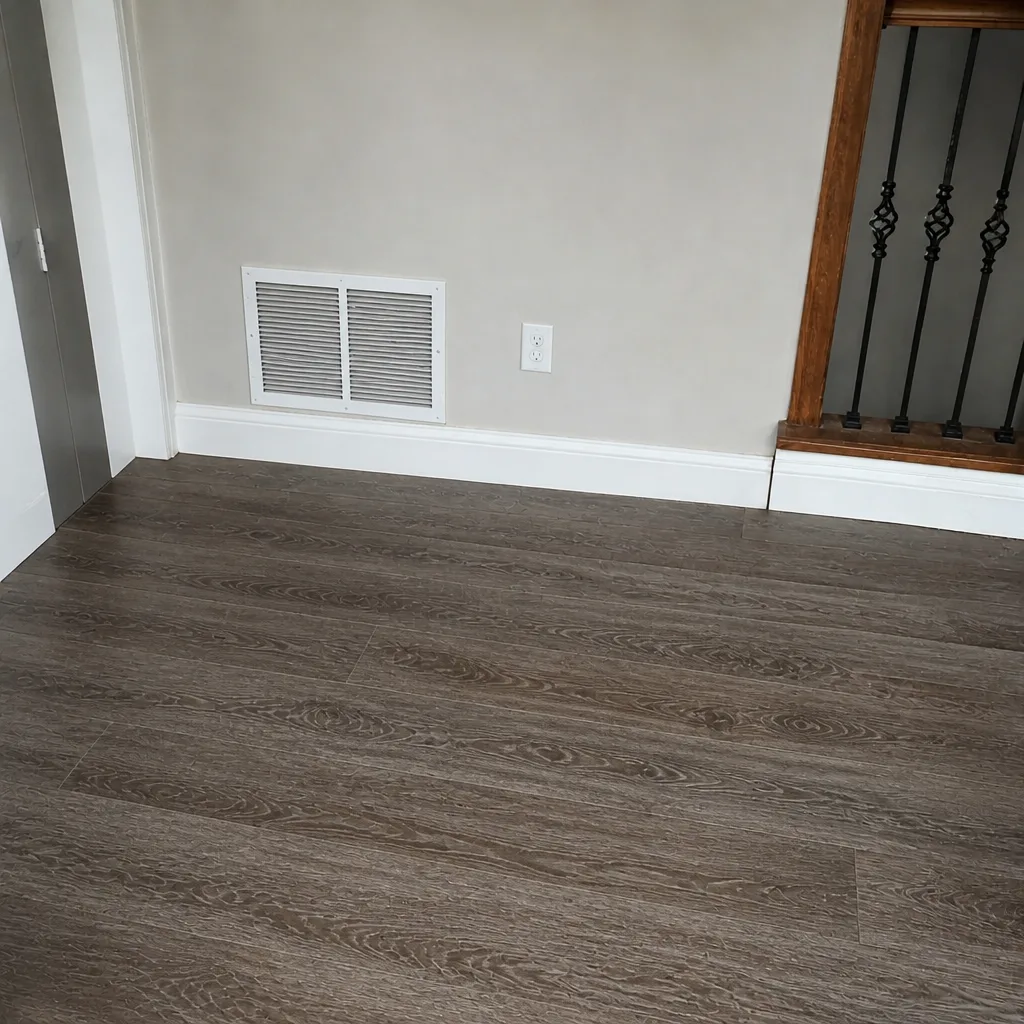
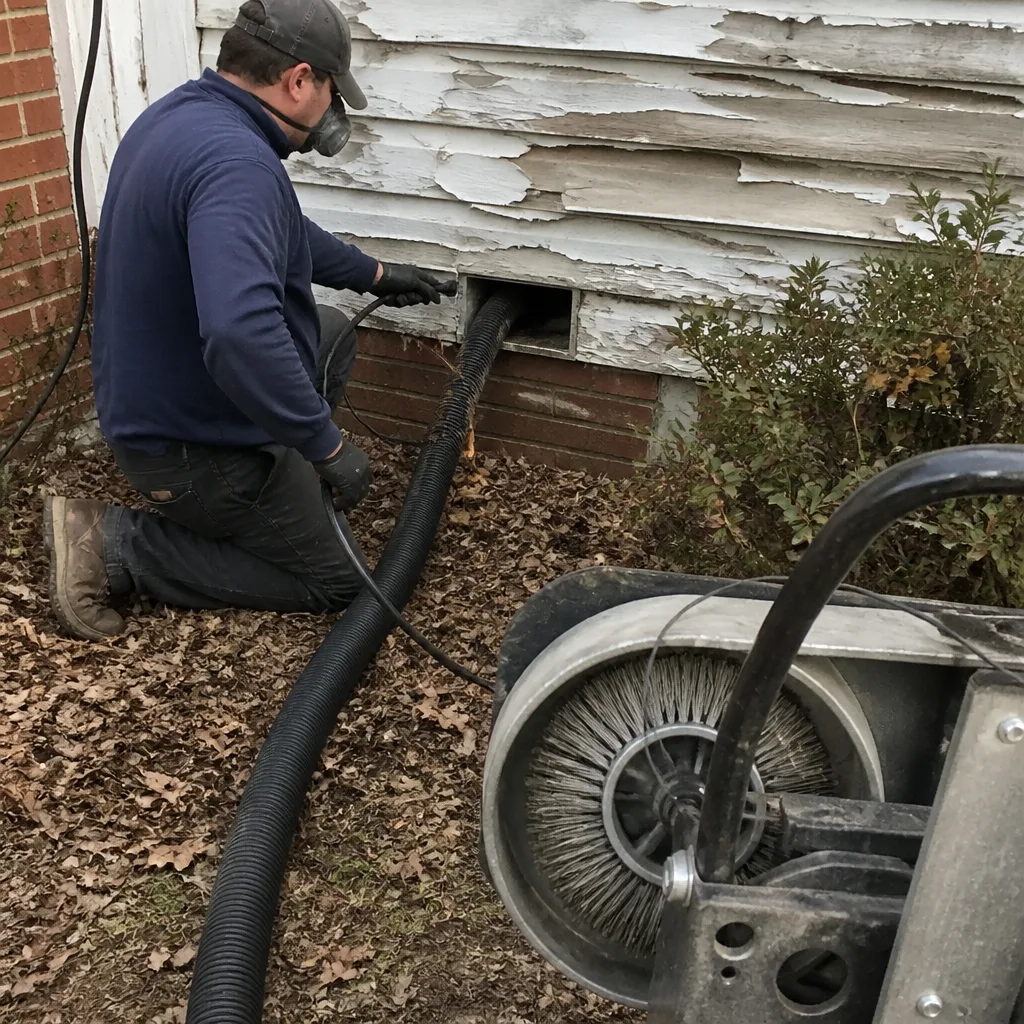
See the difference
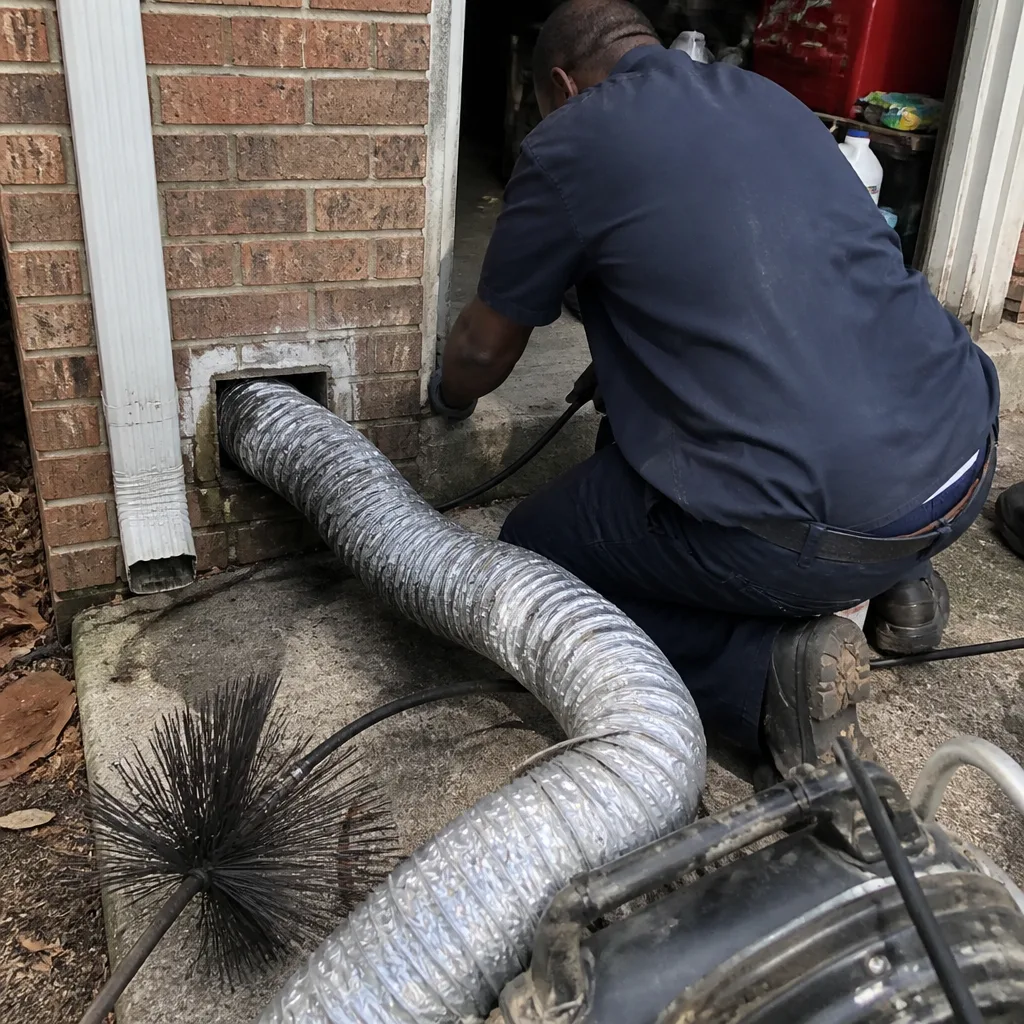 Before
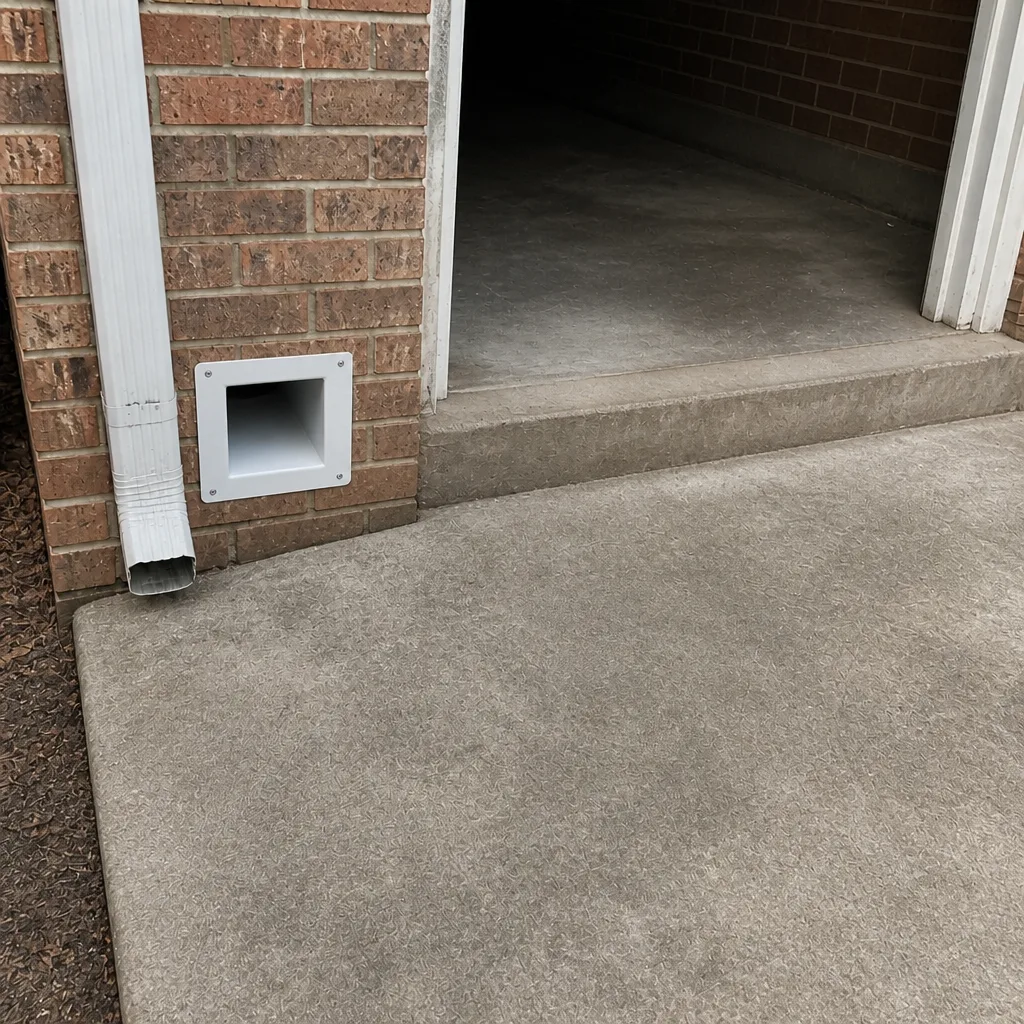 After
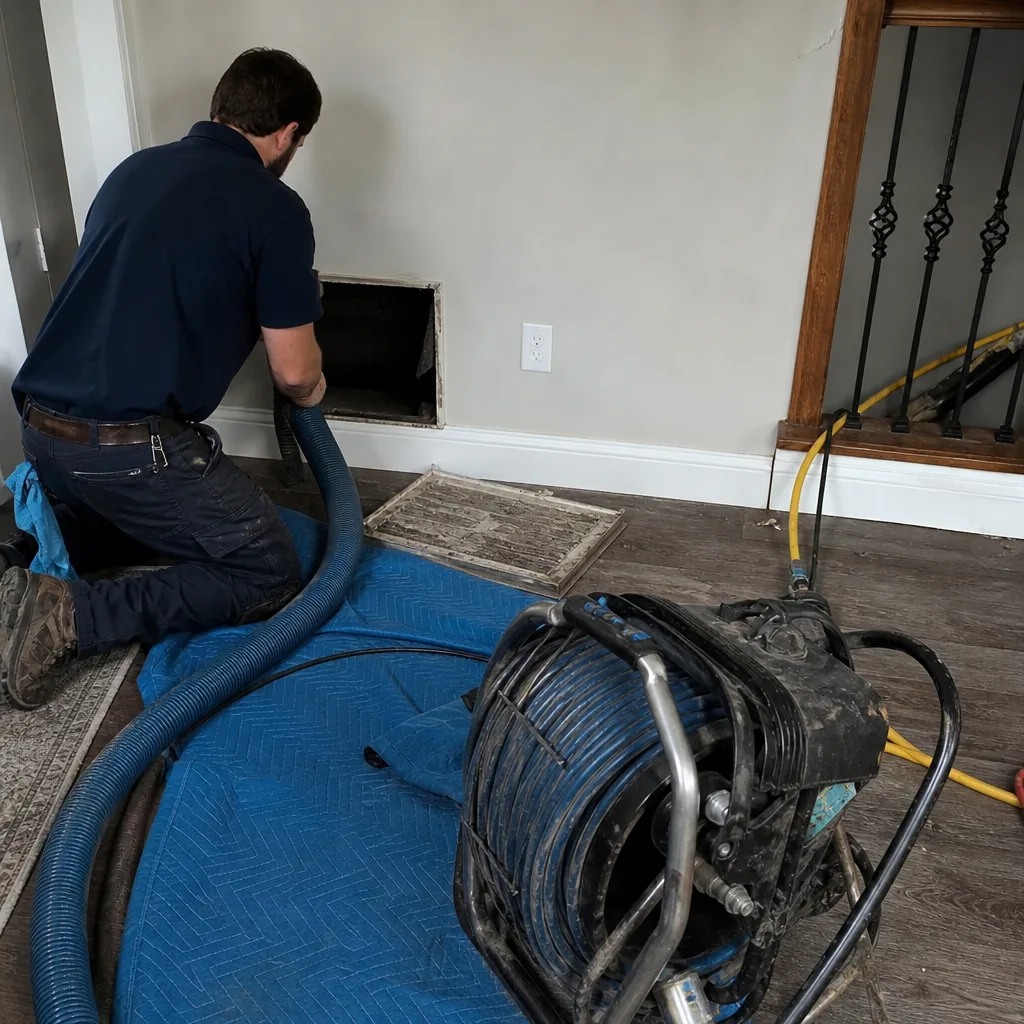 Before
 After
 Before
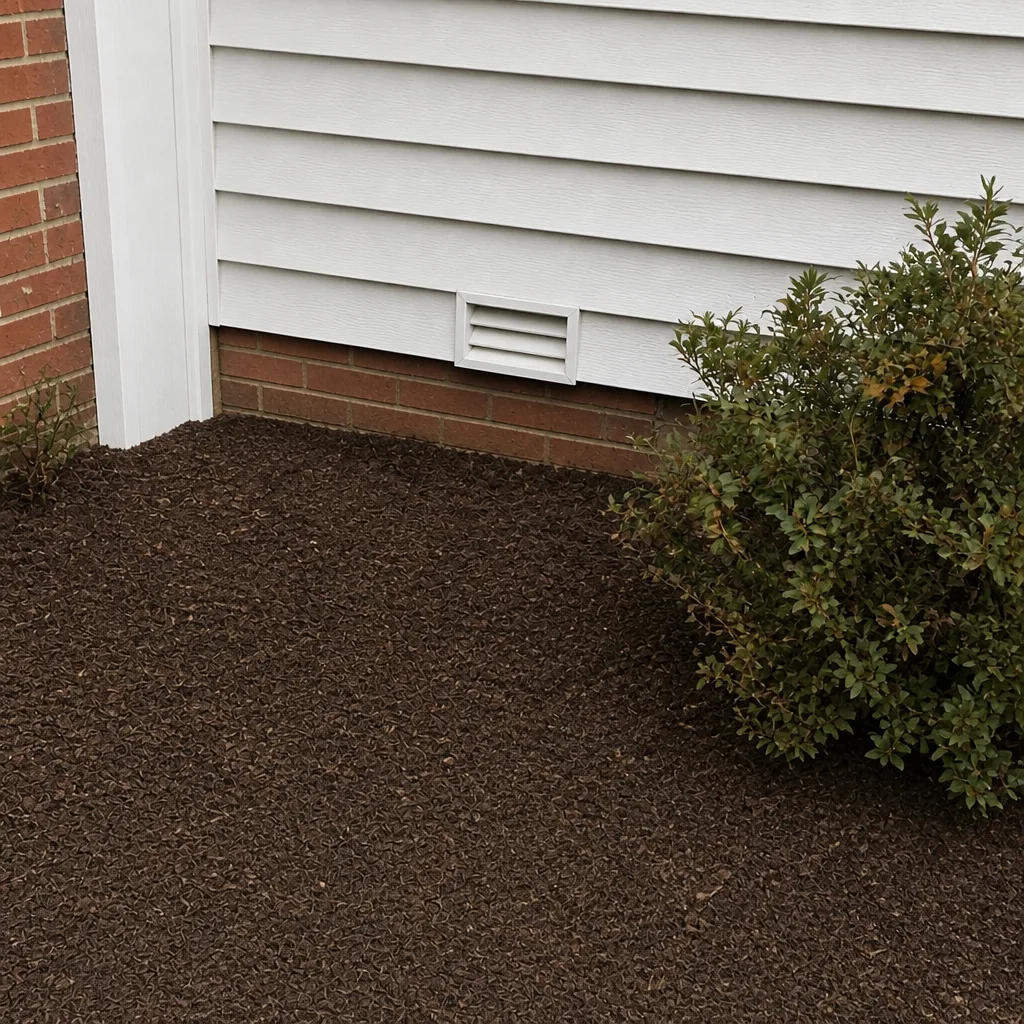 After
When to Call a Professional
Some duct conditions are urgent enough that the question isn’t which brand to hire but whether to hire at all today. Visible dust blowing from supply registers, a strong musty or moldy smell when the system cycles on, a bathroom or kitchen vent that no longer draws air, or a duct run that’s collapsed and blocking airflow in a room all raise the case for a professional visit rather than waiting. Rental property managers in High Point should also treat duct cleaning as a scheduled maintenance item rather than a reactive one; the before-and-after documentation alone saves time on tenant complaints.
Duct Cleaning High Point offers free estimates in High Point. Call (888) 804-6957 to book. We use Rotobrush and Nikro duct cleaning systems with HEPA negative pressure collection, have technicians with up to experience, and we photograph what we find before and after. One flat price per system, agreed before work starts. We also handle air duct repair as a standalone service when cleaning surfaces a problem that cleaning alone can’t fix.
Frequently Asked Questions
The best air duct cleaning company in High Point is the one that can describe its equipment and methodology specifically, runs professional-grade rotary contact brushing with HEPA negative pressure collection, and answers the flex duct crawlspace question in detail. Brand name, franchise size, and coupon price don’t predict a thorough job. Duct Cleaning High Point uses Rotobrush and Nikro systems with HEPA collection and can run a walk-through on your system before quoting. Call (888) 804-6957 for a free estimate.
Professional air duct cleaning in High Point is quoted per job by a written estimate, not per vent. Whole-system ranges vary with the size of the home, the number of HVAC systems, and whether the job includes air duct repair or IAQ integration. The estimate sets the price, so ask for it in writing before work starts. Call (888) 804-6957 for an exact quote – estimates are free.
Cheap quotes are cheap because the scope is smaller, the equipment tier is lower, or the price is designed to be upsold once the technician is on site. A low headline figure that later grows into a much larger invoice is the industry’s bait-and-switch pattern, and it’s the reason per-vent pricing is a red flag. Ask what equipment will actually be on site, and ask for a whole-system written estimate. Call (888) 804-6957 to compare a real scope.
Before-and-after photographs of your own duct interiors are the standard of verification. Ask for them in writing as part of the job scope before you book. A specialist has no problem providing them, and a company that balks at documenting its work is telling you something. Call (888) 804-6957 to schedule a job with documented before-and-after photos.
Yes, in many cases they do. National franchise brands in mid-sized markets like High Point frequently subcontract to local independent operators, so the brand on the invoice doesn’t guarantee which technician or equipment will arrive. Always ask whether the technician on site will be an employee of the company you called. A specialist that dispatches its own trained teams will answer without hesitation.
Sometimes yes. High Point’s humid summers put moisture pressure on duct systems and its crawlspace-heavy housing stock is prone to duct-level dust loading, so homes with pets, smokers, recent renovations, or visible dust at registers often warrant more frequent cleaning. A specialist will inspect before recommending a schedule. Call (888) 804-6957 and we’ll walk through your system and give you a specific answer.
The Bottom Line
Brand name and advertising spend don’t guarantee a thorough duct cleaning. What guarantees a thorough job is what happens on site: whether the technician runs a rotary contact brushing system (Rotobrush, Nikro) with HEPA negative pressure collection, whether they know how to match the tool to the duct type, and whether they document the result with before-and-after photos of your own ducts. Run the flex duct crawlspace test on any candidate. Ask which machine will be in your driveway and who is sending it. Compare written whole-system estimates, not coupon headlines. Duct Cleaning High Point uses Rotobrush and Nikro equipment, handles Abatement Technologies contamination control and Honeywell and Aprilaire IAQ integration, and offers air duct repair as a standalone service. Call (888) 804-6957 for a free estimate.
Written by the team at Duct Cleaning High Point.