
Last updated November 15, 2026
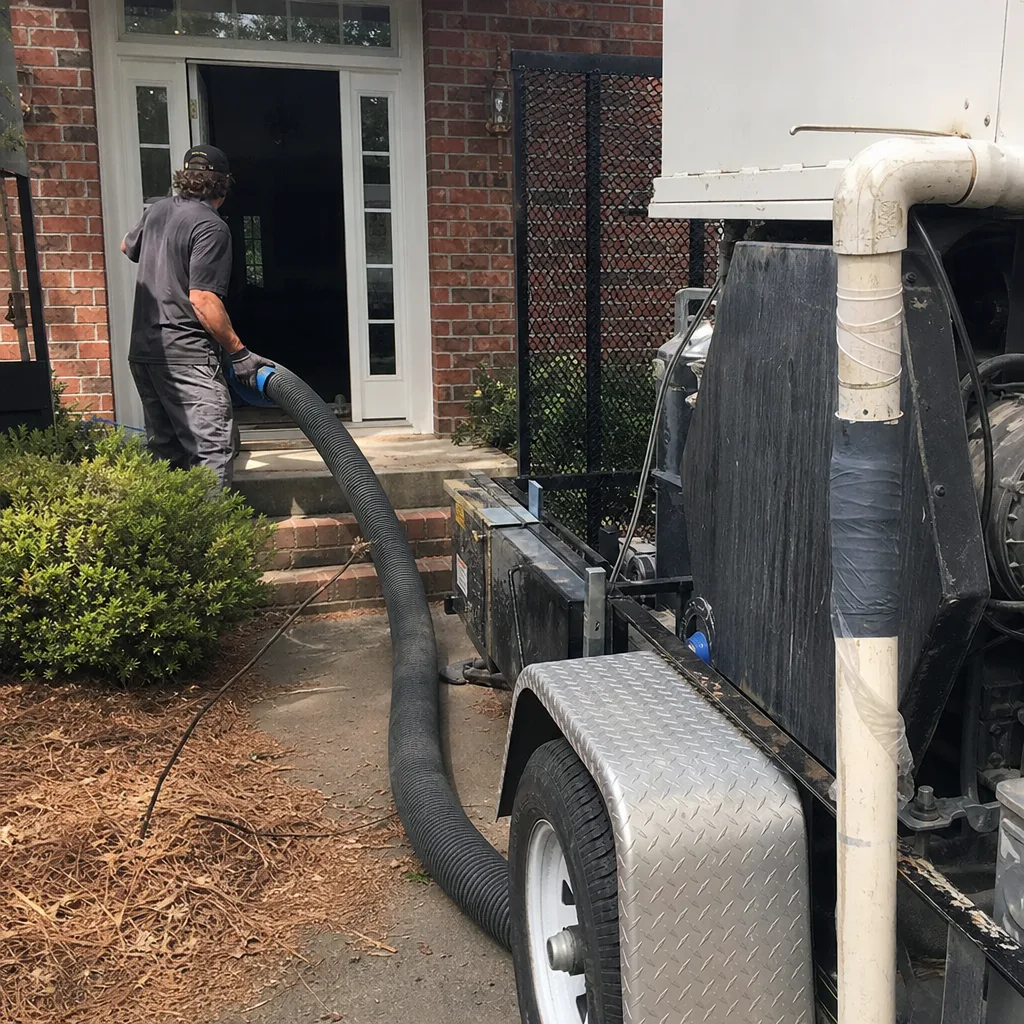
 Whole-home duct cleaning
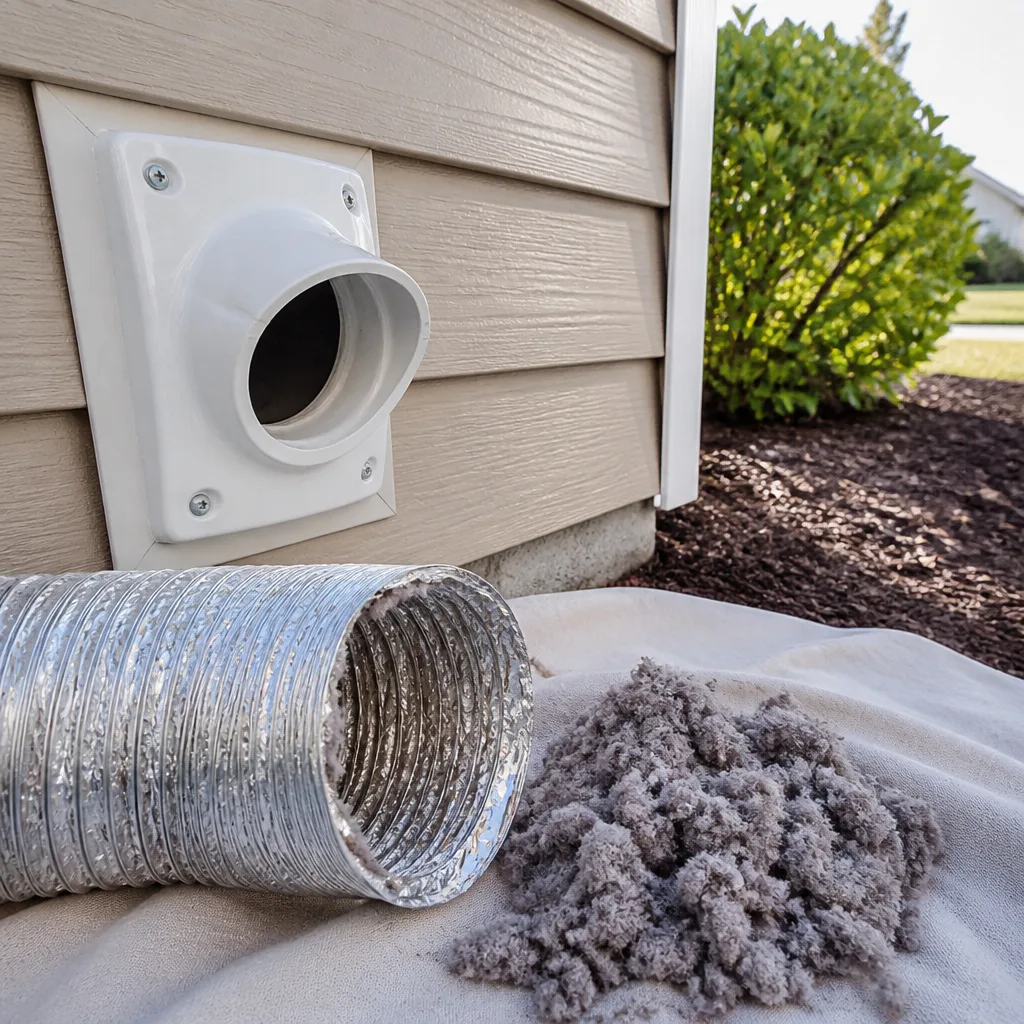 Dryer vent cleaning
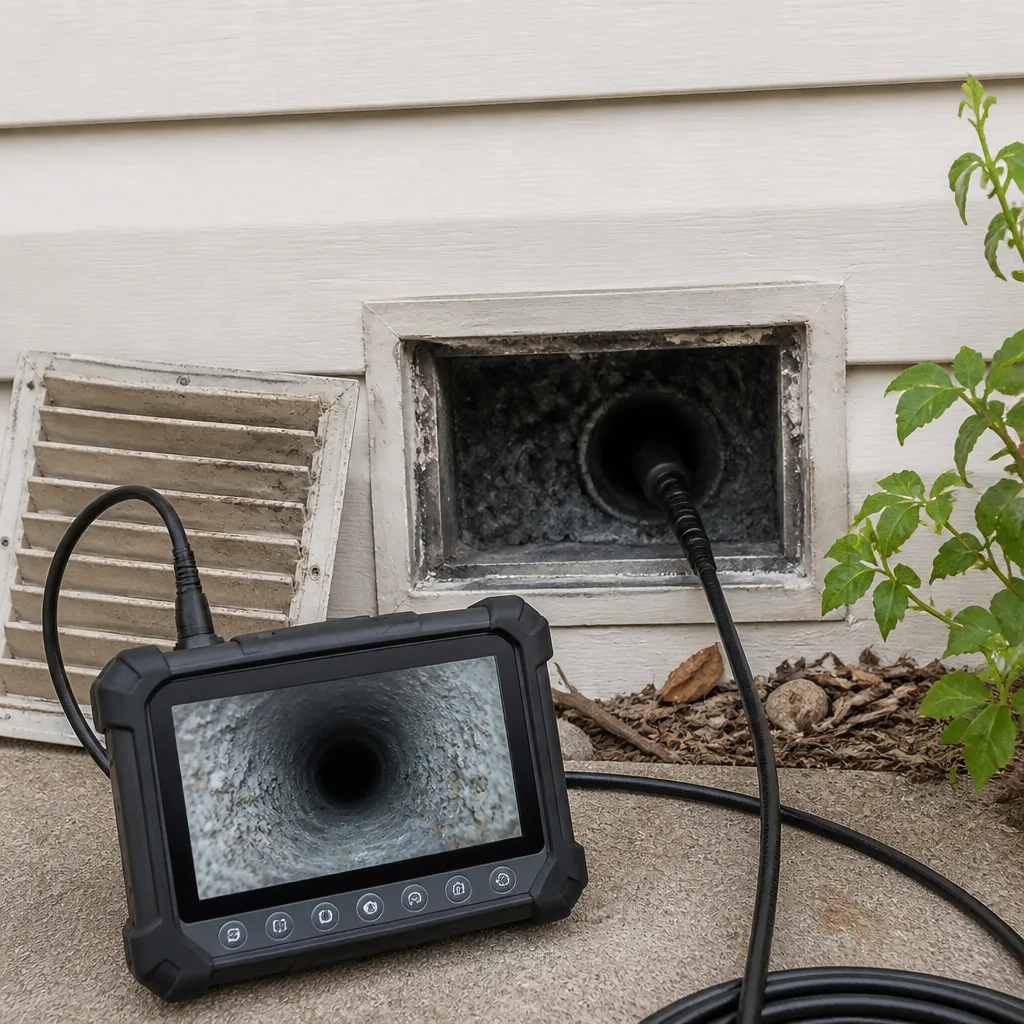 Camera inspection
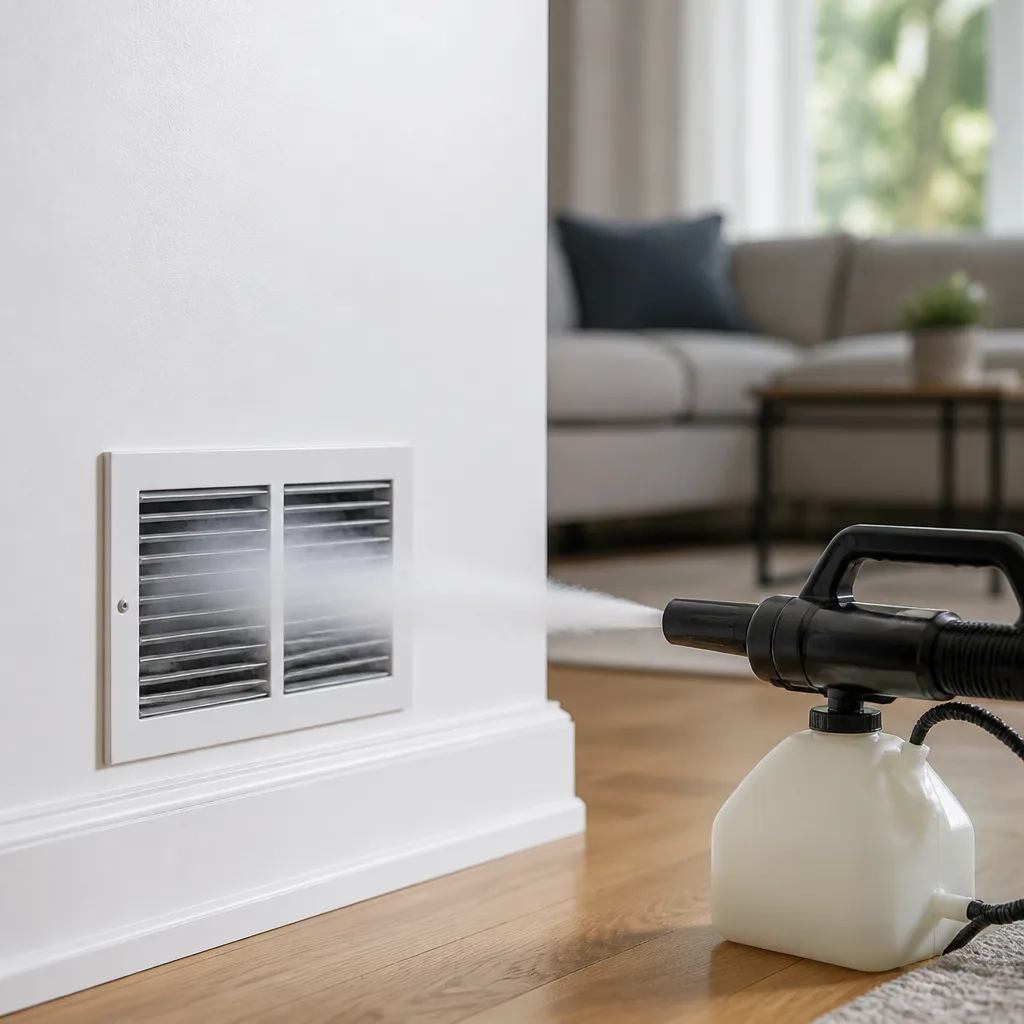 Sanitizing & deodorizing
Whole-system duct and dryer vent check with before-and-after photos - you see exactly what came out of your vents
That "$99 whole-house special" is a bait ad - the real number appears once they are in your hallway, or the "clean" is a shop-vac at the register. We photograph the inside of your ducts before and after instead.
Air Duct Cleaning Emergency Preparedness Guide for High Point Homes
Here’s the counterintuitive part about a house fire: the smoke damage that lingers longest often isn’t on the walls. It’s inside the ducts. The moment a homeowner switches the system back on to clear the smell, warm air pushes soot and combustion byproducts through every supply register in the house. The same thing happens after a flood or a storm breach. We’ve seen it enough times to know the pattern, and it’s almost always avoidable with a little planning before the emergency hits.
This guide walks through the three main hazards that can contaminate a High Point home’s ductwork, what to do in the first hours, and how to document everything so a claim isn’t denied. You’ll learn the right sequence, the wrong moves that make things worse, and what a proper remediation actually involves.
Quick Answer
After a fire, flood, or storm that reaches your duct system, shut the HVAC system off before using it. Do not run the fan to clear the smell. Then get the ductwork inspected with a camera before any cleaning, and use specialized HEPA extraction for smoke or water contamination rather than standard dust removal. High Point’s humid summers make post-flood mold growth in ducts a days-not-weeks problem, so speed and documentation both matter.
Styles & brands we work with
- Whole-home duct cleaning
- Dryer vent cleaning
- Camera inspection
- Sanitizing & deodorizing
Table of Contents
- The Three Emergency Scenarios High Point Homes Face
- Post-Fire: The Smoke Residue Protocol
- Post-Flood: Why Mold in Ducts Moves Fast Here
- Storm Debris and Damaged Equipment Intake
- Insurance Documentation: What to Capture Before Remediation
- The System-Restart Checklist
- Pre-Planning Your Emergency Contacts and Records
- Common Mistakes to Avoid
The Three Emergency Scenarios High Point Homes Face
Not every home emergency touches the duct system. But three kinds of events almost always do, and they’re the ones worth preparing for in High Point: residential fire and smoke, water intrusion from flooding or a burst supply line, and storm-driven debris that gets pulled into the return side after exterior damage.
Each scenario contaminates ducts in a different way, and each needs a different remediation response. Treating all three the same is where homeowners get into trouble. A duct cleaning that’s right for dust is not right for soot. A duct cleaning that’s right for soot is not right for standing water.
- Fire and smoke: Hot gases carry soot particles into return registers before the fire is out. Residue clings to duct interior surfaces and can re-aerosolize for months if it isn’t extracted properly.
- Water intrusion: Flooded crawlspaces, roof leaks, and burst pipes push moisture into floor-mounted return ducts. In North Carolina’s warm months, that moisture supports mold growth within a few days.
- Storm debris and equipment damage: A compromised return intake or a displaced exterior vent can pull in insulation fibers, leaves, and other debris. Damaged flexible duct runs are the usual point of entry.
If you’re a High Point homeowner near areas like Uptowne or the Emerywood neighborhoods, older homes often have floor-mounted returns in the original footprint, which changes how water intrusion plays out. Worth checking which return style your home uses before you need to know.
Post-Fire: The Smoke Residue Protocol
Even a contained kitchen fire sends combustion byproducts deep into the return plenum. Standard duct cleaning with a shop vac or a light-brush system can’t touch this. Soot particles are fine enough to embed in porous duct liner, and the chemical residue from synthetic materials has an oily cling that ordinary agitation pushes around rather than removes.
Here’s the right order of operations:
- Shut the system down at the breaker. Not just the thermostat. Kill power to the air handler so nothing cycles while you get the house assessed.
- Photograph visible soot and ash film at register faces before anyone touches them. This supports both the insurance claim and the remediation scope.
- Request a camera scoping of supply and return trunks before cleaning. That establishes what’s actually in the ductwork, not what’s assumed to be in it.
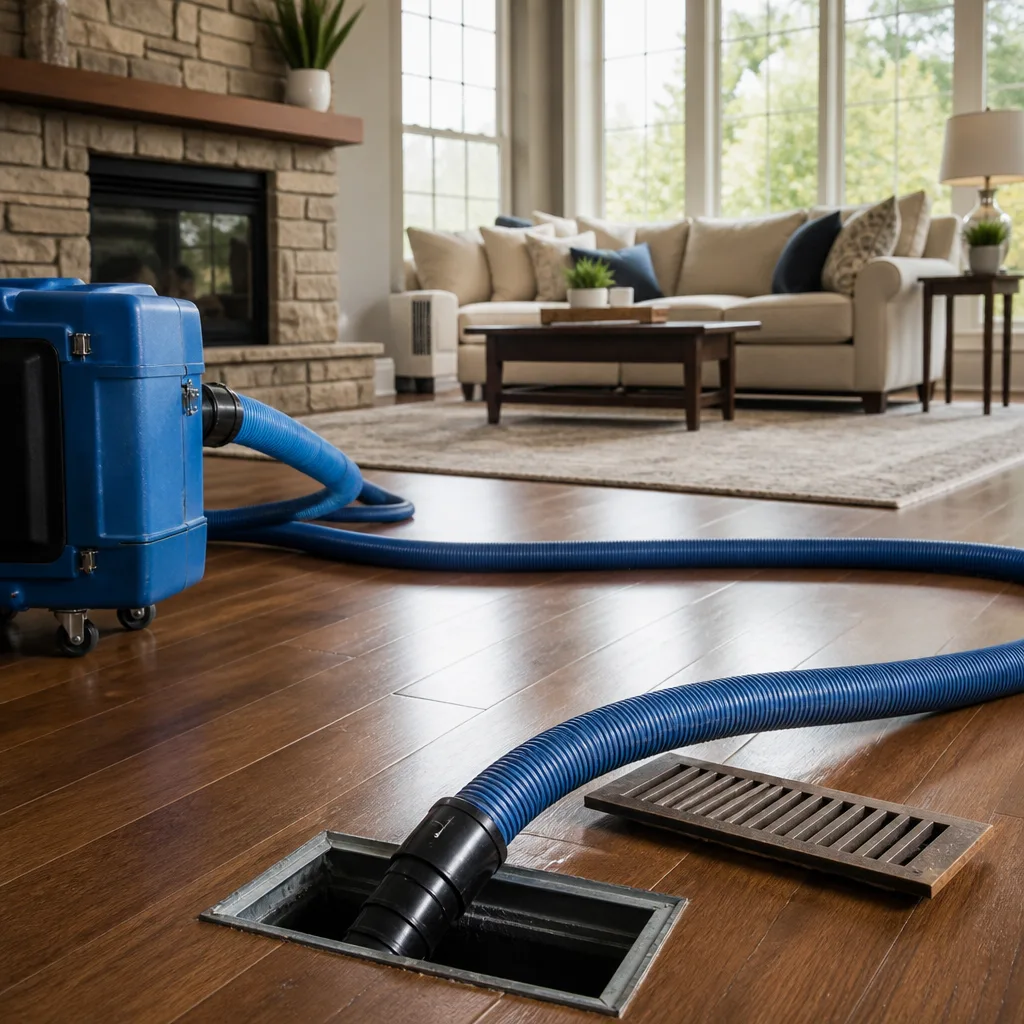
- Let a certified remediation team handle extraction. HEPA filtration with negative air pressure is the standard. Our own work uses Abatement Technologies filtration equipment for exactly this reason – it keeps contamination from migrating through the house while it’s being pulled out.
- Seal duct media after cleaning. Residual smoke odor lives in seams, joints, and porous duct board. Encapsulant sealer locks in what extraction couldn’t pull free.
- Deodorize with a vapor-phase treatment only after the ducts are clean and sealed. Anything earlier just masks the source.
The reason to shut down first is simple: every minute the blower runs, more contaminated air distributes to rooms that were never exposed to the fire itself. Turning it on “just to air things out” is the single most common mistake we hear about, and it’s the one that turns a small smoke claim into a whole-house remediation.
For a deeper look at how routine work differs from emergency remediation, see our air duct cleaning page.
Post-Flood: Why Mold in Ducts Moves Fast Here
Floodwater doesn’t have to reach the living space to reach the ducts. In High Point homes with crawlspace-mounted or slab-embedded supplies, standing water in a low crawl pulls moisture into floor-mounted return boots and, from there, into the trunk line. Moisture in a closed duct system combined with the Piedmont’s summer humidity means the clock starts ticking the day the water arrives.
Duct contamination from water intrusion needs to be treated as urgent, and here’s why: mold requires only moisture, organic material, and warmth. Duct interiors supply all three. Once growth establishes on insulation liner or duct board, cleaning alone is often not the answer – the affected material has to be removed and replaced.
- Turn the HVAC off the moment water is discovered anywhere in the structure. Do not run the fan to “dry things out.”
- Document the water line with photographs before pump-out.
- Get a moisture reading inside the ductwork within 24 hours if any water reached the crawl or floor cavity.
- Disinfect only after the duct is physically cleaned. Disinfectant sprayed onto contaminated liner can trap moisture and make things worse.
- Replace any saturated duct board or flex. It cannot be dried back to a safe state.
If you’re in a neighborhood like Oakview or Deep River and you’re not sure whether your returns run through the crawl, ask during your next routine service. Knowing the answer ahead of time saves days during a real emergency.
Storm Debris and Damaged Equipment Intake
Storms along the Piedmont typically bring wind and heavy rain rather than anything more dramatic, but wind damage is enough to compromise the return side of an HVAC system. Displaced exterior vent hoods, torn flex connections, and damaged return grilles all create a path for insulation fibers, leaves, and fine grit to get pulled straight into the ductwork and, from there, into the air handler and blower compartment.
What to check after a storm:
- Exterior return and intake vents – look for missing hoods, bent louvers, and debris lodged against the grille.
- Attic and crawlspace flex runs – check for separated connections, torn exterior jacket, and crushed sections.
- Blower compartment – open the service panel (power off first) and see whether visible debris sits against the blower wheel.
- Filter change – a storm-stirred filter loads fast and reduces airflow, which affects coil performance.
If any of those checks turn up damage, the right move is a duct repair, not just a cleaning. Cleaning a damaged system pulls air through the leak and can redistribute whatever came in. Our duct cleaning in High Point work includes repair as a standalone service for that reason – many duct-cleaning providers skip that step, which leaves the real problem in place.
Insurance Documentation: What to Capture Before Remediation
The single highest-value thing a homeowner can do after a covered emergency is create a record before anyone starts cleaning. Insurers generally require evidence that the damage existed and that the proposed work was necessary. Once cleaning starts, that evidence disappears with the debris.
Request the following documentation from whichever contractor handles the remediation:
- Pre-remediation camera scope footage of the main trunk and a representative sample of branch runs. Video with audio narration is stronger than stills.
- Written scope of work stating what will be removed, what will be cleaned, what will be sealed, and what will be replaced.
- Moisture readings with location and date stamps if water intrusion is involved.
- Before-and-after photographs of register interiors and duct trunk interiors.
- Manufacturer and model documentation for any IAQ equipment installed (April aire and Honeywell system paperwork belongs in this file).
Ask for the documentation before work starts, not after. That forces the scope to be specific and gives the adjuster a clean paper trail. If a contractor can’t provide camera footage or a written scope, that’s a signal to ask more questions.
The System-Restart Checklist
Once remediation is complete and the ductwork is signed off, the system shouldn’t simply be flipped back on. A proper restart verifies that nothing else was damaged in the emergency and that the duct system is delivering air as designed.
- Install new filters. Use the correct MERV rating for your equipment. Higher isn’t always better – a filter too restrictive for the blower loads the motor.
- Inspect the blower wheel and compartment. Soot or debris on the blower wheel will redistribute into clean ducts on the first run. Clean before restart.
- Verify the evaporator coil. Smoke residue and dust collect on coil fins and reduce heat transfer. Visual inspection and a fin cleaning if needed.
- Check the condensate drain path. A post-flood coil pan can harbor standing water; make sure the drain is clear and the pan is dry.
- Run an airflow test. Register face velocity and static pressure readings confirm the system is moving the volume it should. Low airflow after remediation often means a disconnected or crushed flex run.
- Run the system with the house ventilated for the first hour and watch for odor, dust, or unusual noise. Any recurrence means the remediation wasn’t complete and needs a second look.
Only reoccupy the home once those steps are done. Families who are sensitive to particulates, especially those with asthma or allergy issues, should treat the restart as the final check on indoor air quality rather than an afterthought.
Pre-Planning Your Emergency Contacts and Records
The best time to plan for a duct emergency is before one happens. A few minutes of preparation now saves days of scrambling later.
- Know your return style. Floor-mounted, ceiling-mounted, or crawlspace-fed. Write it down with a photo of each register.
- Photograph your HVAC equipment and the model and serial tags. Insurers love this file during claims.
- Save your contractor’s number in your phone. High Point duct specialists are the people you want on speed dial after a fire or flood, not a generalist you’ve never called.
- Know where the breaker for the air handler is. In a fire or flood, that’s the first switch to flip.
- Keep a copy of your homeowner policy with the duct-remediation coverage language highlighted.
- Note the last duct cleaning date on the filter housing with a marker.
If you’ve never had the ductwork inspected, a routine cleaning is also a good reason to learn the layout of your system. Our team walks every customer through what we find and what it means. That’s the “we show you what we find” part of the job, and it pays off when you’re standing in a smoky hallway trying to decide what to do next.
For homes with recurring moisture or lint buildup issues, dryer vent cleaning is worth scheduling alongside routine duct work – the same equipment focus applies, and the fire-safety angle is even more direct.
Common Mistakes to Avoid
- Running the HVAC to clear the smell. Every minute the blower runs after a fire distributes soot to rooms that were untouched. Shut the system down first, always.
- Skipping camera documentation before cleaning. Once cleaning starts, the evidence for an insurance claim is gone. Get the scope on camera first, every time.
- Using a shop vac or consumer-grade equipment on smoke or flood contamination. Ordinary vacuums spread fine soot and mold spores rather than removing them. HEPA extraction with negative air pressure is the standard for a reason.
- Cleaning saturated duct board instead of replacing it. Duct board and flex that’s been wet cannot be dried back to a safe state. Replacement is the only responsible option.
- Disinfecting before physical cleaning. Spray-on disinfectant onto contaminated liner traps moisture and does not remove residue. Clean first, then treat.
- Restarting the system without checking the blower. A dust-loaded blower wheel pushes contamination into the freshly cleaned ductwork on the first cycle. This one bites people who did everything else right.
- Hiring a generalist without asking about duct repair capability. If damage is found during cleaning, an outfit that only cleans can’t fix the leak. Ask upfront whether repair is part of the service.
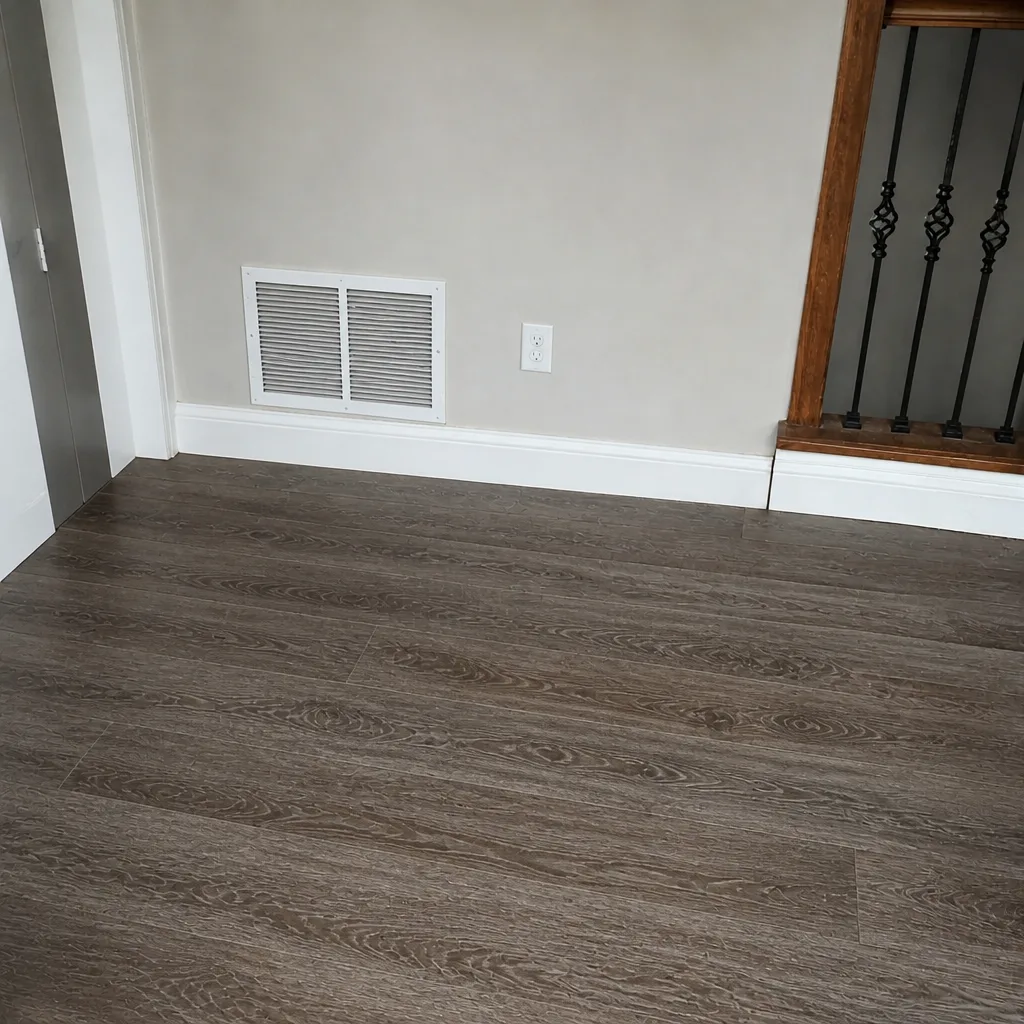
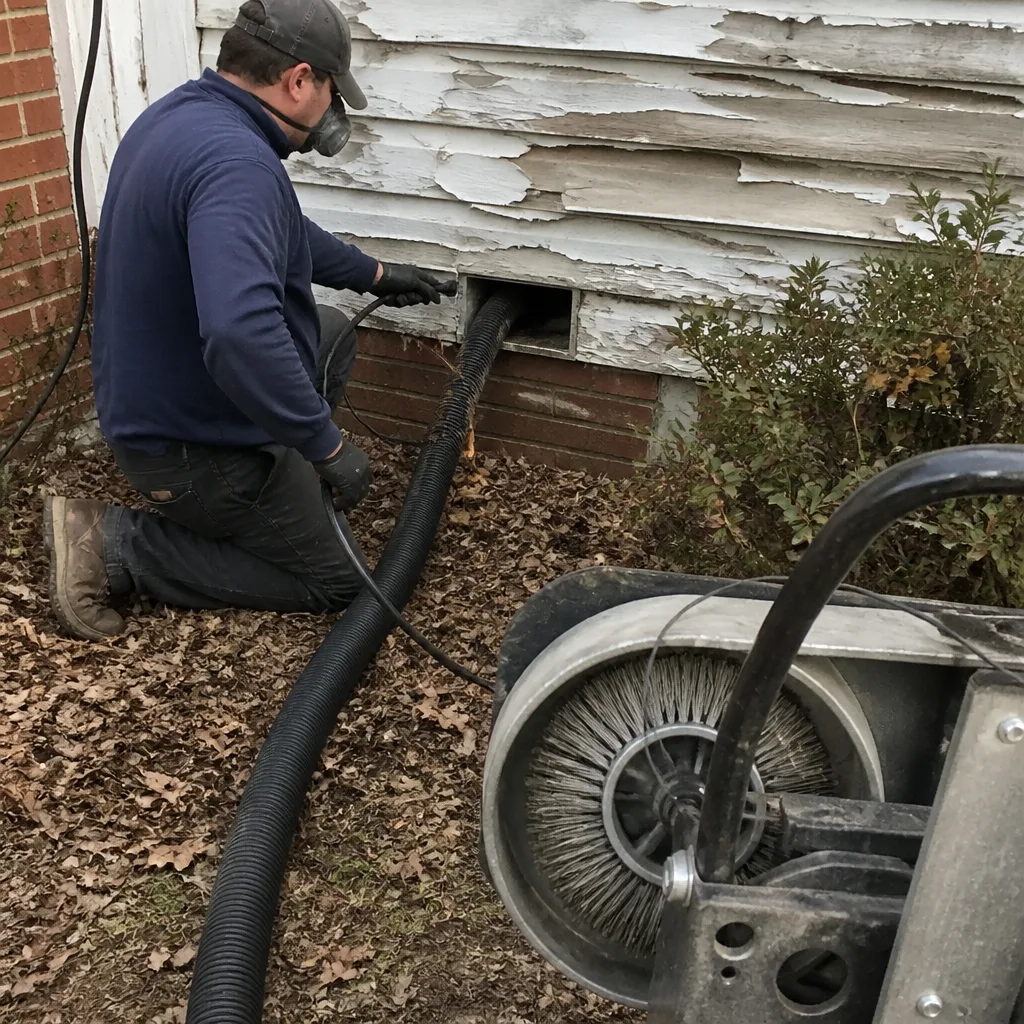
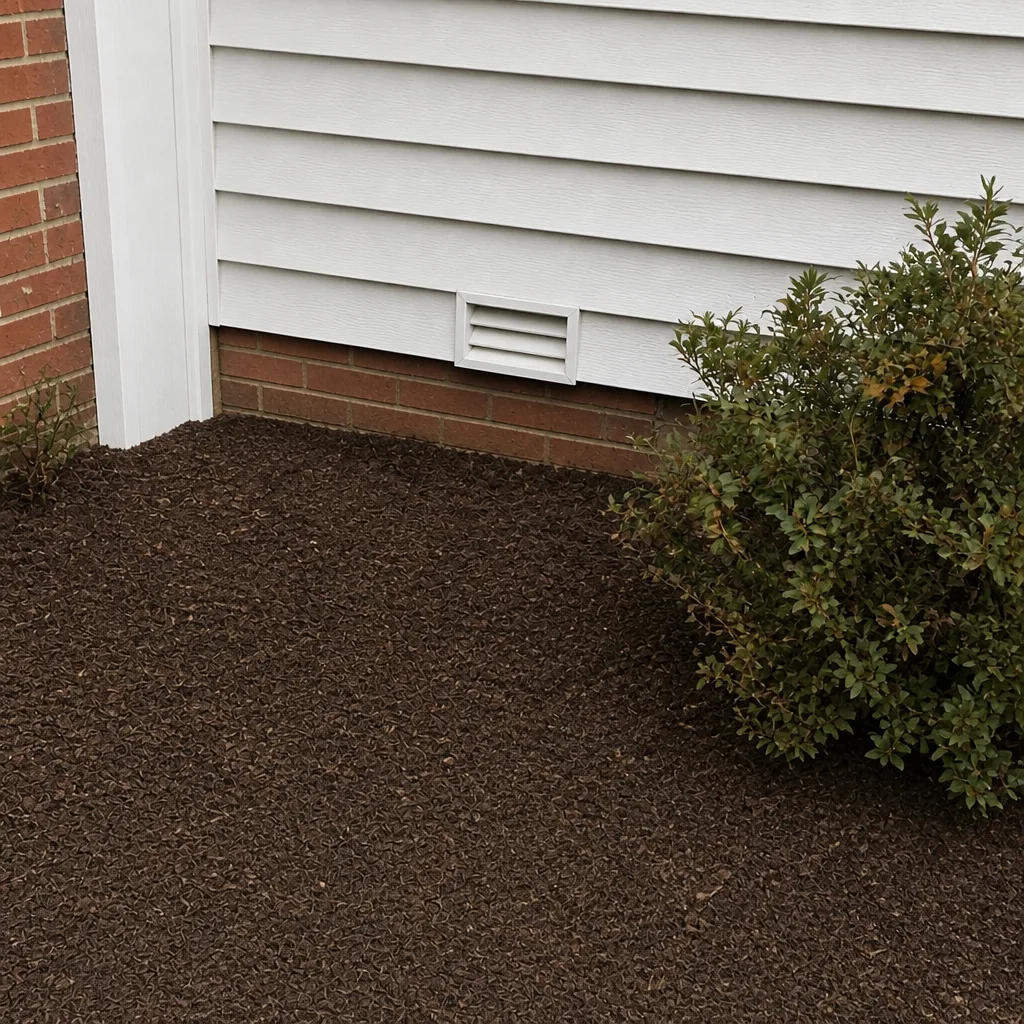
See the difference
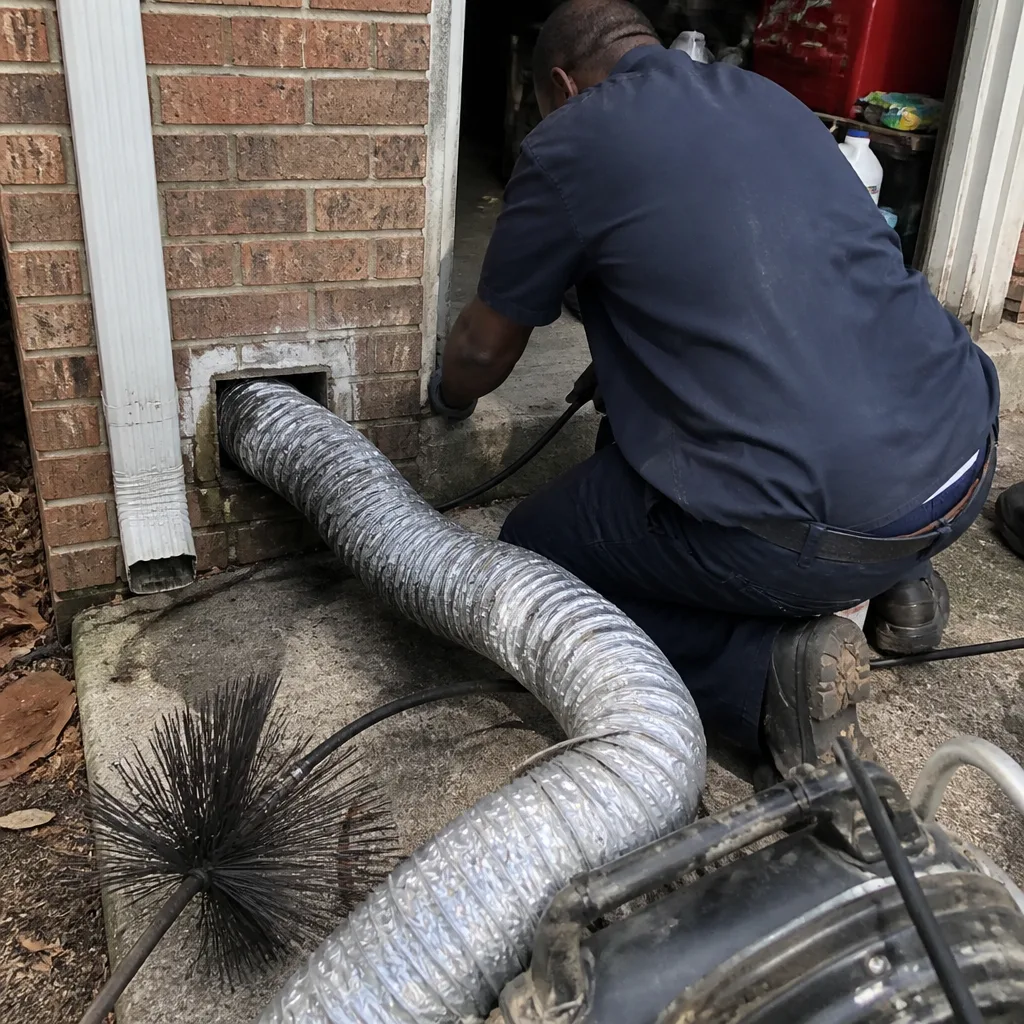 Before
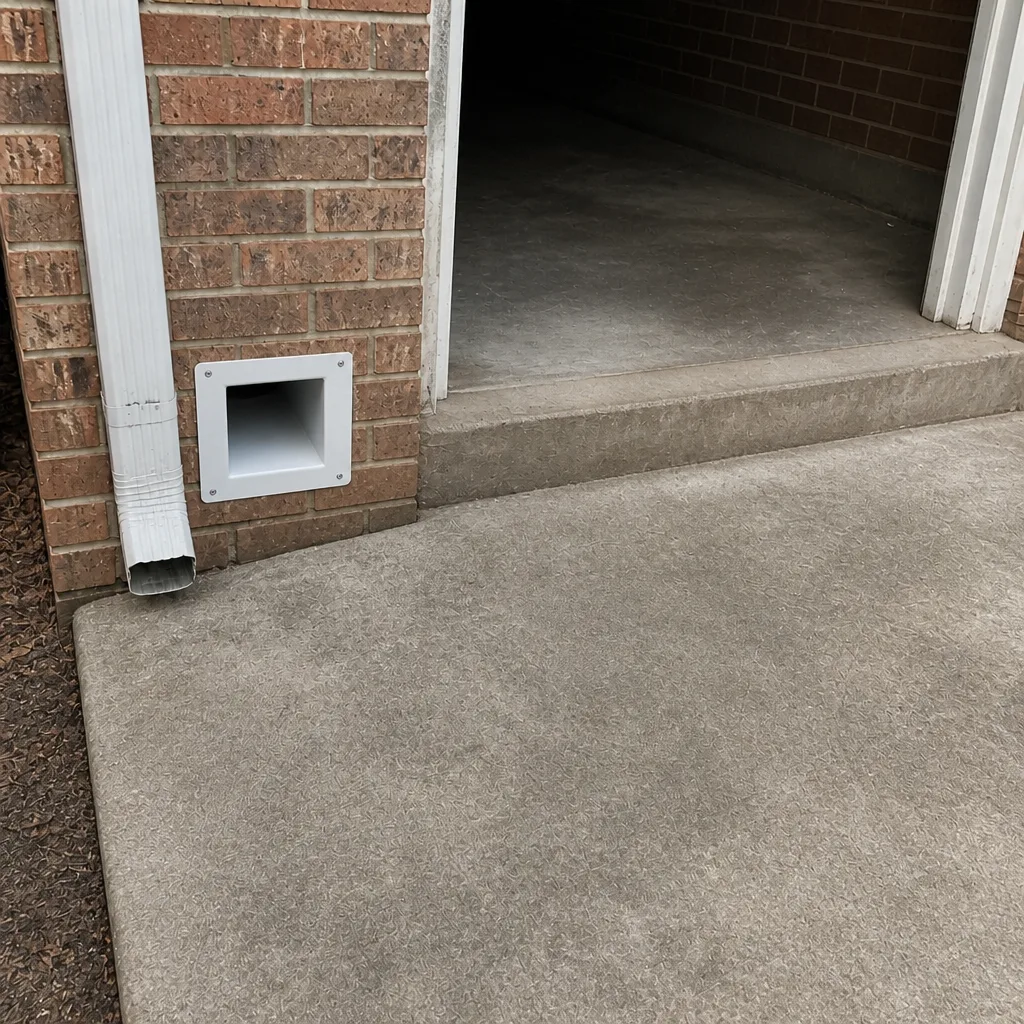 After
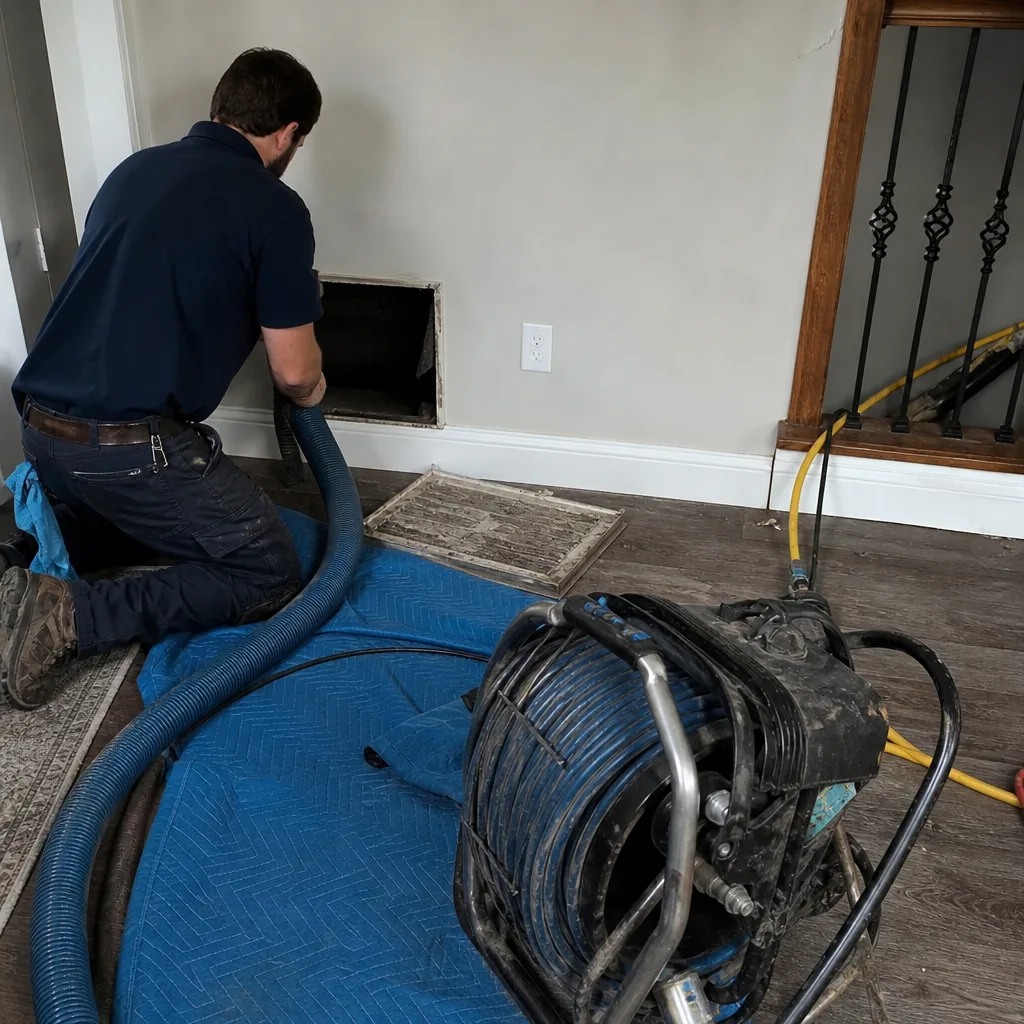 Before
 After
 Before
 After
When to Call a Professional
Any of the following situations should prompt a call to a specialist rather than a do-it-yourself attempt: fire or smoke has touched the home at all; water reached any part of the duct system or crawlspace; storm debris entered through a damaged intake; the home has had an extended period of HVAC inactivity; or visible mold or odor persists after a cleaning. For routine dust and debris, a scheduled cleaning is fine; for contamination from smoke, water, or debris, the response needs to be scoped, documented, and performed with professional HEPA and filtration equipment.
Our technicians have up to experience with professional-grade Rotobrush and Nikro systems, and we work with Honeywell and Aprilaire IAQ equipment to bring air quality back to a safe baseline. Duct Cleaning High Point offers free estimates in High Point. Call (888) 804-6957.
Frequently Asked Questions
No. Even a contained fire sends combustion byproducts into return registers, and running the system distributes them through every room. Shut the air handler down at the breaker, photograph visible soot, and schedule a camera inspection before any cleaning. Call (888) 804-6957 for an exact quote on the inspection – estimates are free.
In North Carolina’s warm, humid months, mold can establish in wet ductwork within a few days. That’s why post-flood duct inspection should happen within 24 hours of the water being pumped out. Any saturated duct board or flex should be replaced, not dried. Call (888) 804-6957 to schedule an inspection.
Ask for pre-remediation camera scope footage, a written scope of work, before-and-after photos, and moisture readings if water intrusion is involved. Get these before work starts, not after. This package is what supports an insurance claim. Call (888) 804-6957 if you need an estimate with documented scope included.
Cheap quotes usually skip camera scoping, HEPA extraction, and media sealing – the three steps that actually address smoke and water contamination. They also often lack duct repair capability, which leaves leak damage unaddressed. Ask what equipment is being used and whether documentation is included. Call (888) 804-6957 for an honest whole-system estimate.
Camera footage before and after is the check. Any reputable remediation should hand over post-cleaning video of the duct trunks, plus a written report of what was removed, sealed, or replaced. If a contractor can’t provide that, ask why. Call (888) 804-6957 to schedule an estimate with documented findings.
Yes. Filters capture fine soot and mold spores that aren’t visible to the eye. Change filters as part of the restart checklist, and choose the MERV rating your equipment is designed for. A filter too restrictive for the blower creates its own problem. Call (888) 804-6957 for guidance on options.
The Bottom Line
Three things decide the outcome of a duct emergency in High Point: shut the system off before using it, document what was there before anyone touches it, and use equipment that actually removes contamination rather than spreading it. Fire needs HEPA extraction and media sealing, not routine dust cleaning. Water needs speed and material replacement. Storm debris needs duct repair alongside cleaning. If you’re standing in the aftermath with the fan switched off and the phone in your hand, you’re already ahead of most homeowners. The next call is the one that matters.
Call (888) 804-6957 for a free estimate. We answer 24/7. Fast dispatch, 7am-7pm, Sunday through Friday. Bring us into the conversation early – pre-remediation documentation is far easier to build than to reconstruct after the fact.
Written by the team at Duct Cleaning High Point.