
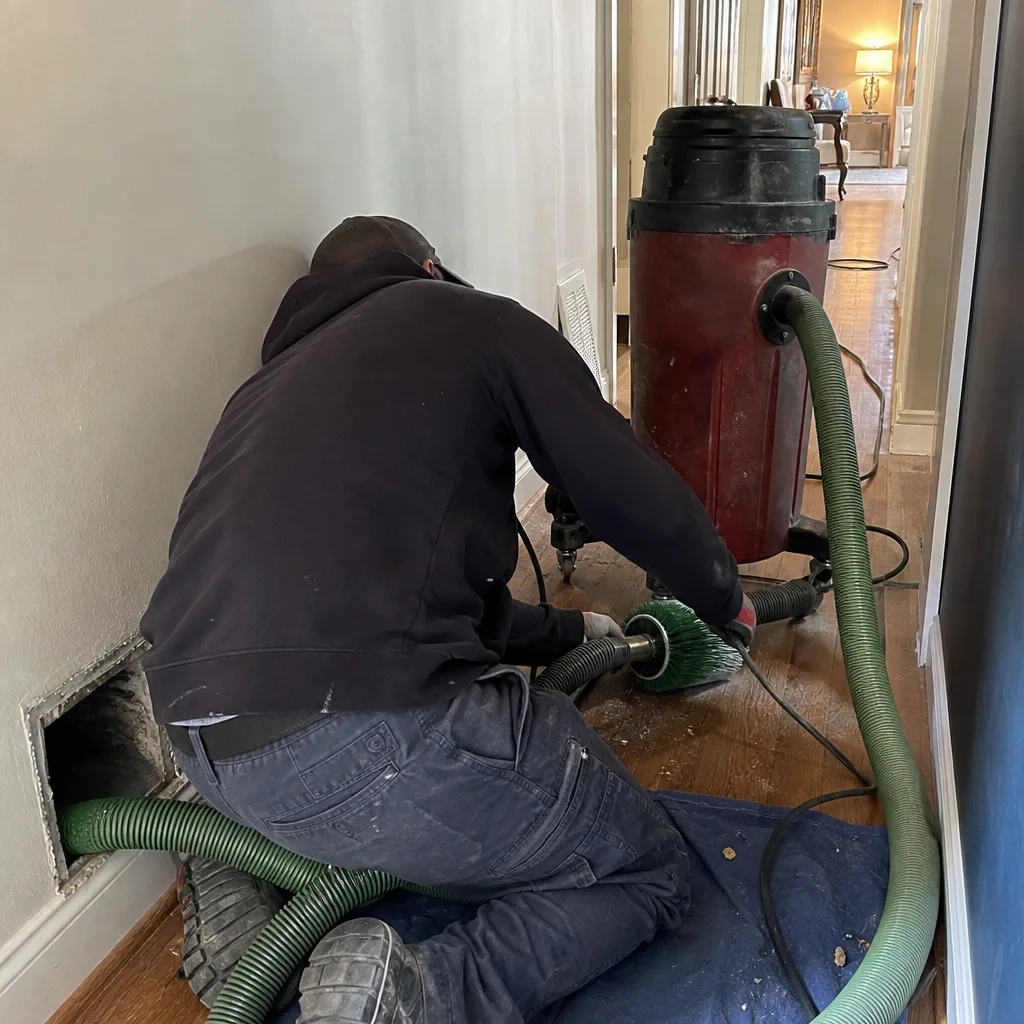
Last updated November 15, 2026
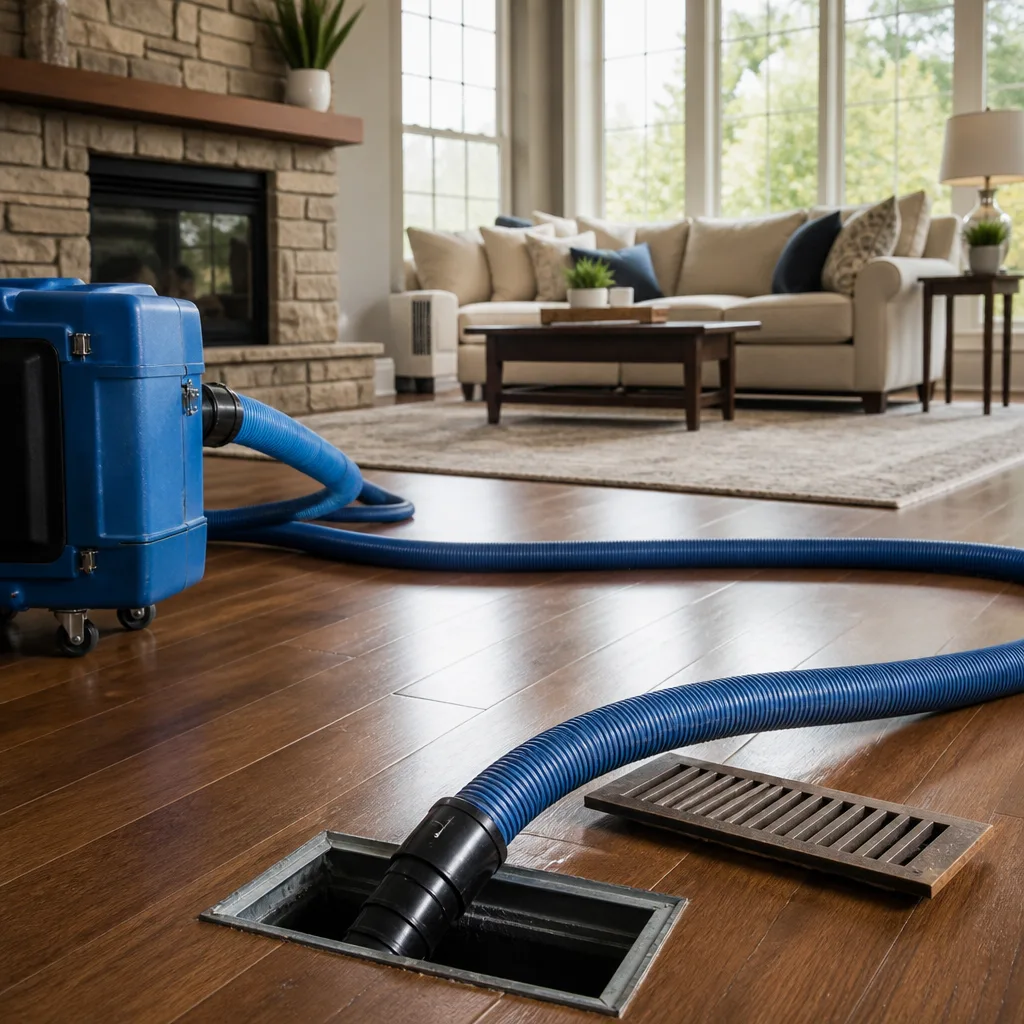 Whole-home duct cleaning
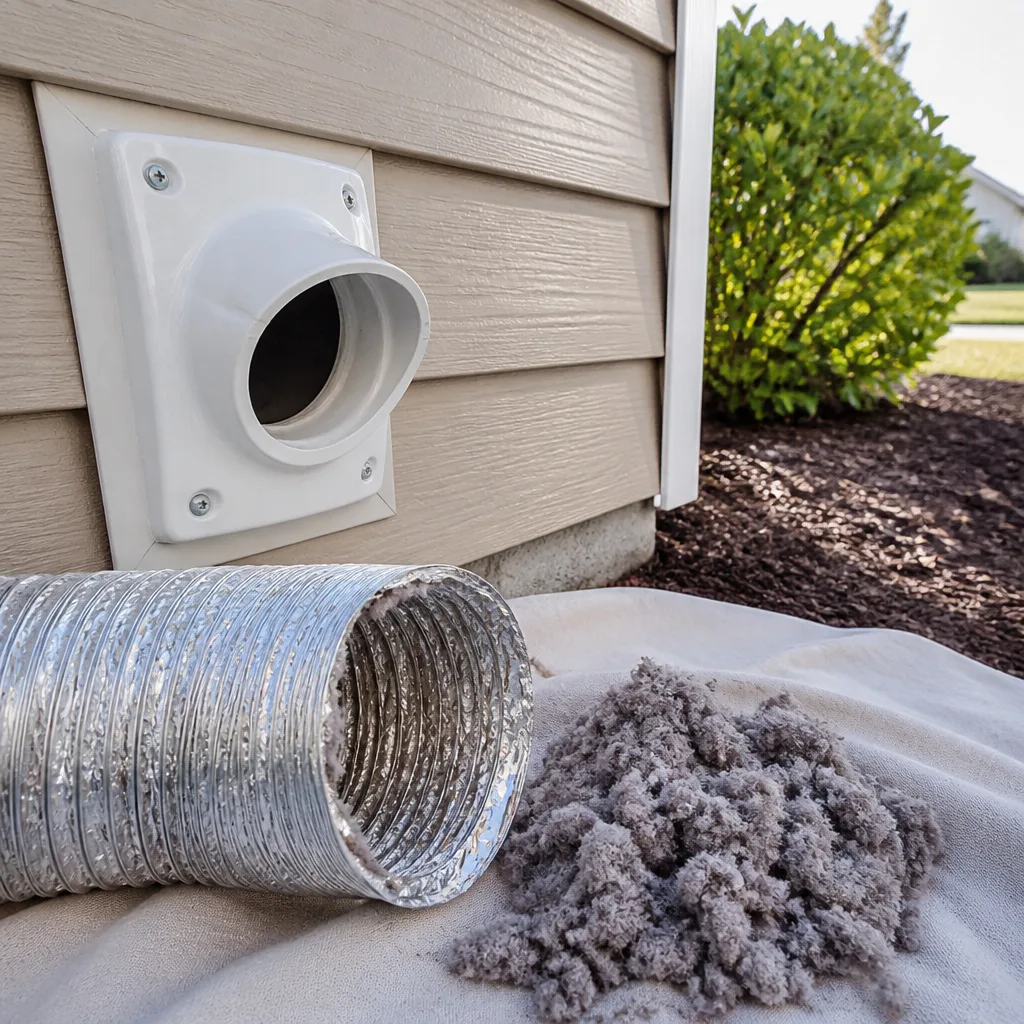 Dryer vent cleaning
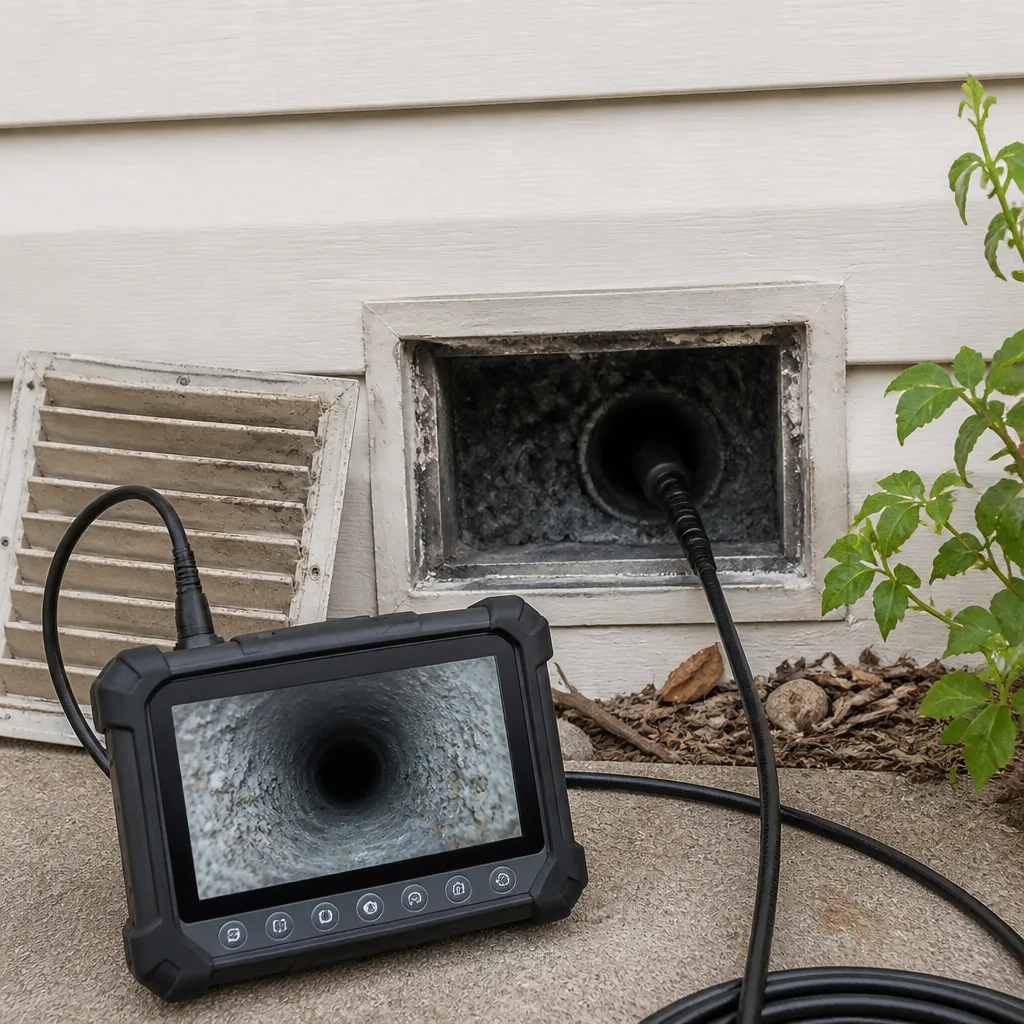 Camera inspection
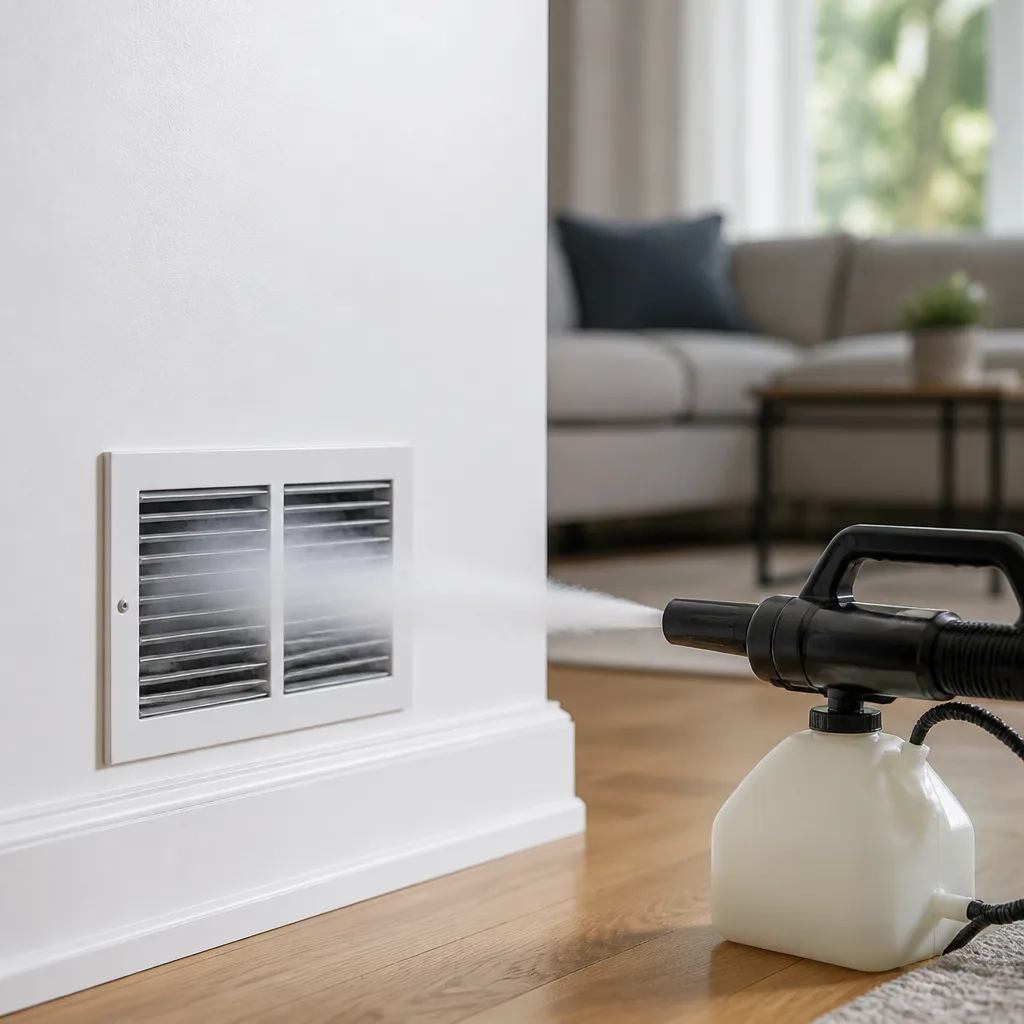 Sanitizing & deodorizing
Whole-system duct and dryer vent check with before-and-after photos - you see exactly what came out of your vents
That "$99 whole-house special" is a bait ad - the real number appears once they are in your hallway, or the "clean" is a shop-vac at the register. We photograph the inside of your ducts before and after instead.
Air Duct Cleaning Cost Breakdown: The High Point Homeowner’s Reference for 2026
When two quotes for the same house land $200 apart, the gap usually isn’t profit margin. It’s scope. One contractor is quoting “duct cleaning” as a quick vacuum pull on each register. The other is quoting a negative-pressure cleaning with camera inspection, blower wheel cleaning, and return plenum access. Same house, same number of vents, two completely different jobs.
That difference is what this guide teaches you to read. Instead of chasing the lowest number, you’ll learn how High Point pricing actually gets built: what a register costs to clean properly, how system type changes the labor, how trunk line footage moves the total, and which add-ons are real services versus pressure at the door. By the end you’ll be able to sketch your own estimate before you ever pick up the phone.
Quick Answer
A complete air duct cleaning for a typical single-family home in High Point runs roughly $350 to $850 in 2026, with most homes landing near the middle. Larger homes, multi-zone systems, heavy contamination, or difficult duct access push the total higher, while a compact ranch with short accessible runs comes in toward the low end. The written estimate you receive on site sets the final price, and a legitimate contractor agrees that price with you before any work begins – one flat price per system, not a per-vent meter running.
Styles & brands we work with
- Whole-home duct cleaning
- Dryer vent cleaning
- Camera inspection
- Sanitizing & deodorizing
Table of Contents
- How air duct cleaning pricing is actually built
- The cost-per-register model for High Point homes
- How duct type changes the price
- Legitimate add-ons versus upsell pressure
- The low-bid red flag, in plain math
- Value comparison: cost per year versus efficiency loss
- What affects your specific quote most
- Common mistakes to avoid
How Air Duct Cleaning Pricing Is Actually Built
Duct cleaning quotes in High Point are constructed from four cost inputs, and every honest estimate is a blend of them. Understanding these four lines lets you compare bids on equal footing instead of comparing a full job against a partial one.
- Labor hours. The largest single driver. A thorough clean of a typical single-family system takes a two-person crew several hours. The number of registers, the length of trunk runs, and the accessibility of the plenum all change the clock.
- Equipment and setup time. Professional systems using Rotobrush, Nikro, and Abatement Technologies equipment have to be staged, connected to the supply and return, and set up to maintain negative pressure so dislodged dust leaves the system rather than recirculating into your living room. Setup is real time on the invoice.
- Scope of what’s actually cleaned. Supply runs, return runs, trunk lines, the plenum, and the blower cabinet are separate line items. Some quotes cover only the branch runs. Look for that on the page.
- Condition and contamination. A lightly dusty system cleans faster than one with visible debris, microbial growth, or rodent evidence. Contamination level is a scope decision, not a pressure tactic.
The four inputs explain the $200 gap from the opening. A low quote often just omits one of them – usually labor hours and plenum access – and then either stops there or prices the missing pieces as add-ons after arrival. In our experience across High Point homes, the honest estimate names all four inputs up front and agrees to one flat price per system before work starts.
The Cost-Per-Register Model for High Point Homes
You can sketch your own estimate before calling anyone. Start with registers, then layer footage and access on top. Here’s the working model we use to reason about High Point-area jobs:
- Base cleaning (supply and return runs, per register): roughly $25 to $45 per register when bundled into a whole-system job. A home with 12 registers lands somewhere around $300 to $540 in the base band.
- Trunk line footage: expect roughly $5 to $12 per linear foot of trunk line cleaned beyond the branch runs. A home with 40 feet of accessible trunk adds meaningfully to the total.
- Return plenum access: a real line item when the return trunk is boxed in, hard to reach, or requires extra machine hookups. Adds often around $50 to $150.
- Blower cabinet cleaning: usually around $50 to $125 because the motor side must be protected before the cabinet is cleaned.
The critical warning here: a per-register model is a reasoning tool, not a coupon. It’s how you sanity-check a quote before you accept it. If a contractor quotes per vent at the door – and the price climbs vent by vent as they walk your home – that’s the bait-and-switch pattern this industry has earned a reputation for. A legitimate High Point contractor gives you a whole-system price in writing, agreed before work begins, and does not meter your invoice as they count registers.
The tighter your home’s system, the lower the base band typically is. Ranch homes with short branch runs and easy attic access price lower than two-story homes with long runs, tight chases, and a second zone. Downstairs main-floor registers in the Piedmont Triad climate typically see less dust loading than returns in unconditioned attic space, which changes the cleaning time too.
How Duct Type Changes the Price
The material inside your walls matters to the invoice. Each duct type requires different equipment time, which shows up in the price.
- Flexible duct (flex). The most common in newer construction in High Point. Flexible runs require careful pressure control – too much suction and the liner can collapse – and heavier buildup can settle into the corrugations. Cleaning is usually moderately priced. It’s the duct type most prone to kinks and sagging, so an inspection of the runs is part of a real quote.
- Sheet metal duct. Common in older homes near Uptown and areas built mid-century. Rigid metal cleans efficiently with rotary equipment, and the surfaces are easy to verify before and after. Often the most straightforward to price.
- Fiberboard duct board. Common in some attic runs. Requires lower pressure and careful brush selection because the surface can fray if handled roughly. Expect a slightly higher labor time – the equipment has to be dialed back. A contractor who doesn’t flag fiberboard as its own consideration is telling you something about their experience with it.
Mixed systems – some flex, some metal, some duct board – are the norm in High Point homes, and a real estimate itemizes the mix. When we walk a system, the material determines which tools come off the truck. The Rotobrush rotary system handles flexible runs gently, while the Nikro and Abatement Technologies equipment covers plenum and higher-volume work. Knowing which system gets which tool is why duct type is a cost line, not just a description.
Legitimate Add-Ons Versus Upsell Pressure
Some add-ons are genuine adjacent services. Others are pressure dressed up as a scope upgrade. Here’s how to separate them.
Coil cleaning is a real service. The evaporator coil inside your air handler collects dust and can grow biological film that reduces heat transfer. Cleaning it is legitimate work with its own equipment time, typically in a modest range relative to the full clean. If your coil is visibly fouled during the inspection, it’s a reasonable next step – and doing it alongside duct cleaning makes sense because the system is already open.
Sanitizer fogging sold before contamination is confirmed is not. A fog that’s pitched before anyone has looked inside the ductwork is answering a question you don’t yet know the answer to. The proper sequence is: inspect, show the homeowner what’s found, then recommend a treatment that matches what’s actually there. If the fog goes in before the camera, walk away. In our experience, the “we show you what we find” order is the tell.
Honeywell and Aprilaire IAQ products sit in a separate category. A whole-home filtration or humidity solution is a project, not a duct cleaning add-on. When the ductwork is clean and the air quality question still isn’t answered, upgrading the filtration side – for instance a Honeywell media cabinet or an Aprilaire system – becomes a real conversation. But it isn’t a same-day pressure sale, and any contractor who treats it that way is telling you something.
Duct repair is the logical next step when cleaning reveals damage. If the inspection finds collapsed flex, separated joints, or leaks at the trunk, cleaning alone won’t fix the airflow or the efficiency. Structural repair is a real service, and a specialist who can do both – not just clean – saves you a second contractor. That’s part of why we offer air duct cleaning and repair as linked capabilities rather than separate line items.
The Low-Bid Red Flag, in Plain Math
A “$99 whole-house duct cleaning” coupon is a math problem. Let’s run it.
A two-person crew has payroll, equipment overhead, insurance, and fuel. A full system clean of a typical High Point home takes roughly three to four hours of on-site time, start to finish, plus drive time on either end. If a crew could clean your entire system in 45 minutes, the $99 price might almost work for the contractor – almost. But a full clean with proper negative pressure and plenum access does not fit in 45 minutes. That’s the disconnect.
The math tells you one of three things is happening:
- The scope isn’t what you think. The $99 is for a partial job – supply runs only, or a quick per-register vacuum without plenum or blower access. When the technician arrives, the quote for the full job you actually need climbs.
- The add-on pressure happens at the door. The low entry price is bait for a service call where the real quote is presented on-site after the technician is standing in your living room. That’s the classic bait-and-switch format.
- The work is being rushed. If a crew genuinely cleans a full system for $99, they are moving fast enough to compromise thoroughness. There is no version of this where all three – thoroughness, equipment time, and price – hold together.
Here’s what a real job looks like in terms of scope, not dollars: two technicians, several hours, camera inspection of supply and return, plenum and blower access, negative pressure maintained with Abatement Technologies equipment, and before-and-after photos of your own ductwork. If a quote doesn’t describe that sequence, the price is being built on a smaller job than the one you need. Call (888) 804-6957 for a free estimate based on all four cost inputs above. We answer 24/7. Fast dispatch from 7am to 7pm, Sunday through Friday.
Value Comparison: Cost Per Year Versus Efficiency Loss
The right way to think about duct cleaning cost isn’t the invoice total – it’s the annualized number. If a full clean runs $500 and a proper cleaning interval is every three to five years, that’s roughly $100 to $165 per year. That’s the number to compare against what dirty ductwork costs you in other ways.
Dirty ductwork and a fouled coil reduce the efficiency of your HVAC system. A system working harder to push air through restricted or contaminated ducts uses more energy to deliver the same comfort. The exact efficiency penalty depends on your equipment, filter strategy, and how contaminated the system is – no honest contractor can give you a precise percentage without inspecting it. But the general direction is well established: restricted airflow costs money, and cleaning restores it.
There’s also the air quality conversation. If anyone in the household has allergy or asthma triggers, or you’ve noticed increased dust settling after filter changes, the argument for regular cleaning tightens. That’s not a marketing claim, it’s a practical one – what’s in the ducts ends up in the air you breathe. And for homes with a dryer vent that hasn’t been cleaned, there’s a separate paper: lint accumulation in the vent line is a documented fire hazard, which is why we treat dryer vent cleaning as its own service line rather than an afterthought.
For a property manager running several units, the math is the same per door. One scheduled cleaning per unit every three to five years, versus the cost of emergency HVAC service calls, tenant complaints, and premature equipment replacement, tends to settle the question.
What Affects Your Specific Quote Most
Two High Point homes with the same square footage can come in at meaningfully different prices. The modifiers below explain most of the variance. Understanding them lets you estimate your own job before the walkthrough.
- Number of registers and returns. The single biggest driver of the base cleaning price. Count yours before you call.
- Trunk line footage and layout. Long horizontal runs in the attic cost more than short basement or crawlspace runs because of the footage cleaned and the stabilization time.
- Accessibility. Attic-hatch access with a clear walkway is fast. Low-clearance chases, boxed-in returns, and second-zone systems in two-story homes add time and price.
- Duct material mix. Flex, sheet metal, and duct board each get different equipment treatment; mixed systems mean more machine changes.
- Contamination level. Visible debris, microbial growth, or pest evidence turns a routine clean into a longer, more careful job.
- Filter and IAQ setup. Homes with whole-home Honeywell or Aprilaire filtration systems have different airflow considerations and a filtration side worth inspecting alongside the ductwork.
The point isn’t to shade your estimate – it’s to know what questions to ask. A contractor who can speak to all six modifiers is pricing a real job. A contractor who quotes a flat number before seeing the system is either guessing or setting you up for a price change at the door.
Common Mistakes to Avoid
- Comparing a low coupon to a full-scope estimate. The coupon is for a smaller job than the one you need. Compare line items, not headline prices. If you can’t tell what’s included, ask for the scope in writing.
- Accepting a per-vent price at the door. A whole-system price, agreed in writing before work begins, is the correct format. A price that climbs by the register during the walkthrough is the bait-and-switch pattern.
- Letting a fog go in before the camera does. Sanitizer treatment before contamination is confirmed is upside-down logic. The inspection comes first, the treatment recommendation follows what’s found.
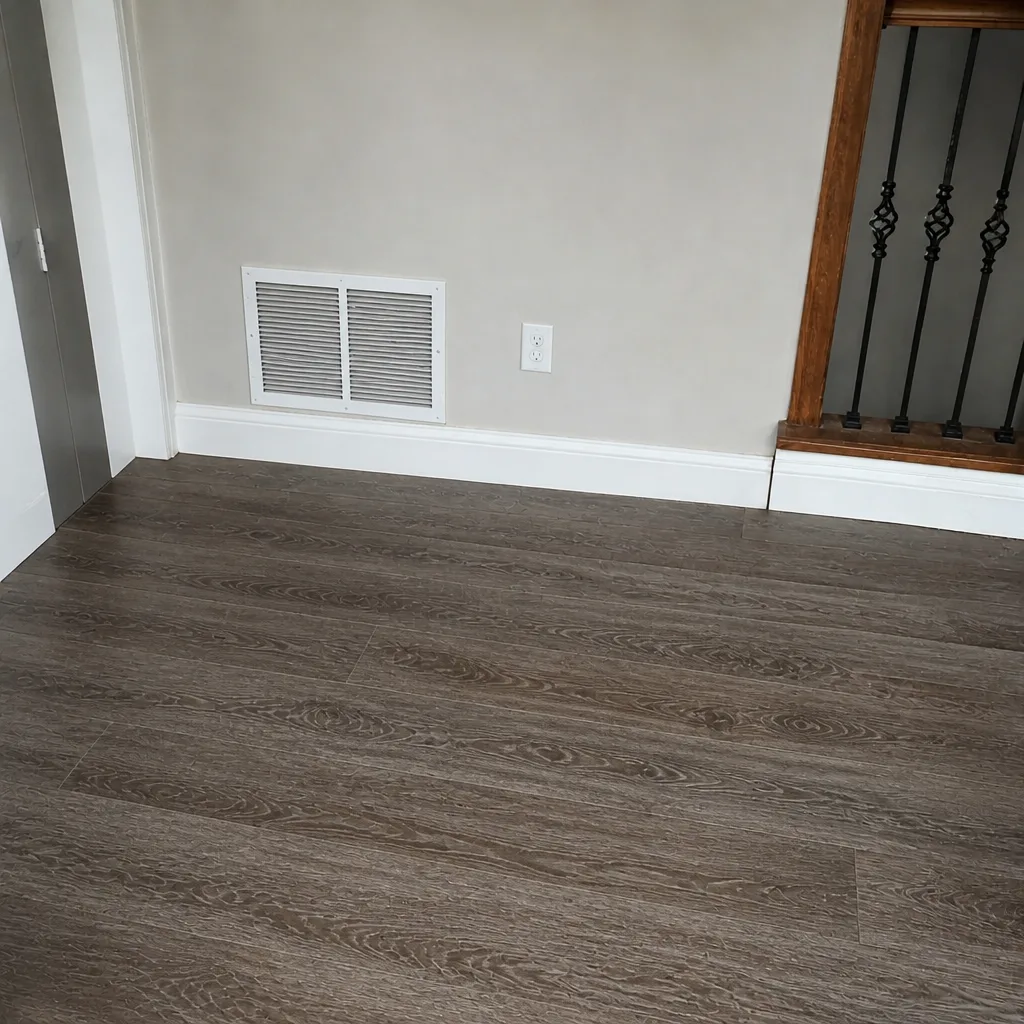
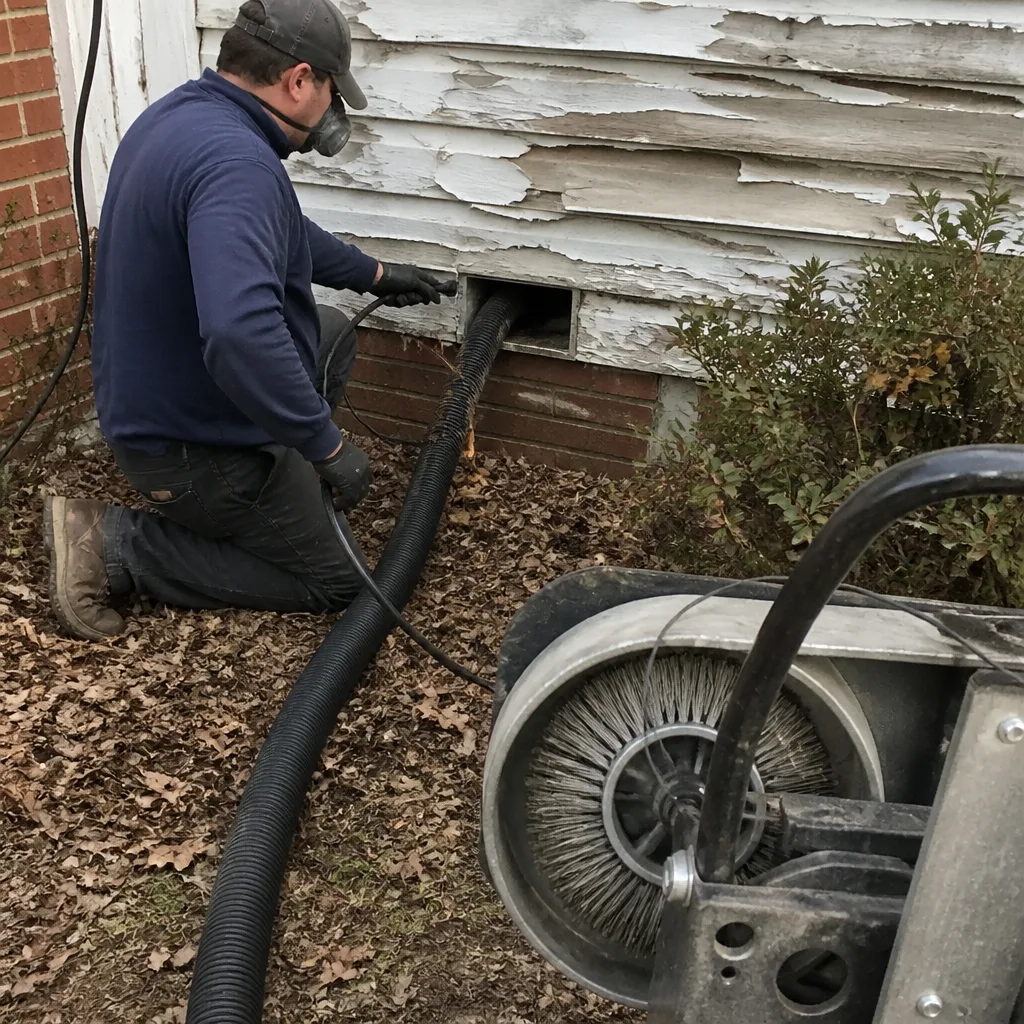
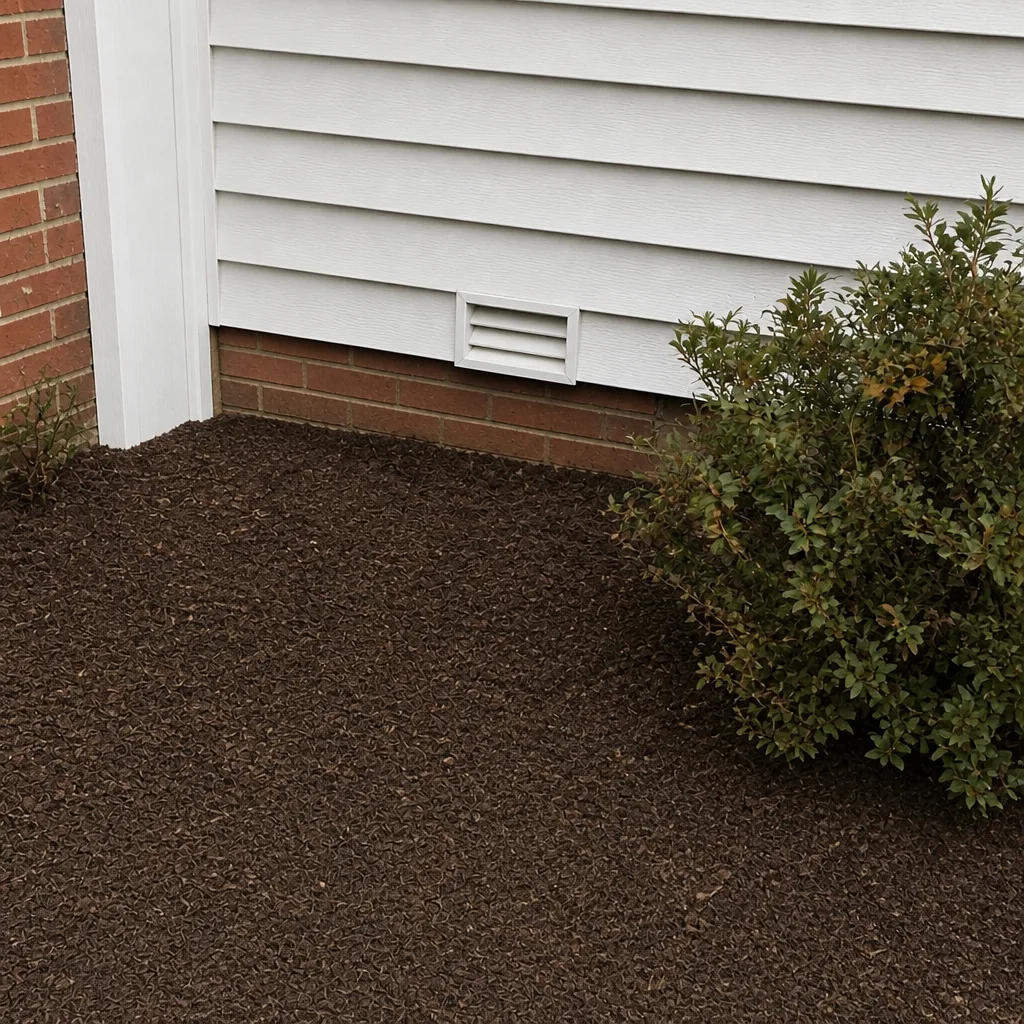
- Skipping the before-and-after photos. If you can’t see the duct interior before and after, you can’t verify the work was done. Ask for the photos before the crew packs up.
- Cleaning without checking duct integrity. A cleaning job that doesn’t notice separated joints or collapsed flex leaves the efficiency problem untouched. Cleaning and repair belong in the same conversation.
- Forgetting the dryer vent as a separate hazard. The lint line behind the dryer is a documented fire risk and an efficiency drag on its own. It’s not the same job as air duct cleaning and shouldn’t be priced as a free throw-in.
- Ignoring the Piedmont Triad pollen and dust cycle. High Point’s spring and fall pollen loads push more particulate into return air, and homes near the more established neighborhoods often see it in the return trunk first. A cleaning cadence that ignores the seasons tends to skip the load.
See the difference
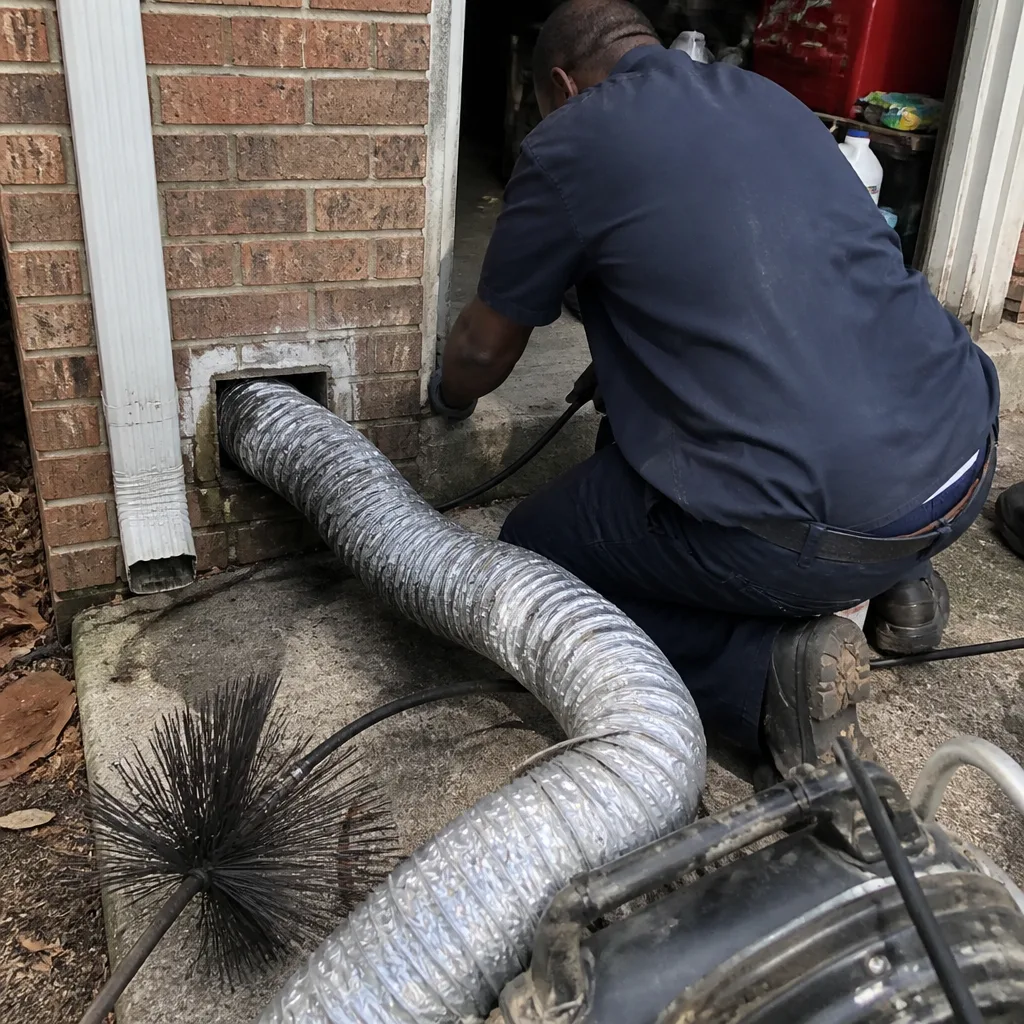 Before
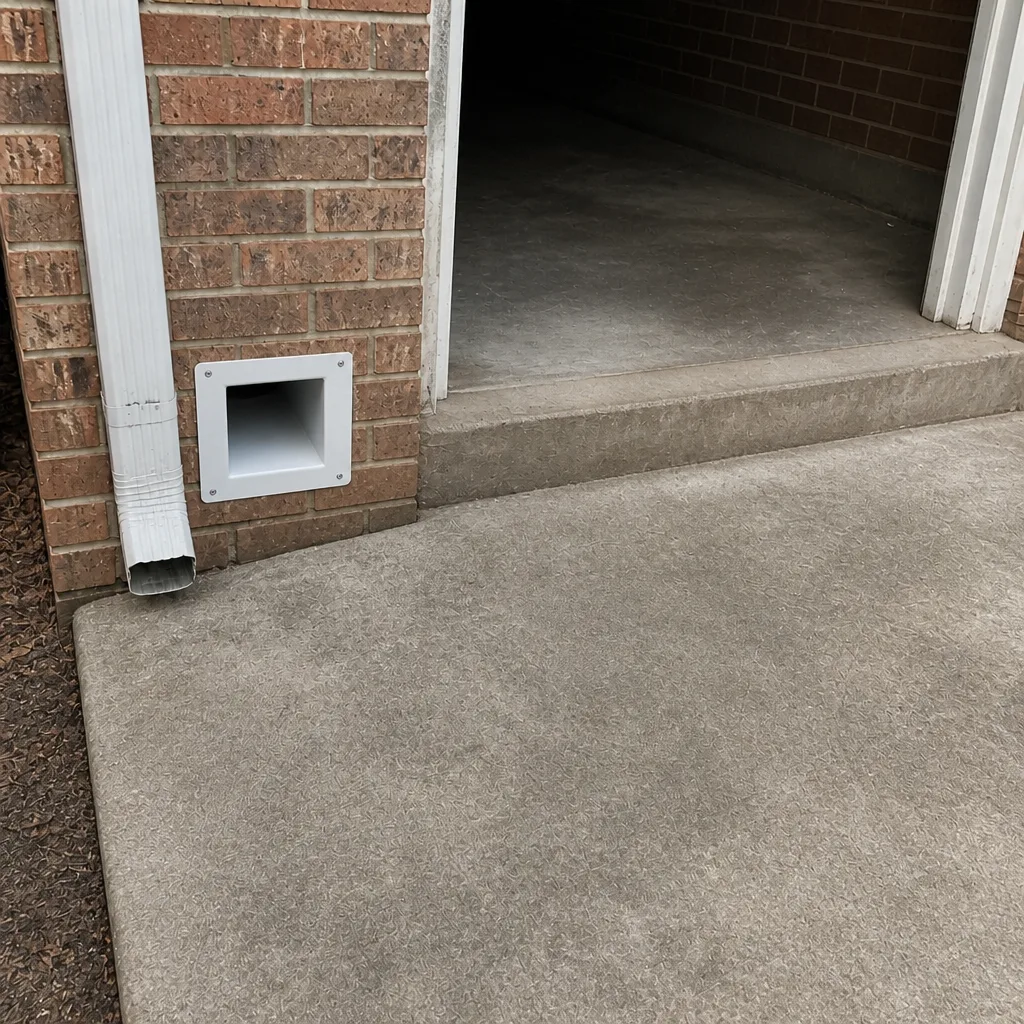 After
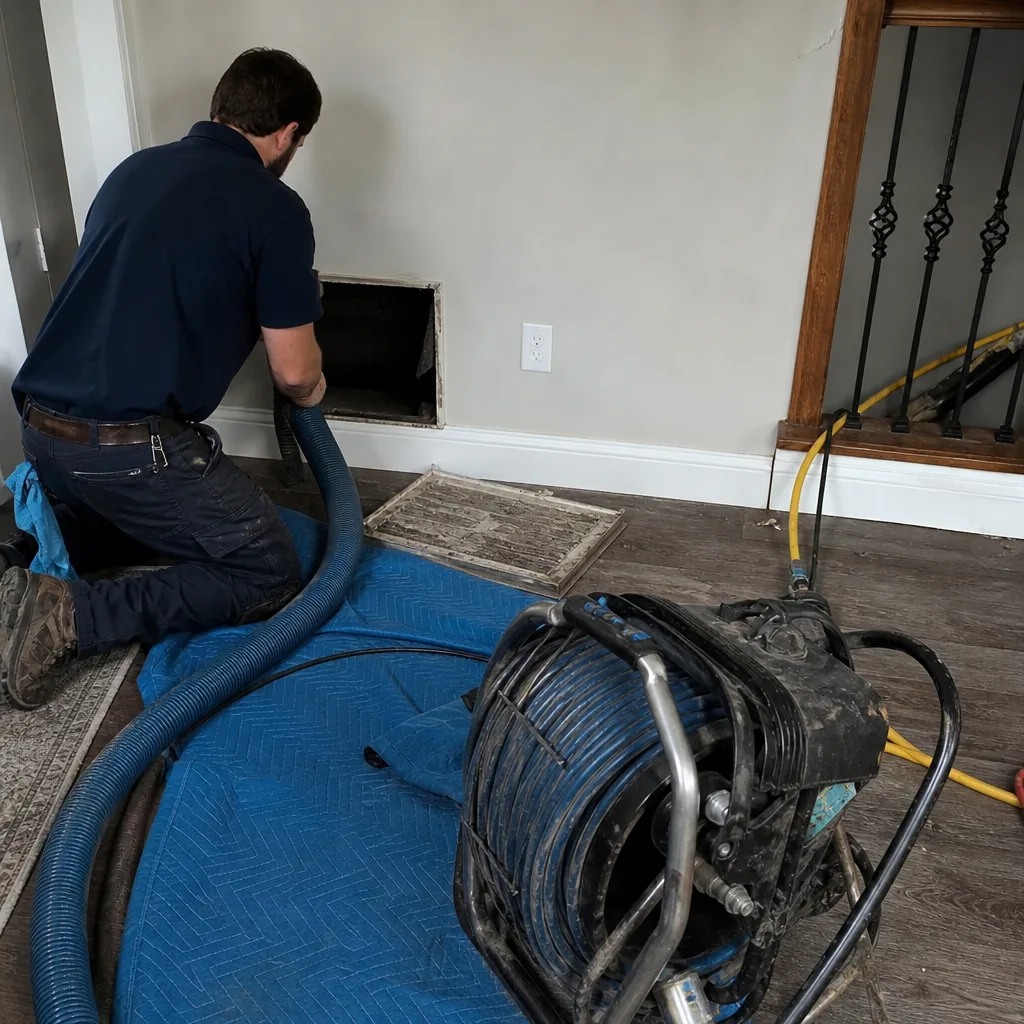 Before
 After
 Before
 After
When to Call a Professional
Call for a professional inspection when you can see a visible dust film on the register grilles after a recent filter change, when the return duct shows debris or pest evidence, when someone in the home has consistent allergy or asthma flare-ups with no other explanation, when your energy bills have climbed without a change in use, or when a recent HVAC service flagged airflow restriction. If the dryer lint trap is filling slower than usual, or the vent hood outside is producing less airflow, that’s a separate call – and it’s worth making. A legitimate cleaning isn’t an annual obligation; most homes are on a three to five year cadence. Duct Cleaning High Point offers free estimates in High Point – call (888) 804-6957. We answer 24/7. Fast dispatch from 7am to 7pm, Sunday through Friday.
Frequently Asked Questions
Typical whole-home pricing in High Point runs $350 to $850 for a standard single-family system, with larger, zoned, or heavily contaminated homes pushing higher. That range assumes a full scope – supply and return runs, plenum access, blower cabinet, and camera inspection. A written estimate built on your specific system sets the final number. Call (888) 804-6957 for an exact quote – estimates are free.
Because they’re usually quoting a smaller job. The $99 or $129 headline price typically covers a partial clean – supply runs only, no plenum, no camera, no blower – or is a low entry price that climbs at the door. A real full-scope clean takes a two-person crew several hours with professional equipment, and that math doesn’t fit a coupon price. Read the scope, not the headline. Call (888) 804-6957 to compare apples to apples.
Ask for before-and-after photos of your own ductwork, taken by the crew on site. If a contractor won’t shoot the interior of the ducts before and after, that’s your answer. We show you what we find – the photos are part of the service, not an upsell. Call (888) 804-6957 to schedule a free estimate.
Every three to five years is a reasonable interval for most High Point homes. Homes with pets, recent renovation, high allergy sensitivity, or heavier pollen exposure may push toward the shorter end. Ductwork that inspects clean doesn’t need the visit pushed sooner just because a calendar says so. Call (888) 804-6957 and we’ll tell you what the inspection shows.
Cleaning removes contamination from the interior of intact ductwork. Repair addresses structural problems – collapsed flex, separated joints, leaks at the plenum, or crushed runs that cleaning can’t fix. Both matter to airflow and efficiency, and the repair is often revealed during the cleaning inspection. We do both as a Duct Cleaning High Point specialty under one visit. Call (888) 804-6957 for a free estimate.
Yes, it’s a separate service with its own pricing. It matters because lint accumulating in the dryer vent line is a documented fire hazard, and a restricted vent makes the dryer run longer and use more energy. It’s one of the highest-value maintenance calls a High Point homeowner can make. Call (888) 804-6957 to add it to the visit.
Yes, and the two work together. A Honeywell or Aprilaire filtration system catches a lot, but the duct interior still accumulates dust over years, and the coil still collects film. Cleaning the ductwork is the reset; the filtration keeps the reset longer. If you don’t have filtration, adding it to clean ductwork is where whole-home air quality actually moves. Call (888) 804-6957 for a free assessment of your High Point home’s setup.
The Bottom Line
Duct cleaning pricing in High Point is built from four inputs – labor hours, equipment setup, scope, and contamination – and every honest estimate reflects all four. A reasonable full-scope clean for a typical home runs $350 to $850 and gets amortized over three to five years, which works out to a modest annual cost compared to the efficiency loss of dirty ductwork and a fouled coil. The red flags to remember: per-vent pricing at the door, sanitizer fogging before the camera runs, no before-and-after photos, and a $99 coupon whose math doesn’t fit a real job. Professional-grade equipment, residential care, and a flat price agreed before work starts – that’s what separates a duct cleaning from a duct sales call.
Call (888) 804-6957 for a free estimate. Our technicians have up to experience, we answer 24/7, and fast dispatch runs from 7am to 7pm, Sunday through Friday.
Written by the team at Duct Cleaning High Point.