
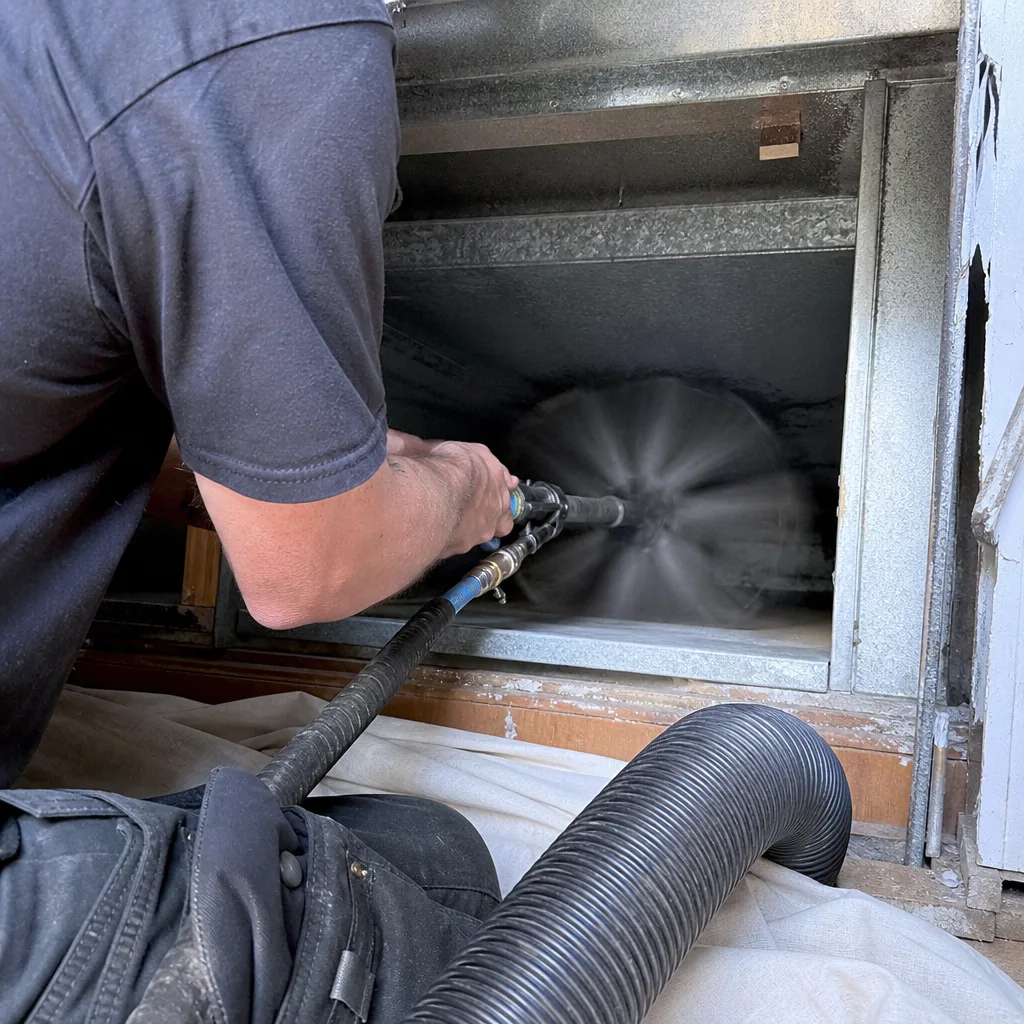
Last updated November 15, 2026
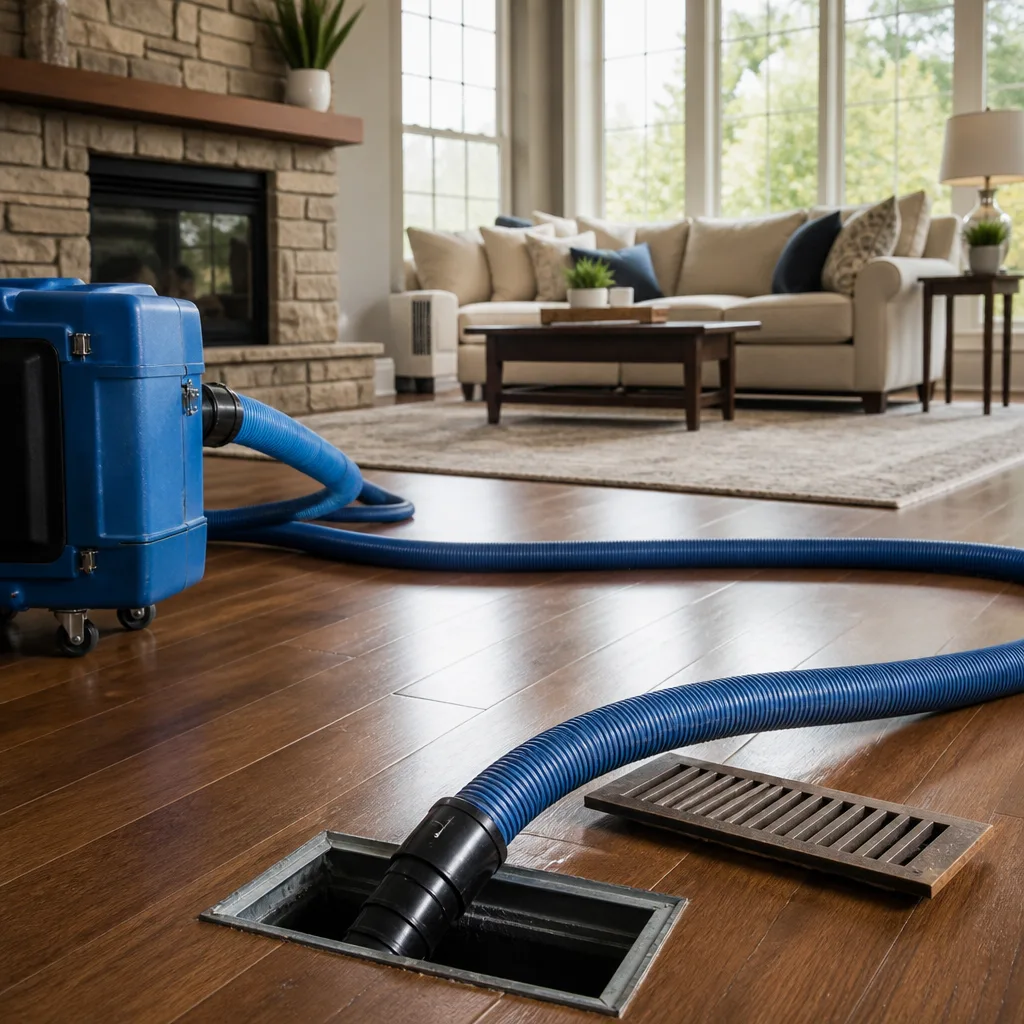 Whole-home duct cleaning
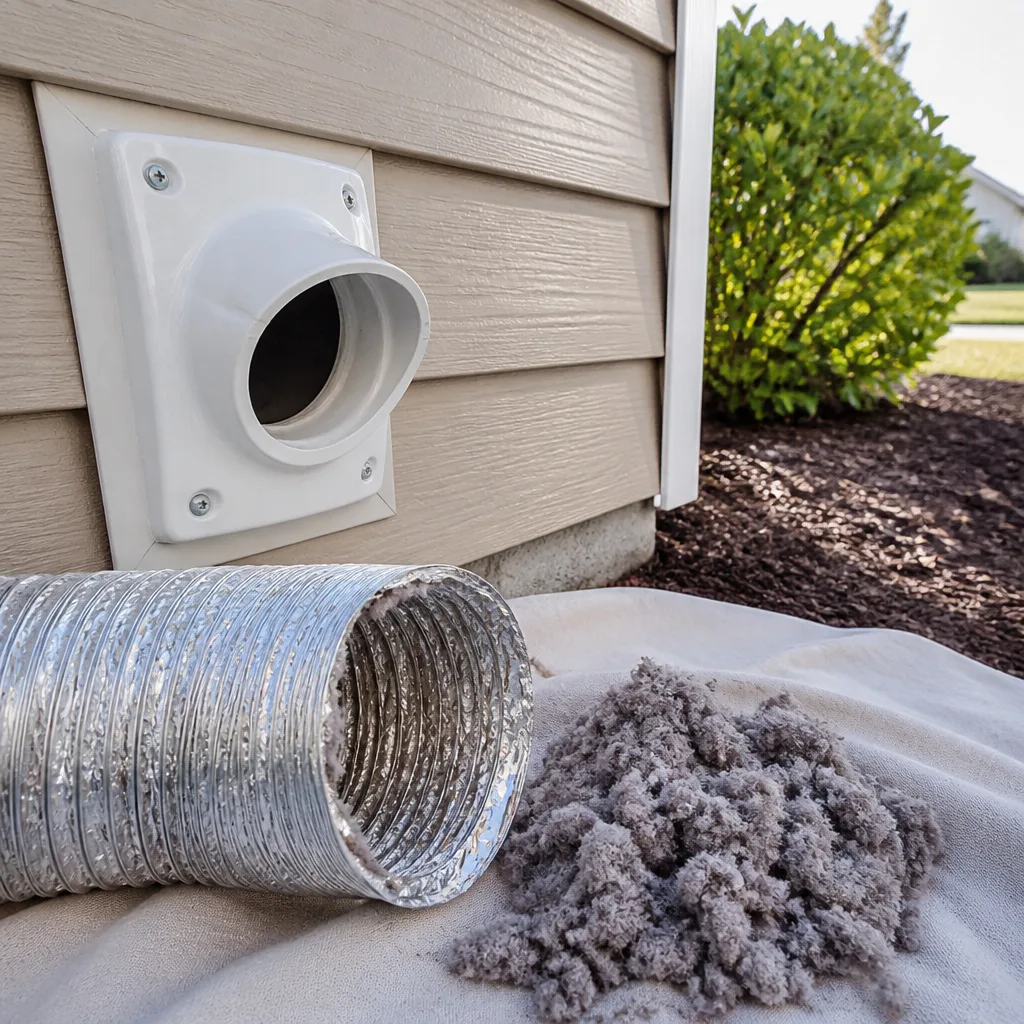 Dryer vent cleaning
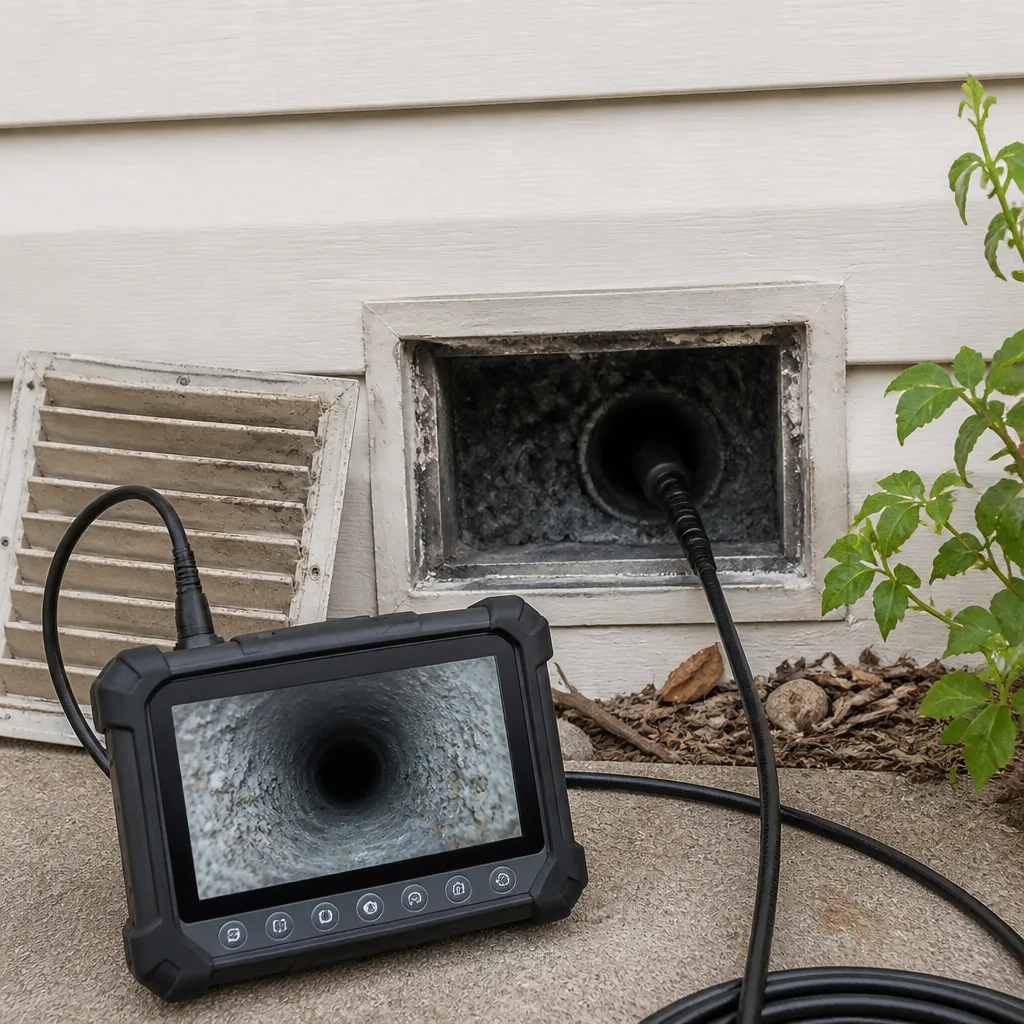 Camera inspection
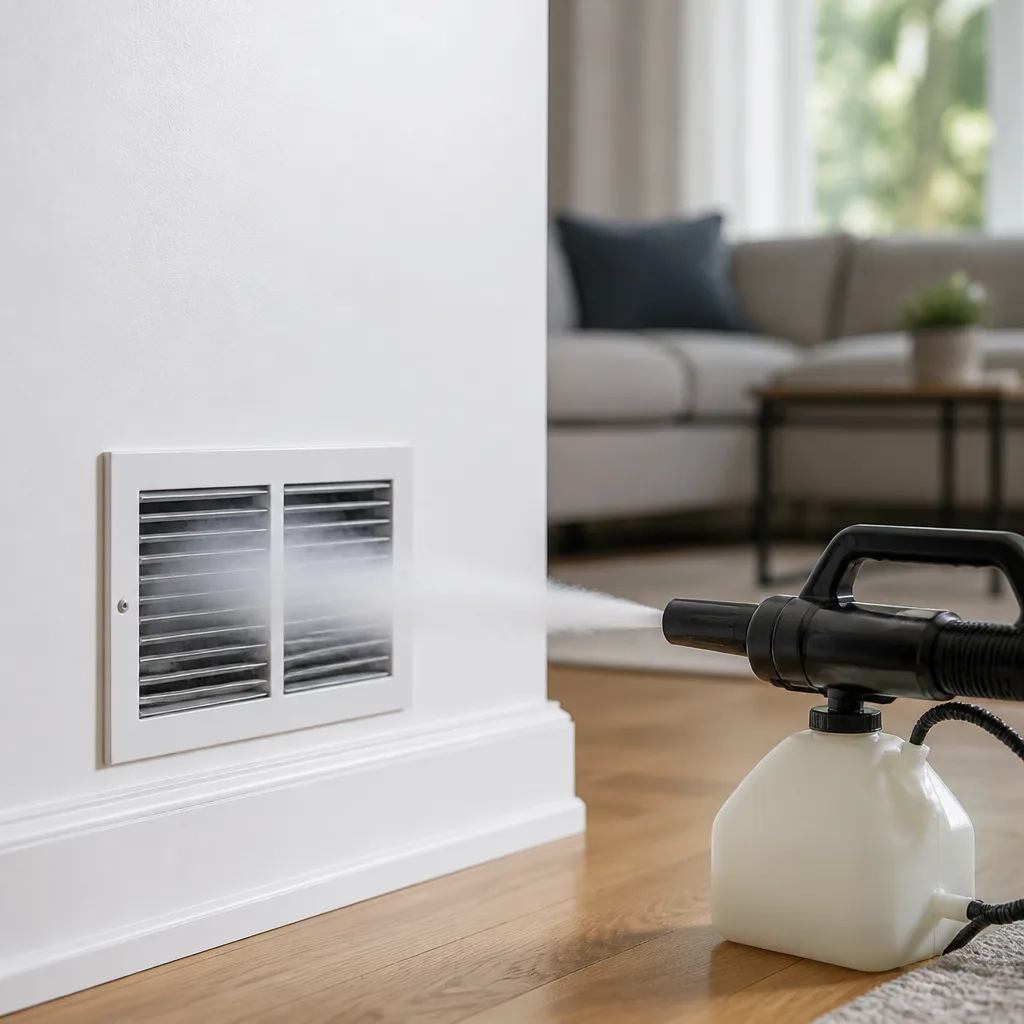 Sanitizing & deodorizing
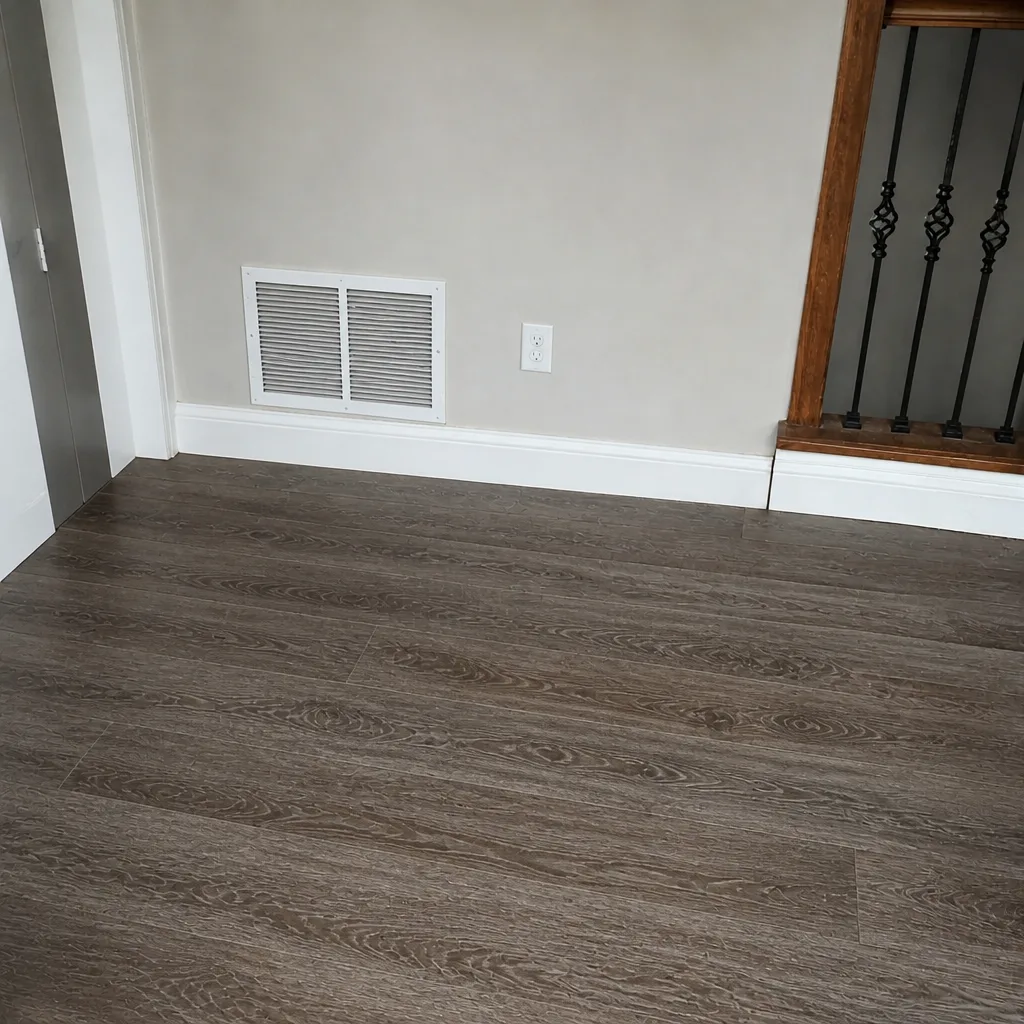
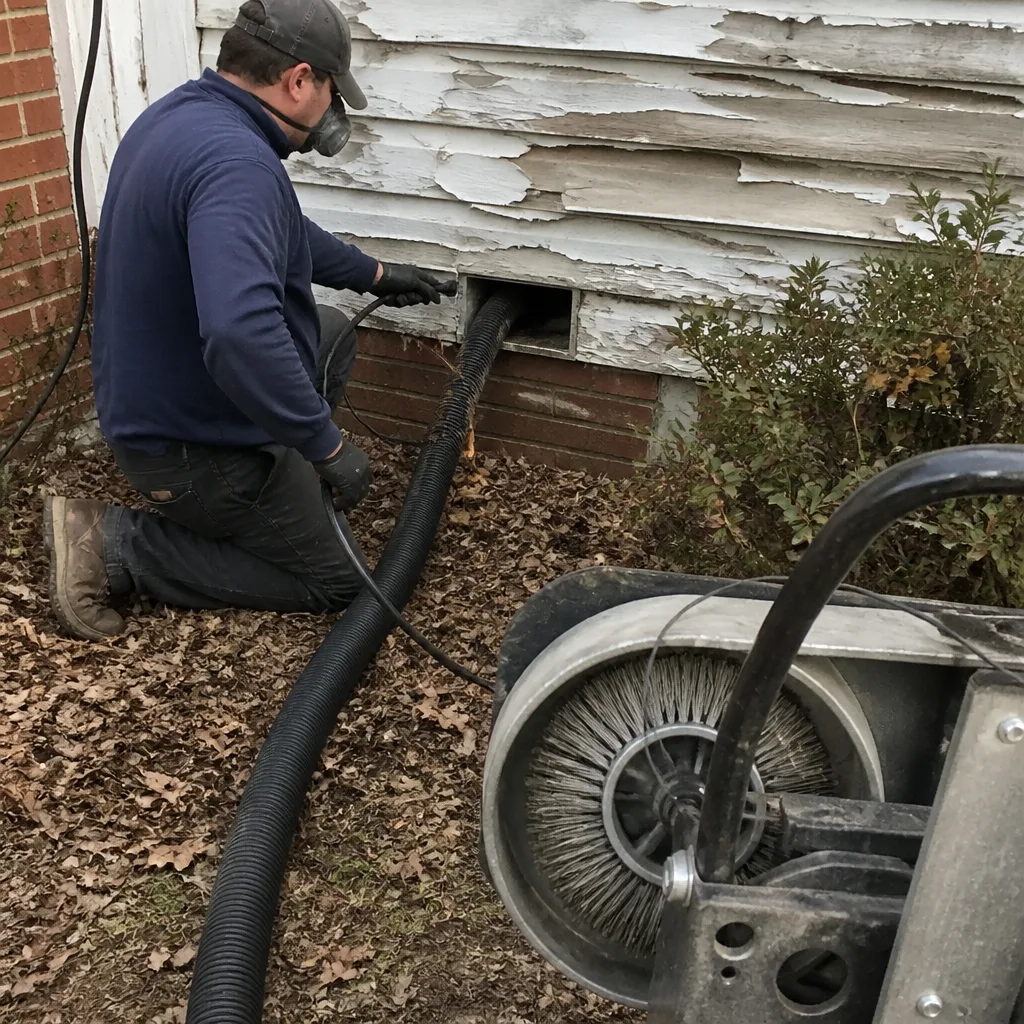
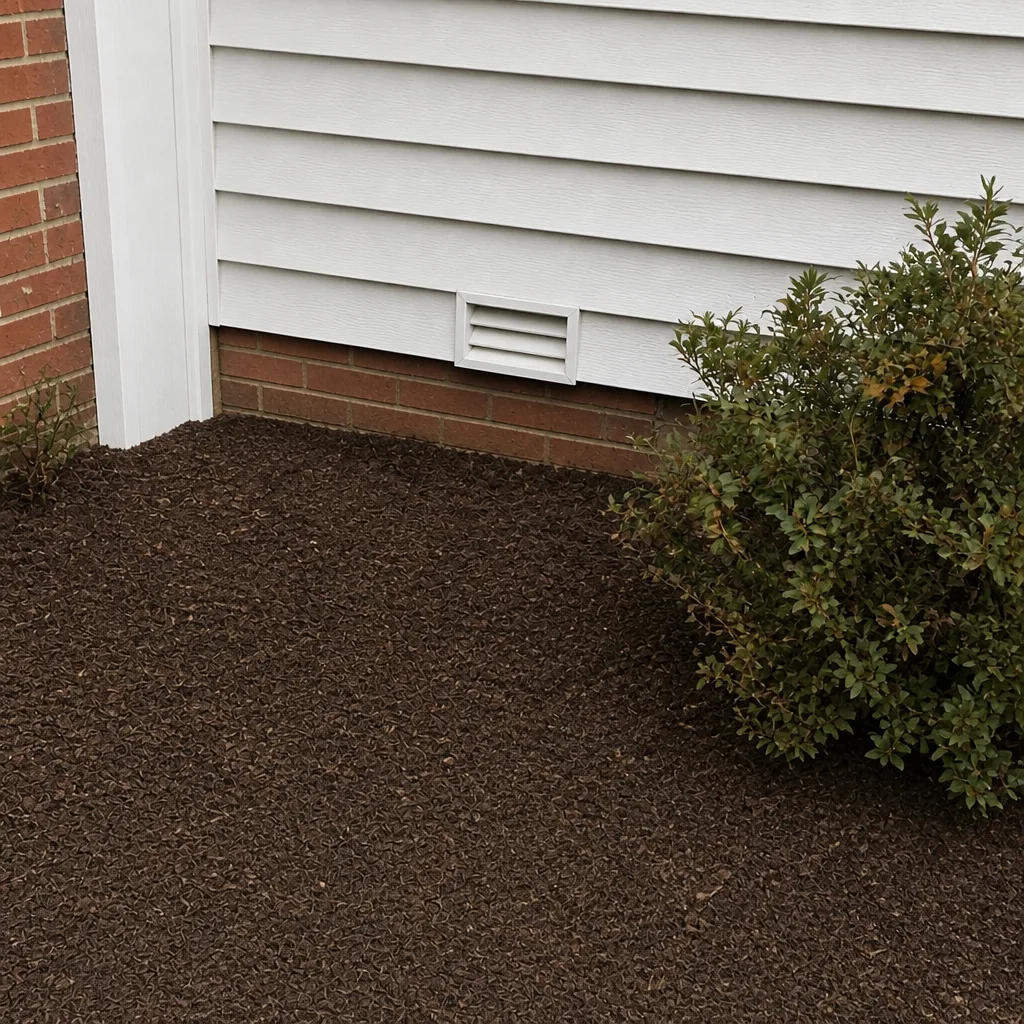
Whole-system duct and dryer vent check with before-and-after photos - you see exactly what came out of your vents
That "$99 whole-house special" is a bait ad - the real number appears once they are in your hallway, or the "clean" is a shop-vac at the register. We photograph the inside of your ducts before and after instead.
Air Duct Cleaning Permits, Codes & Inspections in High Point, NC: What You Need to Know
No permit is required to clean your ducts. That’s the part most homeowners get right, and it’s also where the thinking usually stops. The moment a technician cuts into flex duct to replace a crushed section, mounts UV equipment inside an air handler, or seals a run with mastic and new hard duct, you’ve crossed from cleaning into mechanical alteration, and North Carolina’s mechanical code starts to apply. In High Point, that line matters more than people expect, because the work that gets done quietly without a permit has a way of surfacing at resale, at an insurance claim, or during a home inspection years later. This guide draws the boundary precisely: what’s cleaning, what’s alteration, who issues permits in Guilford County, when mold work requires a licensed remediator, and what paperwork you should ask for before anyone touches your ductwork.
Quick Answer
Air duct cleaning itself does not require a permit in High Point, NC. Permits become necessary when the work involves mechanical alteration to the HVAC system, such as replacing duct sections, installing new equipment in the air handler, or adding components that change how the system moves air. Those jobs fall under the North Carolina Mechanical Code, are permitted through Guilford County, and in most cases require a licensed mechanical contractor to pull the permit and an inspection to close it out.
Styles & brands we work with
- Whole-home duct cleaning
- Dryer vent cleaning
- Camera inspection
- Sanitizing & deodorizing
Table of Contents
- Where cleaning ends and mechanical alteration begins
- NC Mechanical Code Section 603 and why it matters here
- Who permits HVAC work in High Point and what triggers an inspection
- Mold in your ductwork: cleaning versus licensed remediation
- How unpermitted work affects your homeowner’s insurance
- The paperwork to request from any contractor
- What a mechanical inspection actually looks at
- Duct repair and when it becomes a permitted project
Where Cleaning Ends and Mechanical Alteration Begins
The distinction sounds academic until you’re standing in a garage with a contractor telling you the job is “basically cleaning” while a sawzall is out. In North Carolina, cleaning and mechanical alteration are treated very differently, and the dividing line is whether the work changes the physical components of the HVAC system or the way air moves through it.
Pure cleaning means removing dust, debris, and biological buildup from the inside surfaces of ductwork, registers, and the air handler cabinet without modifying any component. Inspection means looking at the ducts, the connections, the coil, and the plenum to document condition. Both of those are maintenance activities. Neither requires a permit.
Alteration is something else. Here’s how to tell them apart:
- Cleaning: brushing and vacuuming duct interiors, cleaning registers, wiping the air handler cabinet, cleaning the evaporator coil surface.
- Alteration: cutting out and replacing a section of flex duct, adding or removing a run, resealing ducts with mastic and new duct board, installing a UV or filtration device in the air handler, replacing the air handler itself.
- Borderline: sealing small joint leaks with foil tape versus rebuilding a connection. The first is often treated as routine maintenance; the second can start to look like a mechanical alteration depending on how much duct is being rebuilt.
If a contractor is only cleaning and inspecting, you don’t need to ask about permits. If a contractor is cutting, replacing, or installing, ask who is pulling the permit. In High Point, that question should never feel awkward. A licensed mechanical contractor will have an answer ready. A company that only cleans ducts shouldn’t be doing the other work at all, and pointing that out is part of an honest conversation.
Where this becomes a real problem is when a company shows up for air duct cleaning, “discovers” a disconnected flex run, and offers to fix it on the spot. Sometimes that fix genuinely needs to happen. But if the fix involves substantial replacement, the right answer is usually for a licensed mechanical contractor to scope and permit the work, not for the cleaning crew to improvise. We’ve seen the aftermath of both, and the unpermitted version is the one that costs a homeowner later.
NC Mechanical Code Section 603 and Why It Matters Here
Section 603 of the North Carolina Mechanical Code addresses duct systems: materials, installation, connections, sealing, and support. It’s the section inspectors point to when they look at ductwork, and it’s the section your contractor should know if the work goes beyond cleaning. The code exists because a duct system installed loosely, sealed badly, or connected without the right materials leaks air, pulls in contaminants from unconditioned space, and undermines the whole HVAC system’s efficiency.
What this means for a High Point homeowner is straightforward. If a contractor wants to replace a duct run, that replacement has to meet Section 603 standards. Duct material has to be rated for the application. Connections between sections have to be mechanically fastened and sealed. Support spacing has to be adequate so the duct doesn’t sag. If the work is permitted, an inspector verifies these things. If the work isn’t permitted, nobody does, and the homeowner has no way of knowing whether the new duct will hold up.
Some common jobs where Section 603 comes into play:
- Replacing crushed or disconnected flex duct in a crawlspace or attic.
- Adding a new supply or return run to a room that was previously unconditioned.
- Rebuilding a plenum connection at the air handler where the duct board has failed.
- Sealing a large section of ductwork with mastic and mesh as part of an efficiency upgrade.
- Installing new duct board trunk lines to replace failing metal or flex duct.
Cleaning a duct system that was installed correctly is one thing. Rebuilding part of it is another, and Section 603 is the standard the rebuild has to meet. A cleaning-only company can inspect and tell you the duct is damaged. The repair itself belongs in the hands of someone who can pull the permit and stand behind the work when an inspector walks through.
The practical upshot: when you call a specialist for duct cleaning in High Point, ask whether they handle duct repair in-house or refer it out to a licensed contractor. Both answers are acceptable. Neither should be “we’ll see what’s needed when we get there.”
Who Permits HVAC Work in High Point and What Triggers an Inspection
Building permits for HVAC and mechanical work in High Point are issued through Guilford County’s building inspection department. High Point is in Guilford County, and mechanical permits for residential and light-commercial HVAC work go through the county, not the city, for most work. If you’re ever unsure, a call to the county building department is free and takes five minutes, and their staff are used to homeowners asking exactly this question.
What typically triggers a mechanical permit:
- Replacing an entire HVAC system, including the air handler and condenser.
- Installing a new air handler or furnace.
- Adding new ductwork runs that change the system’s capacity or distribution.
- Substantial duct replacement, particularly when multiple runs or a trunk line are involved.
- Installing an indoor air quality device that connects to the HVAC system’s electrical or ventilation components in a way that requires modification.
- Changing the type of duct material in a way that affects the system’s rating or fire performance.
What typically does not: cleaning, inspection, minor resealing of joints already in place, filter changes, and routine maintenance.
When a permit is pulled, the job gets at least one inspection, and sometimes more depending on scope. The inspector looks at the installed components, the duct connections, the support, the sealing, and whether the equipment is listed for the application. If the work passes, the permit is closed and the property’s permit history reflects a compliant installation. If it doesn’t pass, the inspector issues corrections, and the contractor has to make them before the permit closes.
For homeowners in High Point neighborhoods like Emerywood, Uwharrie, or the older streets around downtown, this matters because a lot of housing stock is decades old and has been through multiple HVAC changes. Permitted work creates a paper trail. Unpermitted work leaves questions that show up when you sell. If you’re a property manager working with High Point rentals, keeping permits clean is worth more than it costs.
Mold in Your Ductwork: Cleaning Versus Licensed Remediation
Mold inside ductwork is a separate regulatory category from cleaning, and North Carolina treats mold remediation as licensed work. If a duct cleaning job uncovers visible mold growth on duct surfaces, coil, or air handler components, the scope has changed. General contractors cannot perform mold remediation in North Carolina without the appropriate licensure, and a duct cleaning company cannot legally advertise mold remediation just because they own a vacuum system.
What that means for you:
- Mold on a small patch of flex duct that’s being replaced anyway: the replacement removes the contamination, and the project is a duct repair, not a remediation. That’s often the simplest answer.
- Mold spread across duct interior surfaces, the coil, or the air handler cabinet: this is remediation territory and needs a licensed mold remediation contractor, sometimes in coordination with an industrial hygienist for verification.
- Musty odors without visible growth: a thorough cleaning, moisture source correction, and follow-up inspection are usually the right first step. If growth returns, that’s a signal the underlying moisture issue hasn’t been solved.
Understanding the boundary is important because the wrong contractor for the job can make things worse. Aggressive brushing on heavy mold growth can aerosolize spores into the living space if containment isn’t in place. Professional remediation uses negative air pressure and HEPA filtration to prevent exactly that. That’s what our Abatement Technologies equipment is designed for: filtration and negative air pressure during work that has to stay contained. What we can do is clean, inspect, and tell you what we find. What we can’t do is call a mold job a cleaning job. When we see significant growth, we say so, and we explain what kind of specialist needs to step in.
If you’re seeing mold and you’re in High Point, call (888) 804-6957 and describe what you’re seeing. We’ll tell you whether the next call should be to us or to a licensed remediator. Estimates are free either way.
How Unpermitted Work Affects Your Homeowner’s Insurance
Homeowner’s insurance policies generally require that work on the insured property be done to code. When a claim involves a system that was modified without a permit, the insurer can treat that as a factor. This doesn’t mean every claim gets denied. It means the insurer has a legitimate question about whether the unpermitted work contributed to the loss, and the burden of answering that question usually falls on the homeowner.
Where this gets practical for ductwork:
- Fire claims: if a fire originates in or near the HVAC system and the system has unpermitted modifications, the insurer will look closely at what was changed and when.
- Water claims: an unpermitted air handler installation or condensate routing change that leads to a leak can complicate coverage.
- Mold claims: many policies cap or exclude mold coverage, and unpermitted work that contributed to moisture issues can worsen the position.
The good news is that this is preventable. If ductwork is only being cleaned, there’s nothing to permit and nothing to worry about. If ductwork is being replaced or modified, insist that a licensed contractor pull the permit. The permit is your record. It travels with the property. If a claim ever comes up, the paper trail makes the conversation simple instead of adversarial.
Property managers in High Point should be especially careful here. An unpermitted modification in a rental unit can complicate not just the owner’s insurance but the property manager’s liability exposure, and the paper trail that protects everyone is the same one a permit creates.
The Paperwork to Request From Any Contractor
Whatever work you’re having done, the documentation matters. For cleaning-only jobs, most of what you want is service documentation. For work that involves any alteration, you want permit documentation. Here’s what to ask for in each case.
For cleaning and inspection:
- A written scope of work describing exactly what will be cleaned, with equipment listed.
- Before-and-after photos of your own ducts, taken during the actual job.
- A summary of what was found during inspection, including any damaged duct or moisture issues.
- Any recommendations in writing, especially if the recommendation is for work that isn’t cleaning.
For work that involves alteration:
- The permit number and the name of the licensed contractor who pulled it.
- Copy of the permit card once the inspection passes.
- The inspection sign-off showing the permit was closed.
- A scope of work that clearly separates cleaning from alteration, so you can see exactly what was permitted and what wasn’t.
Any contractor who hesitates on these requests is telling you something. A licensed contractor doing permitted work expects to produce this documentation because it’s part of doing the job. A company doing unpermitted work avoids the topic because producing a permit number is the one thing they can’t do. Request the paperwork before work starts, not after. If the answer is “we’ll send it later,” ask again before the job is scheduled.
For duct cleaning in High Point where no permit is needed, the documentation you want is our before-and-after photos of your own ducts. That’s the standard we hold ourselves to: we show you what we find, and you keep the record. Call (888) 804-6957 for a free estimate and we’ll walk you through what a typical job includes.
What a Mechanical Inspection Actually Looks At
If you’ve never had a mechanical inspection on your property, the idea can feel mysterious. The inspection itself is usually brief, and it’s built around verifying that installed work meets the code. Here’s what the inspector focuses on for duct-related work:
- Materials: duct material rated and listed for the application, with no substitutions.
- Connections: mechanically fastened and sealed, with the right sealant or tape for the material.
- Support: duct supported at the intervals the code requires so it doesn’t sag and trap air.
- Clearances: proper clearance to combustibles where ductwork passes near heat sources.
- Sealing at penetrations: duct penetrations through walls, floors, and ceilings properly sealed.
- Equipment installation: air handler and connected components installed per manufacturer’s listing.
The inspection is not about how clean your ducts are. It’s about whether the alteration was done to standard. If a cleaning job is done correctly and no alteration occurs, no inspection happens and none needs to. If an alteration occurs but no permit was pulled, no inspection happens and nobody ever verifies the work met code, which is where the resale, insurance, and safety problems come from.
For High Point homeowners who are planning to sell, ask your realtor to pull the permit history on your property before you list. If any duct or HVAC work was done without a permit, you want to know before a buyer’s inspector does. In Guilford County, the permit history is accessible and the conversation is much easier if you have it first.
Duct Repair and When It Becomes a Permitted Project
Duct repair is the service that most often crosses the permit line, and it’s also the one most commonly handled by companies that don’t pull permits. Here’s a simple rule: if the repair is small and localized, it may not need a permit. If the repair involves replacing substantial ductwork or rebuilding a connection at the air handler, it usually does.
In practice, that means a small hole patched on a single flex run is often treated as maintenance, while replacing a crushed trunk line or rebuilding a plenum connection is a permitted alteration. The specific scope determines the answer, and any contractor doing the work should be able to tell you which side of the line a given repair lands on. Our own approach when we find damaged duct during cleaning is to document it, show you the photos, and explain honestly whether the repair we’d recommend is one we can do as a standalone repair or whether it needs a licensed mechanical contractor. Air duct repair is a service we offer, and when the repair scopes into a permitted project, we say so.
What this looks like across a High Point house depends on the house. Older homes with original metal ductwork tend to have localized failures at joints. Homes with flex duct in the attic or crawlspace often have crushing, disconnected runs, and rodent damage that spans more than one section. The scope of the repair is what drives the permit decision, not the name of the service on the invoice.
If you’re not sure whether a duct issue you’ve spotted needs a permit, call us at (888) 804-6957. We answer 24/7. Fast dispatch from 7am to 7pm, Sunday through Friday. Estimates are free, and we’ll tell you honestly which side of the line your project is on.
Common Mistakes to Avoid
- Assuming no permit is needed because the invoice says “cleaning.” If a technician is cutting duct or installing equipment, the invoice wording doesn’t matter, the scope does. Ask what the job actually involves before it starts.
- Letting a cleaning crew handle a “discovered” duct repair on the spot. A duct cleaning visit is not the time for a surprise alteration. Get the repair scoped separately and confirm who’s permitted to do it in Guilford County.
- Treating mold like dust. If mold growth is visible on duct surfaces, the project has crossed into remediation territory in North Carolina. A licensed remediator needs to be part of the conversation.
- Not pulling permit history before selling. In High Point, unpermitted HVAC work can surface during a buyer’s inspection and complicate the sale. Pull the history before you list.
- Accepting verbal reassurance instead of documentation. If a contractor says the work is permitted, ask for the permit number and the inspection sign-off. A verbal answer is not a paper trail.
- Choosing a company that can’t do both cleaning and repair. A specialist who can inspect, clean, and locate duct problems is more useful than a company that only runs a vacuum and leaves duct damage for someone else to find.
- Ignoring dryer vent cleaning because it’s “not ductwork.” Lint buildup in a dryer vent is a genuine fire hazard, and it’s a separate job from air duct cleaning. Treat it as its own service on its own schedule.
See the difference
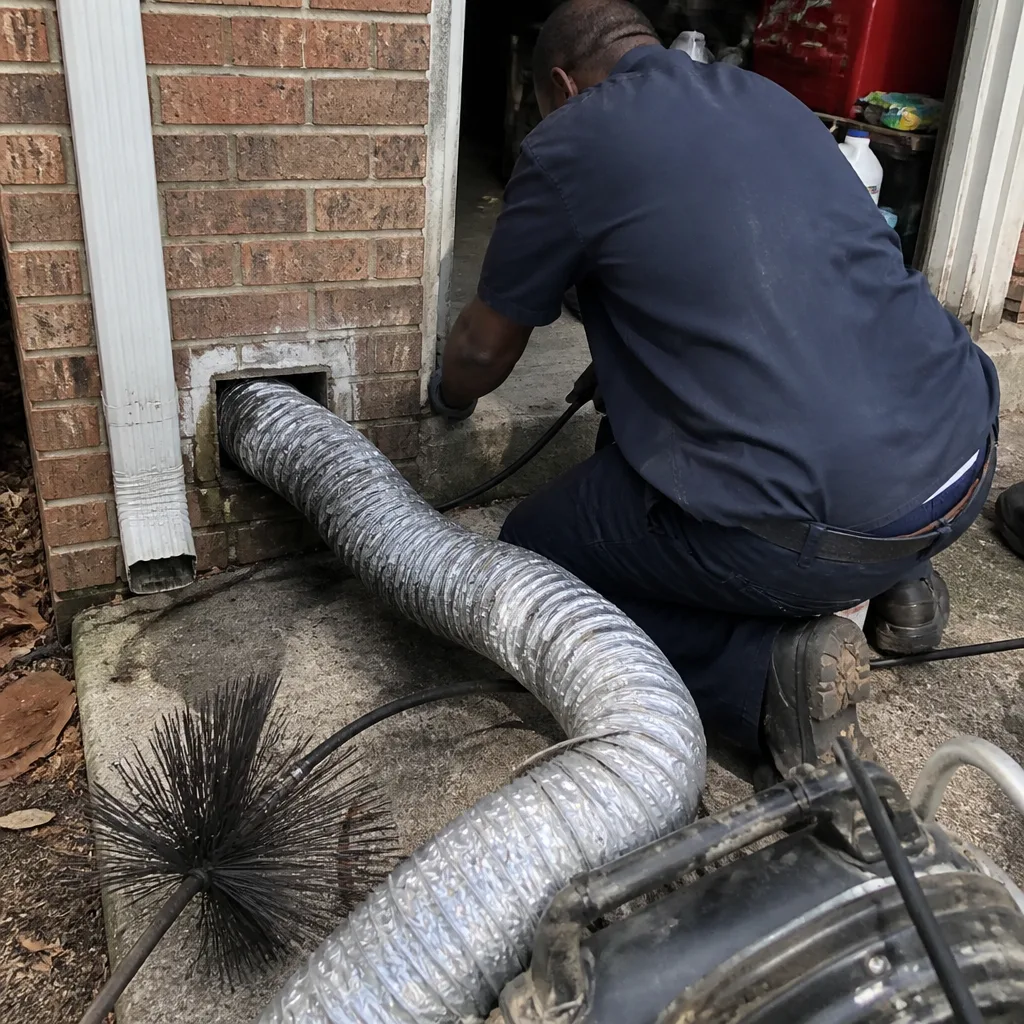 Before
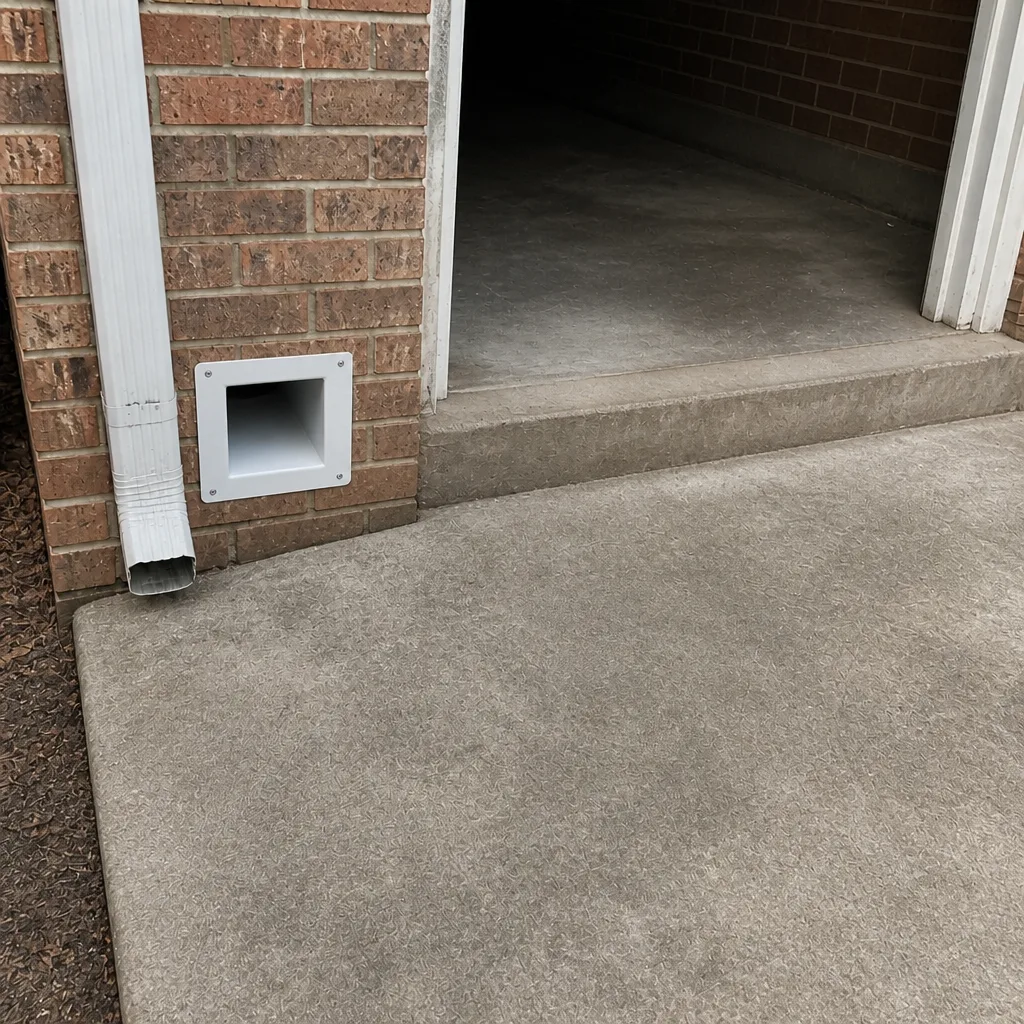 After
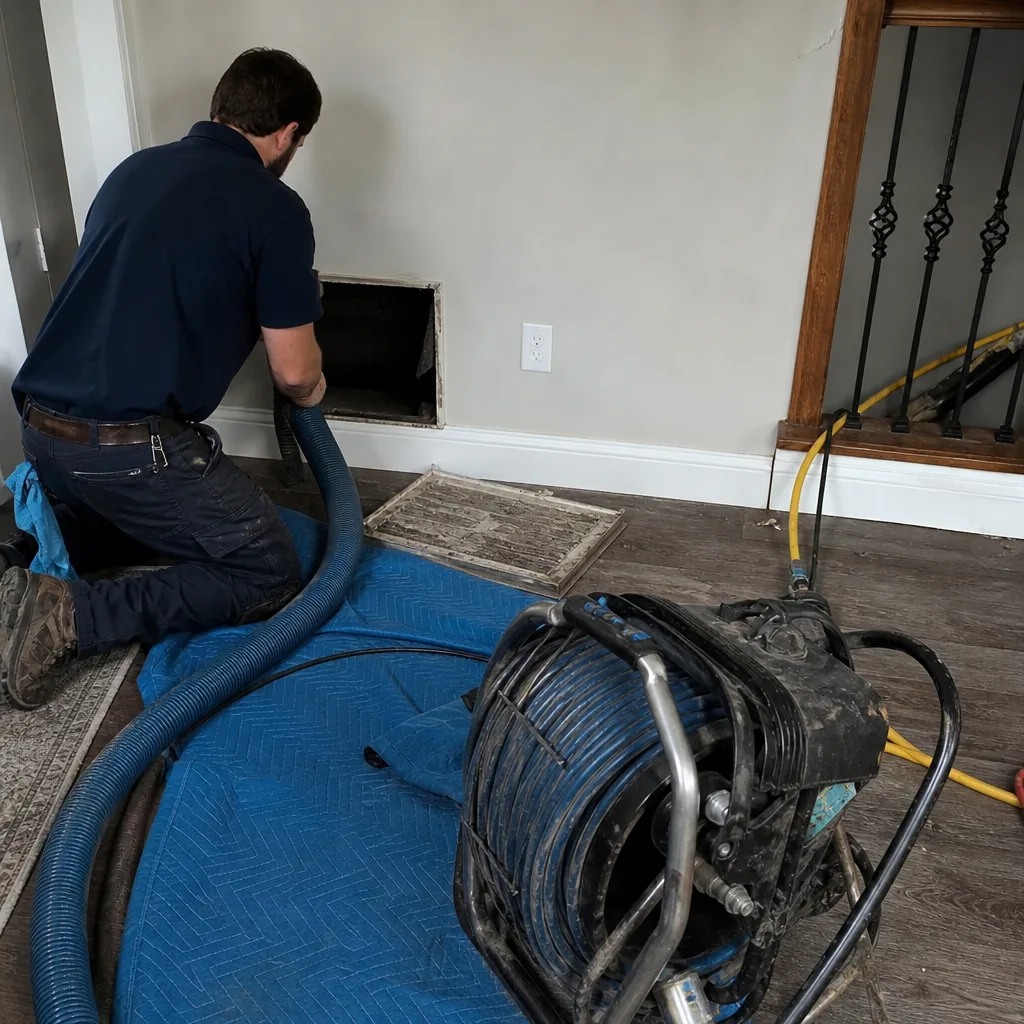 Before
 After
 Before
 After
When to Call a Professional
Some signs clearly point to a professional visit. Visible mold on duct surfaces, musty odors that return after cleaning, air pressure that feels weak in parts of the house, ducts that look crushed or disconnected in the attic or crawlspace, and lint buildup around the dryer vent are all reasons to get someone out to inspect. If you’ve just moved into a High Point home and don’t know the duct history, a full inspection is worth scheduling before anything else.
Duct Cleaning High Point offers free estimates in High Point. Our technicians have up to experience, and we work with professional-grade equipment from Rotobrush, Nikro, and Abatement Technologies. Call (888) 804-6957 for a free estimate, and we’ll tell you what we find, including whether the work ahead is cleaning, repair, or a job that needs a licensed contractor.
Frequently Asked Questions
No. Air duct cleaning does not require a permit in High Point. It’s a maintenance activity, not a mechanical alteration, and there’s no inspection involved. If the scope grows into duct replacement, new equipment installation, or significant alteration, that changes and a mechanical permit through Guilford County becomes part of the project.
Guilford County’s building inspection department issues mechanical permits for HVAC work in High Point, and their office can verify what a specific job requires. A quick call to the county building department is free and it’s the fastest way to confirm whether your specific project needs a permit.
The permit history will show the gap, and it’s worth discussing with your realtor and inspector before closing. Unpermitted work can complicate insurance coverage and sometimes needs to be brought to code after the sale. Pulling the permit history before closing is the way to see the full picture.
Yes. North Carolina treats mold remediation as licensed work, and a duct cleaning company cannot legally perform remediation without the appropriate licensure. If mold is visible across duct surfaces, the coil, or the air handler, a licensed mold remediation contractor should be part of the project. Call (888) 804-6957 and describe what you’re seeing, and we’ll point you to the right specialist.
Sometimes. Small localized repairs are often treated as maintenance, while substantial duct replacement or rebuilding connections at the air handler usually requires a mechanical permit. The scope determines the answer. If you’re not sure, describe the repair to us at (888) 804-6957 and we’ll tell you honestly which side of the line it falls on.
For cleaning, ask for a written scope of work, before-and-after photos of your own ducts, and a summary of any inspection findings. For permitted work, ask for the permit number, the inspector’s sign-off, and a scope that shows which parts of the job were permitted and which were not. Any contractor doing permitted work will expect these requests.
It can complicate claims. Insurers require that work on the property be done to code, and unpermitted work related to a claim is something the insurer will look at closely. The simplest protection is to insist on a permit whenever ductwork is being altered, not just cleaned, so the work has a paper trail.
No. Dryer vent cleaning is a maintenance service, not a mechanical alteration, and no permit is required. It’s worth doing on its own schedule because lint buildup in the vent is a fire hazard and a drag on dryer efficiency, and it should never be treated as optional.
The Bottom Line
Cleaning your ducts in High Point doesn’t require a permit. Altering them does, and the line between the two is worth understanding before anyone shows up. When the work is maintenance, ask for before-and-after photos of your own ducts and a written summary of what was found. When the work is alteration, ask for the permit number and the inspection sign-off. Mold work is its own licensed category, and it’s worth knowing that boundary too. The paper trail protects you at resale, at an insurance claim, and during the ordinary life of the house. Call (888) 804-6957 for a free estimate and we’ll tell you exactly what your project requires.
Written by the team at Duct Cleaning High Point.