
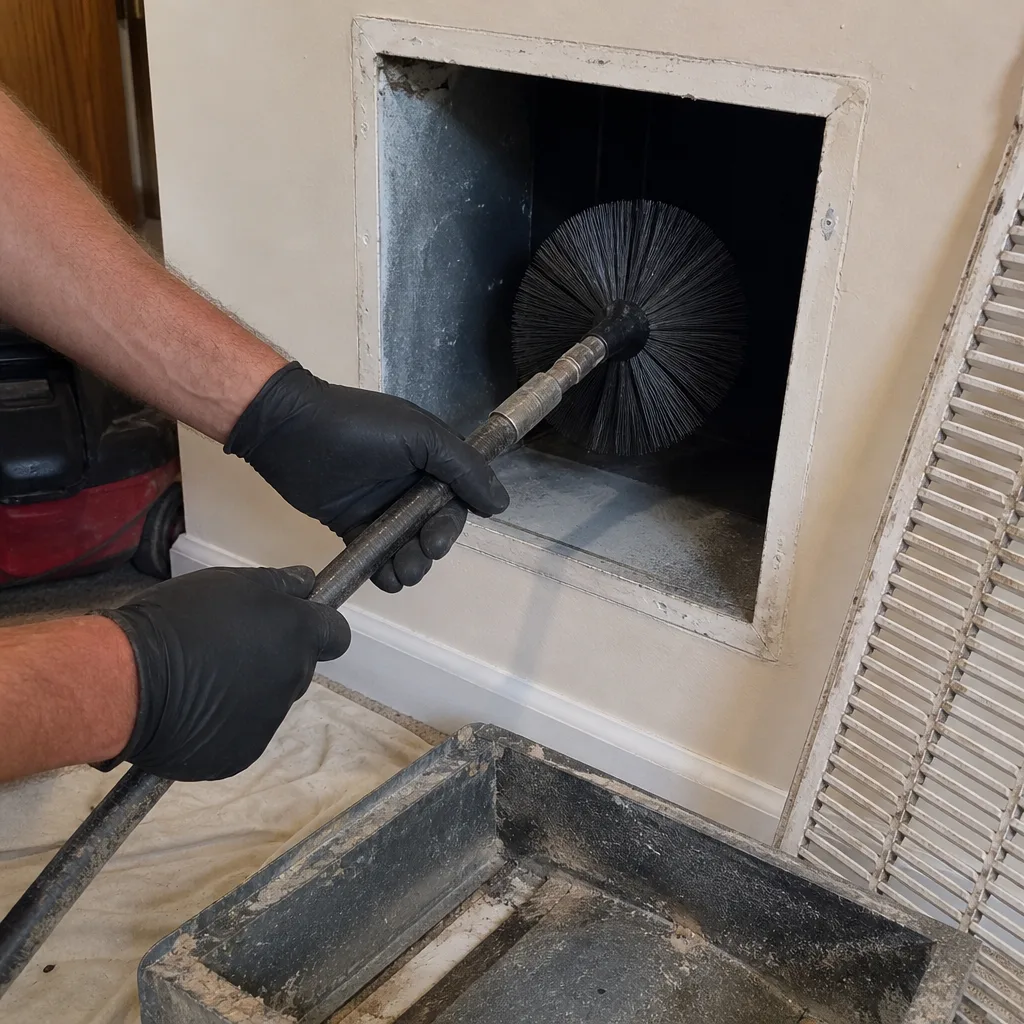
Last updated November 15, 2026
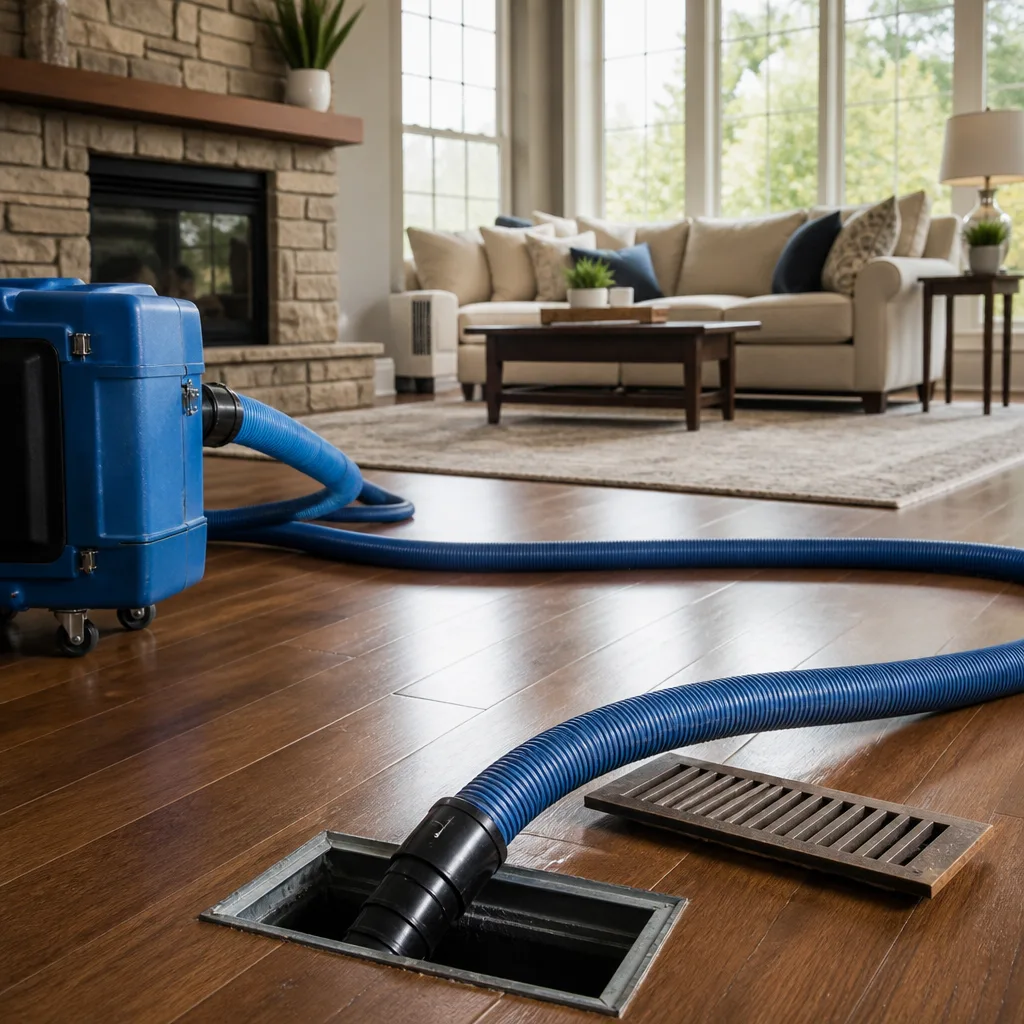 Whole-home duct cleaning
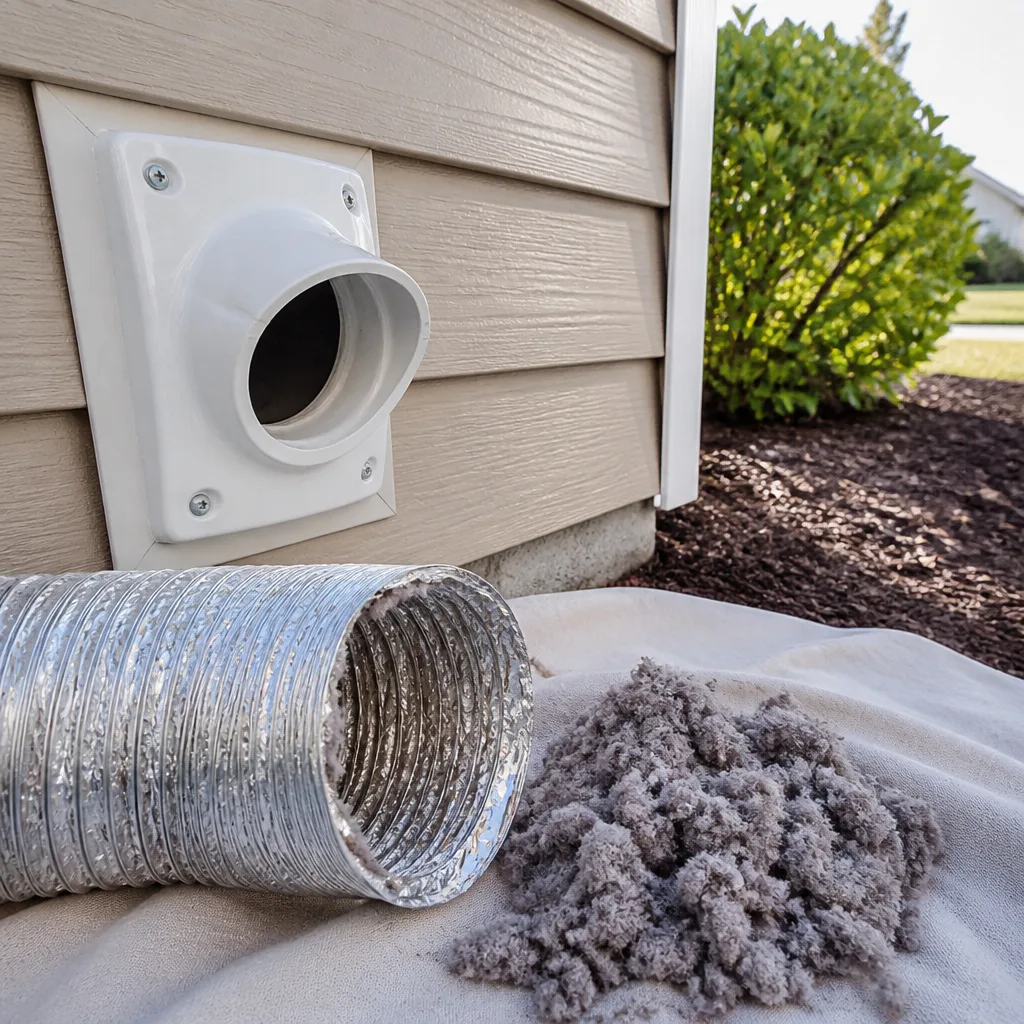 Dryer vent cleaning
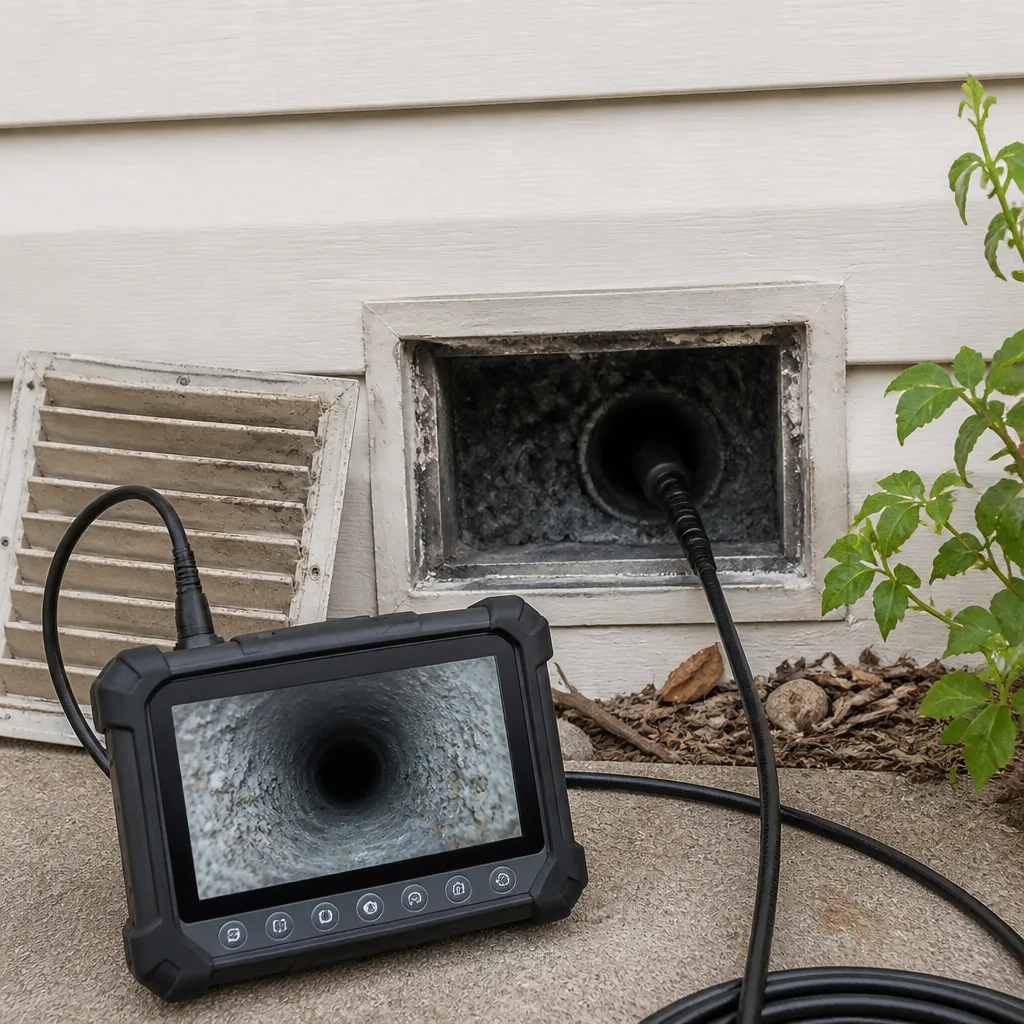 Camera inspection
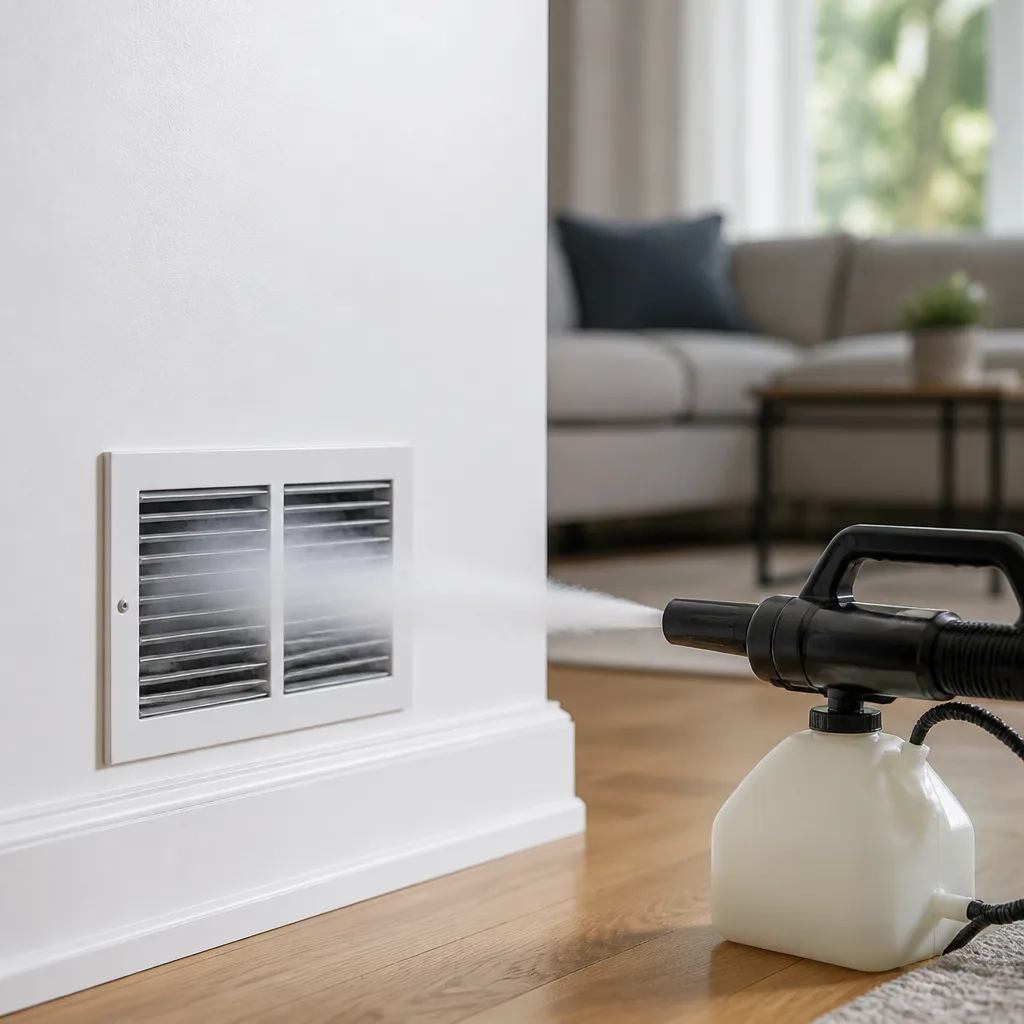 Sanitizing & deodorizing
Whole-system duct and dryer vent check with before-and-after photos - you see exactly what came out of your vents
That "$99 whole-house special" is a bait ad - the real number appears once they are in your hallway, or the "clean" is a shop-vac at the register. We photograph the inside of your ducts before and after instead.
Air Duct Cleaning Maintenance Checklist for High Point Homeowners
Most duct maintenance advice tells you to change the filter every 30 to 90 days and call someone once a year. That calendar approach misses the point. Your system leaves evidence constantly: the color your filter turns and how fast it gets there, the dark ring that forms around a supply grille, the smell that shows up ninety seconds after the blower starts. A filter loading gray within two weeks of a fresh install is telling you something a filter can’t fix. In this guide we’ll walk through a checklist built around those observations, the High Point humidity window that drives mold risk in flex duct, and the MERV decision that quietly starves airflow in older air handlers.
Quick Answer
A workable air duct maintenance checklist for a High Point home has four moving parts: monthly filter inspection with a log of loading rate and color, quarterly grille and register checks for dust rings and airflow, a humidity log through the April to September season, and a professional duct cleaning on evidence rather than the calendar. Action the filter and grille items yourself. Treat musty odors, visible debris at the registers, rising static pressure, or filter loading under three weeks as triggers to call a technician.
Styles & brands we work with
- Whole-home duct cleaning
- Dryer vent cleaning
- Camera inspection
- Sanitizing & deodorizing
Table of Contents
- Why a Checklist Beats a Calendar
- Reading Your Filter: The Loading Log
- Grille and Register Inspection
- The High Point Humidity Log (April-September)
- Choosing MERV Without Starving Your Air Handler
- Post-Renovation Checklist Variant
- DIY Items vs. Call-a-Technician Triggers
- Seasonal Walkthrough: A Numbered Order of Operations
Why a Checklist Beats a Calendar
Calendar-based maintenance assumes every High Point home has the same dust load, the same duct layout and the same envelope tightness. They don’t. A house on a tree-lined lot near Emerywood with mature oaks out front is pulling in different particulate than a newer build in the north High Point corridor off Highway 68. Same calendar, different biological reality inside the duct system.
An evidence-based checklist turns routine checks into data points. You stop asking “is it time?” and start asking “what is my system telling me?” That shift matters because duct problems progress quietly. A small seam leak in a supply run pulls attic air into your living room without ever making a noise. A filter that used to last two months that now loads in three weeks is reporting a change somewhere upstream, and you’ll only catch it if you’ve been writing down the interval.
Here’s what a well-run checklist actually produces:
- A trend, not a snapshot. One gray filter means nothing. Three in a row loading faster than the last tells you a story.
- Documentation for the next technician. If you eventually need air duct cleaning, your log tells us more in sixty seconds than a five-minute walkthrough.
- An early warning for duct damage. Debris at only one register, or dust blowing back out of a supply, points to a failing joint that cleaning alone won’t fix.
- A defensible call. When you decide to book a professional cleaning, you’ll know why, and you won’t be sold one on the calendar out of habit.
Every item below is something you can observe, write down and act on. None of it requires opening the ductwork or getting near the air handler’s electrical components. We’ll flag clearly where observation ends and a technician should take over.
Reading Your Filter: The Loading Log
Your filter is the cheapest diagnostic tool in the house, and most homeowners never read it. Instead of “change it when it looks dirty,” start a simple log. Note the install date, the MERV rating, the filter size, and the day you notice the first visible gray load. Then note the day it reaches full gray across the face. That interval is your baseline number.
Now here’s what the pattern tells you:
- Full gray in two to three weeks on a 1-inch filter: your ductwork is delivering more particulate than the filter is designed to handle. This is the classic signal that interior duct surfaces need professional attention, not a higher-MERV filter.
- Filter is gray on one half and clean on the other: suspect a return-side airflow imbalance, a collapsed flex run or a return grille blocked by furniture. Worth a technician’s look.
- Filter stays clean for months: you might be running an oversized filter for the return, or the return is pulling unconditioned air from an attic or crawlspace instead of from the living space. That’s a duct integrity issue.
- Filter loading faster after a recent change: something changed in the house (renovation, new pet, new baby, new windows). The checklist should slow down and observe for two cycles before any call.
What to Write Down Each Month
- Date inspected.
- Days since install.
- Color rating on a simple scale: light gray, mid gray, dark gray, matted.
- Coverage percentage by eye (under 25%, 25-50%, 50-75%, over 75%).
- Any smell when you pull the filter out.
- Any visible debris on the return side of the filter frame.
Six lines a month. That’s the whole log. After two years you’ll have a record that makes any duct decision trivially easy, and you’ll spot a change in your system before it becomes an expensive problem. If your log starts showing a two-week loading pattern that won’t quit, that’s a call-the-professional moment – book a free estimate with Duct Cleaning High Point and we’ll walk the duct system with you.
Grille and Register Inspection
Grilles are where the duct system meets your eye. Every vent is a window into the run behind it, and what you see there is more diagnostic than any humidity reading. Do this walk monthly, right after the filter check, with a flashlight and a step stool – nothing more.
What to Look For at Each Register
- Dust rings around the edges of the grille face. A thin uniform film is mild. A dark, thick ring right at the seam means debris is being pushed out past the grille from a dirty run or a leaking joint behind it.
- Streaking – vertical or horizontal lines of dust across the grille bars. Streaking usually points to turbulent airflow, which can mean a duct run that’s undersized, collapsed, or connected with a sharp bend.
- Visible debris inside the boot (the short piece the grille sits on). If you use a flashlight and can see flakes, drywall dust or dark material, the ductwork behind that grille has contamination worth checking.
- Airflow feel – hold your hand near the grille with the blower on. Every supply should feel roughly similar. A weak or dead supply is a duct integrity problem, not a cleaning problem.
- Grille dust wipe. Wipe each grille face with a damp cloth every three months. This is a five-minute job you can do without any equipment, and it prevents the false signal of “my ducts are dirty” that’s actually just a dusty grille.
The Register-by-Register Log
- Number your registers. Write the numbers on a small sketch of the floor plan, keep it with your filter log.
- Walk each register with a flashlight.
- Note the condition of the grille face (clean, film, ring, streak).
- Note what you can see through the grille into the boot.
- Note airflow feel on a scale of 1 to 3 (weak, normal, strong).
After two walkthroughs you’ll see the pattern clearly: a single bad register versus the whole system trending. A single bad register is a duct repair conversation. A whole-system trend is a cleaning conversation. Either way, calling the specialist shop that runs the appropriate diagnostic equipment matters more than picking the cheapest coupon.
The High Point Humidity Log (April-September)
Piedmont North Carolina is a high-humidity climate, and the April-to-September window is the one that puts the most stress on a duct system. The humidity reading for High Point in summer sits consistently high enough that overnight dew points stay elevated for weeks at a stretch. That matters for ductwork because of one simple physical fact: cold surfaces in humid air condense. Whenever a supply duct runs through an unconditioned space (attic, crawlspace, garage) and the insulation on that duct is compromised, condensation forms on the duct exterior and, in worse cases, inside the duct.
That moisture is where mold risk begins. Flex duct with a damaged vapor barrier is the highest-risk segment. Rigid metal with a good wrap is lower risk. Either way, humidity is a variable your checklist should track, because you cannot see inside a duct, but you can see the humidity in the room.
How to Run the Humidity Log
- Buy a cheap digital hygrometer (indoor humidity and temperature, one number displayed to the tenth of a percent). Put it in the main living area, not near a supply vent.
- Read it once a day, at roughly the same time. Morning is fine.
- Record the reading. A written log or a note on your phone – either works.
- Watch for three patterns: sustained indoor relative humidity above 55%, a spike shortly after the AC shuts off, or a slow drift upward across a two-week stretch even as the system runs normally.
- Note any musty odor within 90 seconds of startup – HVAC blowers stir the whole duct system, and any interior contamination announces itself at startup if it’s present.
What the Patterns Mean
- Sustained high indoor humidity with the AC running: the system is short-cycling, oversized, or the return is pulling humid attic air. Have an HVAC contractor look at system sizing and duct sealing.
- Humidity spike right after shutdown: condensation from a duct that’s sweating. The fix is duct insulation, not a new AC.
- Musty odor at startup that fades after five minutes: contamination in the duct system, or a wet evaporator coil pan. Both warrant a professional inspection. In our experience with High Point systems, flex duct runs in unconditioned attic space are the first place we look.
Note the humidity log pattern that matters most for High Point: two to three weeks of steady high humidity in mid-July are what put a wet-duct problem into visible territory. If your log shows a run of high readings, don’t wait for the calendar. Get it checked.
Choosing MERV Without Starving Your Air Handler
Here’s where a lot of homeowners think they’re being thorough but are actually hurting their system. MERV is a filtration rating. Higher MERV traps more particles. It also increases resistance to airflow. Put a MERV 13 filter into a 24-year-old air handler designed around a MERV 8, and the system’s blower tries to pull the same cubic feet of air through a denser media. The result is higher static pressure in the duct, less delivered airflow at the registers, and the evaporator coil running colder than it should. That means more condensation, not less, and in a High Point summer that’s the opposite of what you want.
Use the following decision rules for High Point homes:
Match MERV to the Air Handler, Not the Marketing
- Older systems (over 15 years, standard 1-inch filter slot): stay at MERV 8 to MERV 11. Higher is asking for trouble. The filter slot itself is part of the calculation. A 1-inch slot is designed for a lighter filter.
- System with a deep media cabinet or a 4- or 5-inch filter slot: MERV 13 is defensible. The deeper filter gives more surface area, which keeps static pressure down.
- Newer high-efficiency air handler: check the manufacturer’s spec for the maximum MERV rating, and stay at or below it. Never exceed it to “clean the air.”
- Household with documented allergy or asthma concerns: consider MERV 13 only if the air handler can take it, and pair it with a dedicated room air cleaner rather than relying on the filter to do the whole job. This is where working with Honeywell and Aprilaire indoor air quality products makes a real difference – they’re designed for that job specifically.
The Static-Pressure Test You Can’t Do Yourself, But Should Ask About
A technician uses a manometer to measure static pressure across the air handler and compare it to the manufacturer’s range. If static pressure is already near the top of spec with a MERV 8 filter, that’s a system that cannot take a higher MERV. We measure static pressure whenever we’re evaluating a duct system. It tells us more about what a filter is going to do than any label on the box. If you’re upgrading filters, ask for that measurement. It’s the only honest way to know.
Post-Renovation Checklist Variant
Drywall dust is not the same as household dust, and treating it like household dust is a mistake. Sanding drywall produces fine gypsum particulate, silica dust and joint compound residue, and it drifts into the return duct system through every open seam and return grille in the house. Once inside, it doesn’t behave like a light dust film. It packs. It settles into the horizontal runs, it cakes onto the interior surfaces of flex duct, and it clings to the evaporator coil. A duct system that didn’t need cleaning for years can need it weeks after a renovation.
The Post-Renovation Checklist
- During the renovation: cover every return and supply register with a taped plastic film. Do this on day one, not when the sanding starts.
- Day the work finishes: remove the covers, replace the filter (accepting the new high load), and run the fan continuously for 24 hours.
- Day two: inspect each register with a flashlight. If you see visible residue in the boot, note which runs are affected.
- Day three: replace the filter again. Renovation dust is finer and more aggressive than household dust, so a second replacement within 72 hours is normal.
- Day seven: check filter loading and compare to the pre-renovation baseline. If the interval has compressed by more than half, book a professional duct cleaning. Wait no longer – the gypsum residue is actively accumulating.
- Day fourteen: if there’s a smell, or the register boots still show debris, that’s a technician trigger.
The renovation case is the one time in this checklist where “calendar” wins over “evidence.” Most cleanings follow observation. Post-renovation is the exception: schedule a duct cleaning within the first month after major work finishes, even if your log looks clean. Gypsum dust hides in the horizontal runs and horizontal boots, and by the time it shows up at a supply register, it’s been building for weeks.
DIY Items vs. Call-a-Technician Triggers
Not every checklist item belongs to you, and not every observation demands a call. Here’s the honest line. Everything above the line is a homeowner task. Everything below is a reason to pick up the phone.
Homeowner Tasks (Safe, Effective)
- Monthly filter inspection and log entries.
- Filter replacement on the right interval for your system.
- Quarterly grille wipes with a damp cloth.
- Register-by-register flashlight walk with your numbered sketch.
- Daily humidity hygrometer readings during April through September.
- Plastic film covering of registers during renovations.
- Logging musty odors with the time of day and how long they last after startup.
Technician Triggers (Call for a Free Estimate)
- Filter loading to full gray in under three weeks on a fresh install, for two consecutive cycles.
- Visible debris inside any register boot that doesn’t wipe clean.
- Musty odor at startup that persists more than five minutes.
- A single register with noticeably weak airflow while others are normal.
- Humidity drift upward across a two-week stretch, or spot readings above 55% with the AC running normally.
- Post-renovation register boots still showing residue after the two-week check.
- Any duct damage visible at a seam, joint or run transition. That’s an air duct cleaning adjacent problem – duct repair is a separate service and cleaning alone won’t fix it.
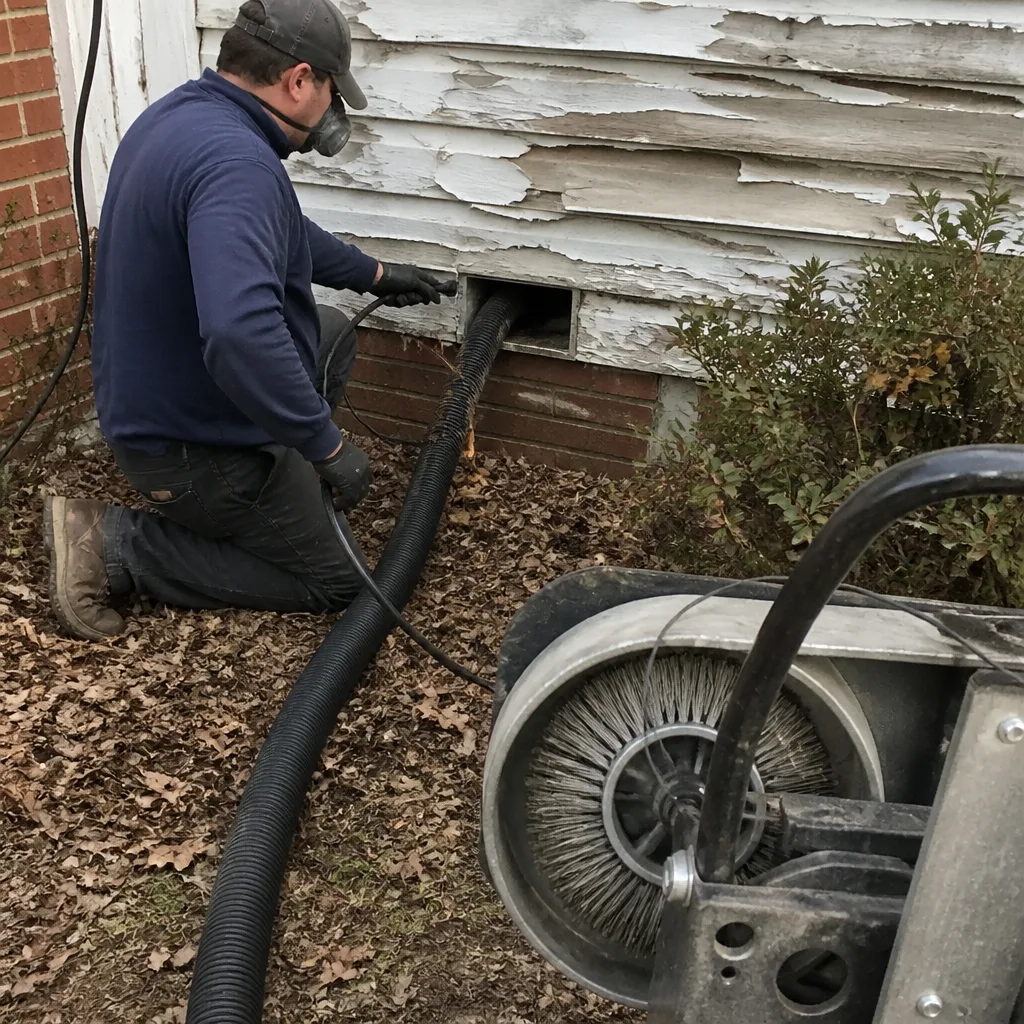
One item that belongs in the technician column is dryer vent cleaning. Lint accumulation in a dryer vent is a fire hazard, not a cleanliness issue, and it doesn’t show up on an indoor checklist. Treat it as an annual technician call independent of your air duct log.
The single most important thing about that technician column is this: we show you what we find. When we open a system, we photograph the interior before we start and after we finish, and we walk you through the same evidence your own checklist produced. That’s how a maintenance relationship should work.
Seasonal Walkthrough: A Numbered Order of Operations
The checklist becomes useful when you know what order to do it in. Here’s the sequence we recommend for High Point homeowners across the year. Each of these steps is a short session, and the whole set is doable without any specialized tools.
Spring (March-April)
- Replace the filter and note the install date.
- Walk every register with a flashlight and update the sketch.
- Wipe every grille face.
- Start the humidity log (hygrometer in place, daily reading).
- Inspect accessible flex duct runs in the attic or crawlspace – flashlight only, no crawling on the insulation.
Summer (May-September)
- Monthly filter check and log entry.
- Monthly grille wipe.
- Weekly humidity review – look for drift over a two-week window, not single-day spikes.
- Note any musty odor at startup.
- During July and August, watch for condensation on any duct exterior visible in the attic or crawlspace.
Fall (October-November)
- Replace filter and note the install date.
- Walk every register, update the sketch, and compare to spring.
- Wipe grille faces.
- Close the humidity log for the season.
- Evaluate the year’s log: did loading intervals compress? Did the humidity drift?
Winter (December-February)
- Monthly filter check.
- One grille wipe midway through the season.
- Dryer vent check (technician call).
- Pre-renovation checklist if any interior work is planned for the following year – film the registers early.
Common Mistakes to Avoid
- Upgrading MERV to solve a dust problem. A higher-MERV filter traps more, but it doesn’t clean the ducts, and it starves an older air handler of airflow. Fix the duct problem, then pick the filter.
- Changing the filter without logging it. The interval is the data. If you swap filters on a hunch, you’ve lost the trend line. Track the install date every time.
- Assuming a musty smell is “just the house.” A musty odor at startup in a High Point summer is more often duct contamination, a wet evaporator pan, or a compromised insulation wrap than a foundation moisture ghost. Get it checked before adding a dehumidifier.
- Booking a cleaning on the calendar instead of evidence. A duct cleaning done when there’s nothing to remove does nothing. Your log should drive the call.
- Ignoring register-by-register airflow differences. One weak supply is a duct integrity signal. Cleaning won’t fix it, and air duct cleaning without a repair will leave the weak register weak.
- Skipping the post-renovation follow-up. Gypsum dust doesn’t behave like household dust. If you don’t replace the filter within 72 hours of sanding finishing, you’re already behind.
- Letting the dryer vent ride on the air duct schedule. Dryer lint is an annual fire-safety item, not a byproduct of duct cleaning. Book it separately.
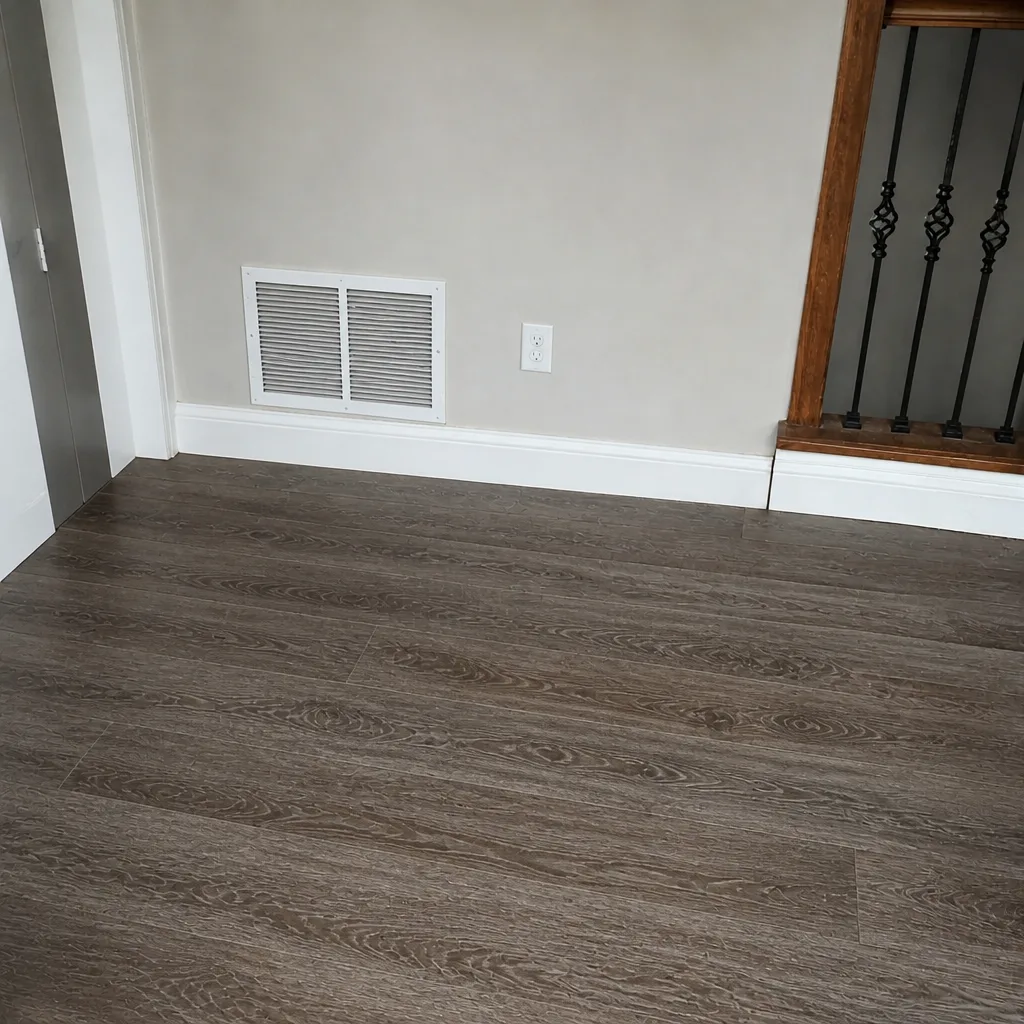
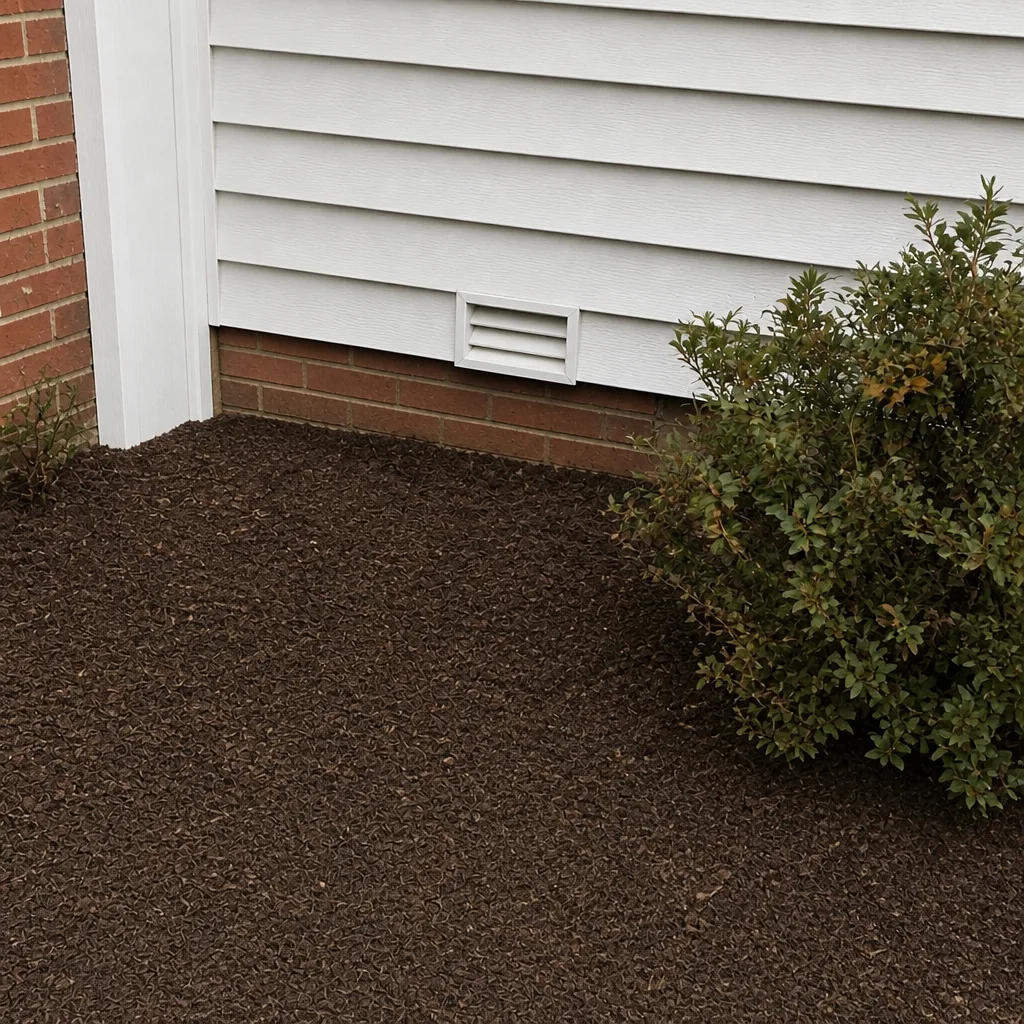
See the difference
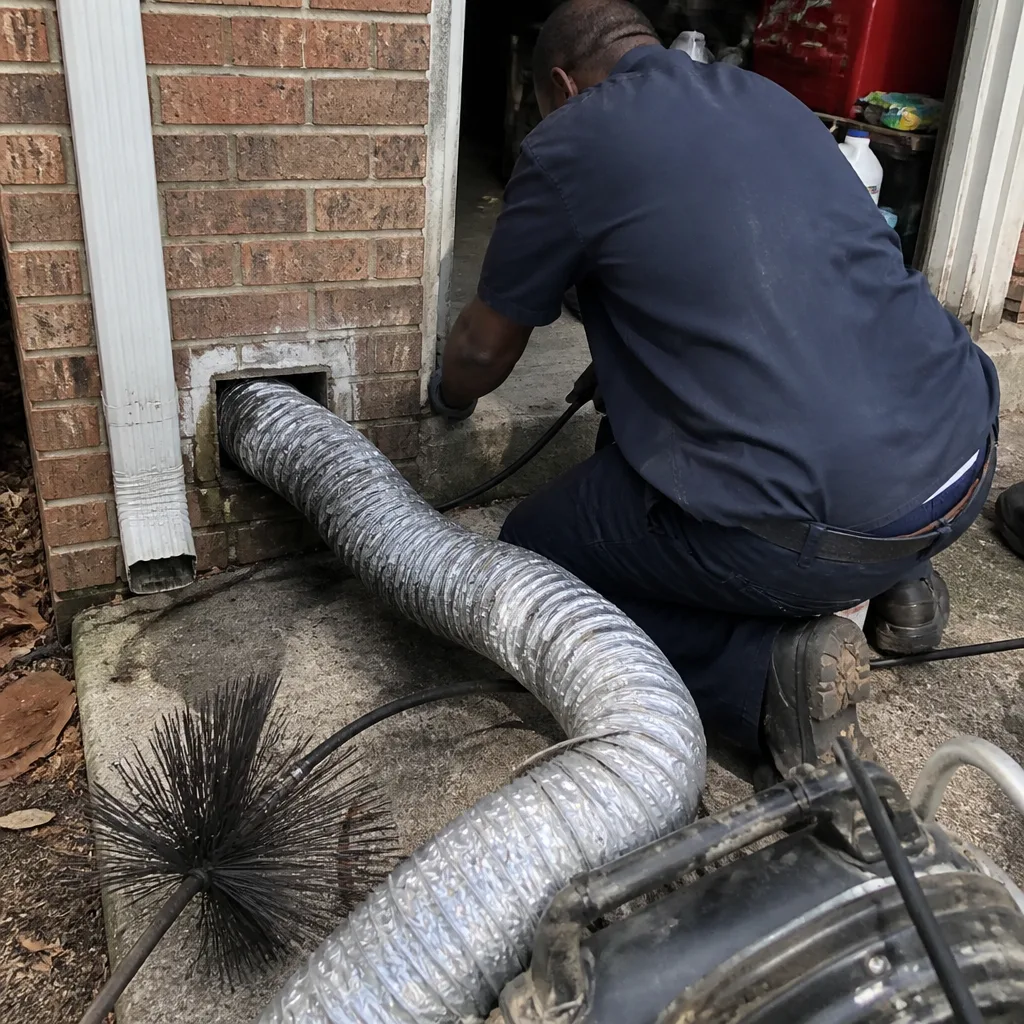 Before
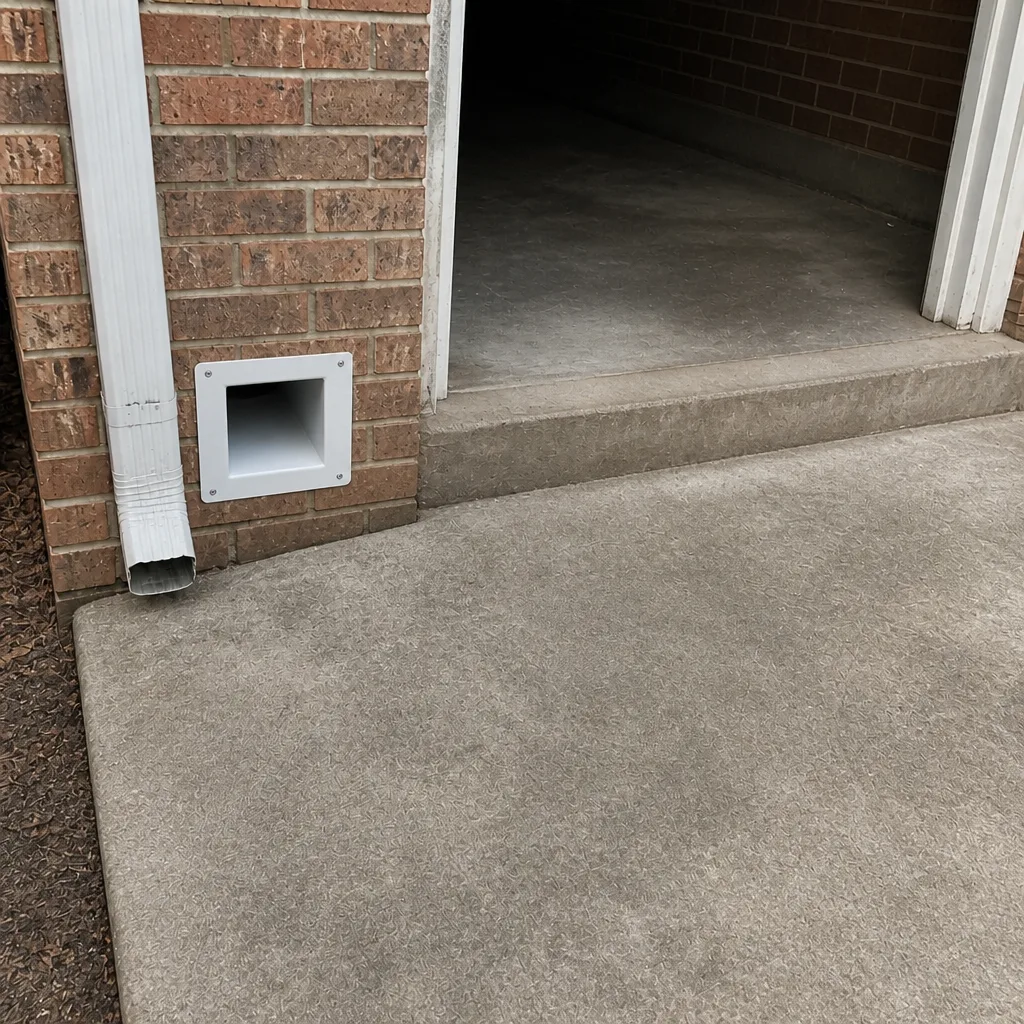 After
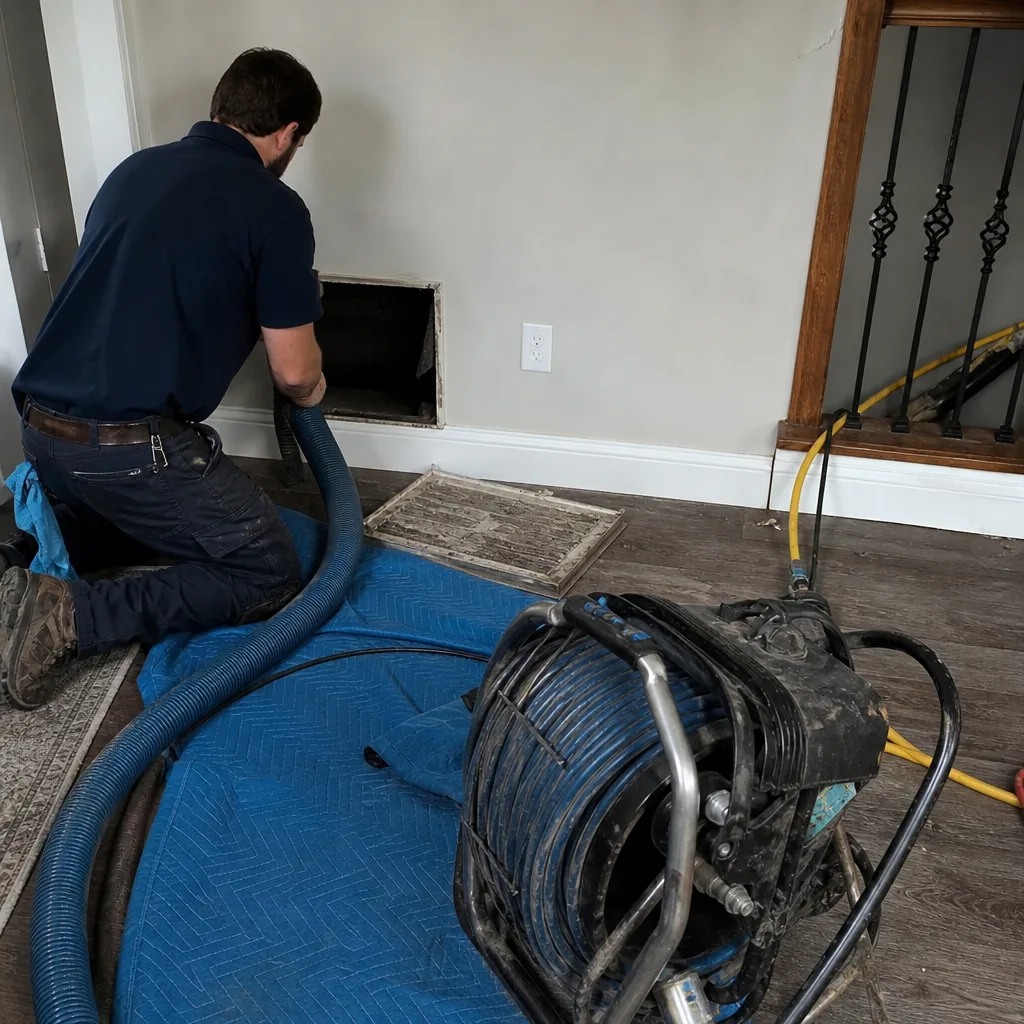 Before
 After
 Before
 After
When to Call a Professional
Call a professional when your checklist has produced evidence, not before. Specific scenarios worth a call: a filter that loads fully gray in under three weeks on two consecutive installs, visible debris inside any register boot that doesn’t wipe away, musty odor at system startup that lingers, humidity readings that drift above 55% with the AC running normally through April to September, or a renovation that finished in the last 30 days. Call also if your log shows one register with consistently weak airflow – that’s a duct integrity check, not a cleaning job.
For High Point homeowners, High Point duct specialists who bring real diagnostic equipment and photograph what they find are the ones worth calling. Duct Cleaning High Point offers free estimates – call (888) 804-6957, we answer 24/7.
Frequently Asked Questions
For most High Point homes, an evidence-based cleaning interval lands somewhere between three and seven years, and the checklist tells you when. Homes with pets, allergy-sensitive occupants, recent renovations, or flex duct in an unconditioned attic tend toward the shorter end. Homes with rigid metal duct, a well-sealed envelope and a clean filter log can push toward seven. Don’t pick a number off a service flyer – let the filter loading interval and the register condition drive the call. When you’re ready for an exact quote, call (888) 804-6957 and estimates are free.
Most High Point air duct cleanings run in the range set by the written, whole-system estimate – not a per-vent coupon price. The pricing structure matters more than the number: a low advertised price that becomes a much larger invoice once the technician is on site is the industry’s classic bait-and-switch, and it usually reflects minimal equipment being deployed. A touch-up pass with a shop vac and a brush is not the same job as a system clean with a Rotobrush and a negative-air machine, and the price difference is usually equipment and time, not margin. We price per system, one flat price agreed before work starts. Call (888) 804-6957 for a free estimate.
Ask for before-and-after photographs of the duct interiors at every register boot and at the air handler. A credible duct cleaning leaves visual evidence because the interior surfaces are what was cleaned. We show you what we find and what was removed, register by register. If a quote doesn’t come with a photo walkthrough, that’s a data point. Call (888) 804-6957 and we’ll walk a system with you before you decide.
For most older High Point homes with a standard 1-inch filter slot and an air handler over 15 years old, MERV 8 to MERV 11 is the right range. Going higher starves airflow and raises static pressure. If your system has a deep media cabinet or a 4- to 5-inch filter slot, MERV 13 becomes defensible. The system’s own spec sheet overrides everything – stay at or below the maximum MERV the manufacturer lists. Have a technician measure static pressure if you’re considering an upgrade. Call (888) 804-6957 for a free estimate.
Yes, in the April through September window, and it’s more of a risk than most homeowners realize. Piedmont North Carolina summers keep indoor humidity elevated for months, and any supply duct with a compromised insulation wrap in an unconditioned attic or crawlspace will condense moisture. Flex duct is the highest-risk segment. A daily humidity log in the main living area catches the drift before it becomes visible mold. If you’re seeing sustained readings above 55% with the AC running, call (888) 804-6957 for a free estimate.
Register boots, filter loading interval and any startup odor. Drywall dust is a distinct contamination event that propagates through the whole system within days, so the post-renovation checklist runs faster than the normal one: replace the filter on the day sanding finishes, again within 72 hours, and compare the loading interval to your pre-renovation baseline at day seven. If the interval compressed by more than half, or if you still see gypsum dust in the register boots at day fourteen, book a professional cleaning. Call (888) 804-6957 for a free estimate.
The Bottom Line
A maintenance checklist is only useful if it teaches you what your system’s evidence means. Filter loading intervals, grille dust rings, register-by-register airflow and a daily humidity reading through the April-September High Point season are all observable without tools. Post-renovation cleaning runs on a faster schedule because gypsum dust behaves differently from household dust. MERV decisions belong inside the system’s airflow capacity, not above it. Everything else – interior contamination, duct damage, wet insulation, dryer vent fire risk – belongs to a technician who brings real equipment and shows you what was found. Written by the team at Duct Cleaning High Point.
Call (888) 804-6957 for a free estimate. We answer 24/7. Fast dispatch from 7am to 7pm, Sunday through Friday.
Written by the team at Duct Cleaning High Point.