
Nikro Air Duct Cleaning in High Point: A Homeowner’s Guide
The critical moment in any duct cleaning job isn’t the brushing. It’s what happens to the debris after it comes loose. If a contractor agitates dust inside your ductwork without a controlled place for it to go, that debris ends up in your living room, your return grilles, and your lungs. Nikro equipment answers that question mechanically. It’s a sealed negative-air system with HEPA filtration, and understanding how it works makes you a sharper judge of every quote you collect in High Point.
How does negative-air extraction actually work?
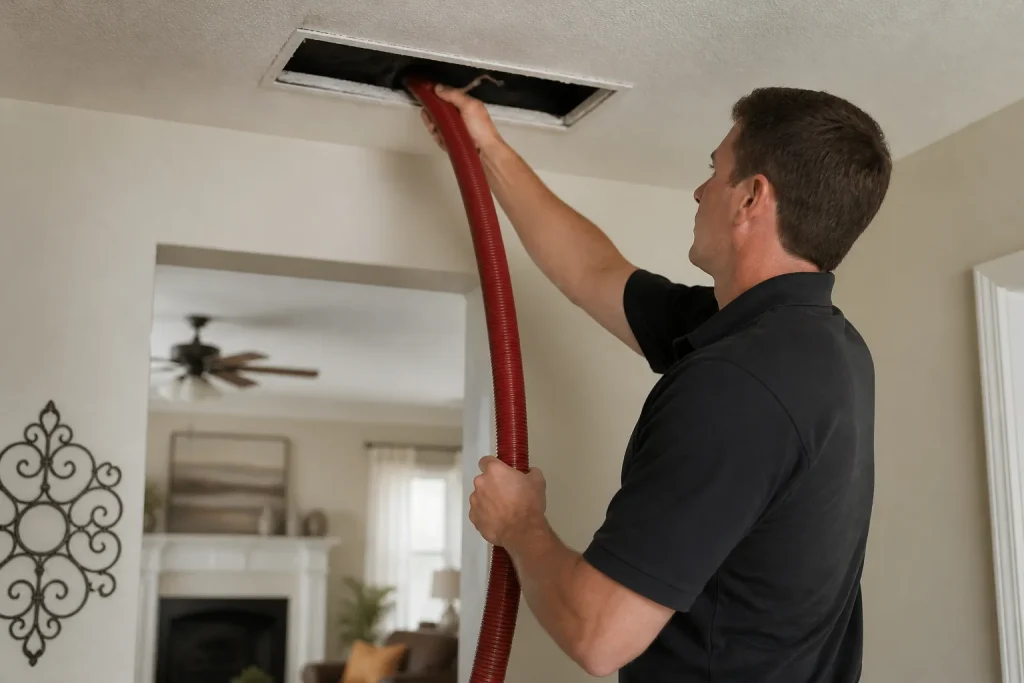
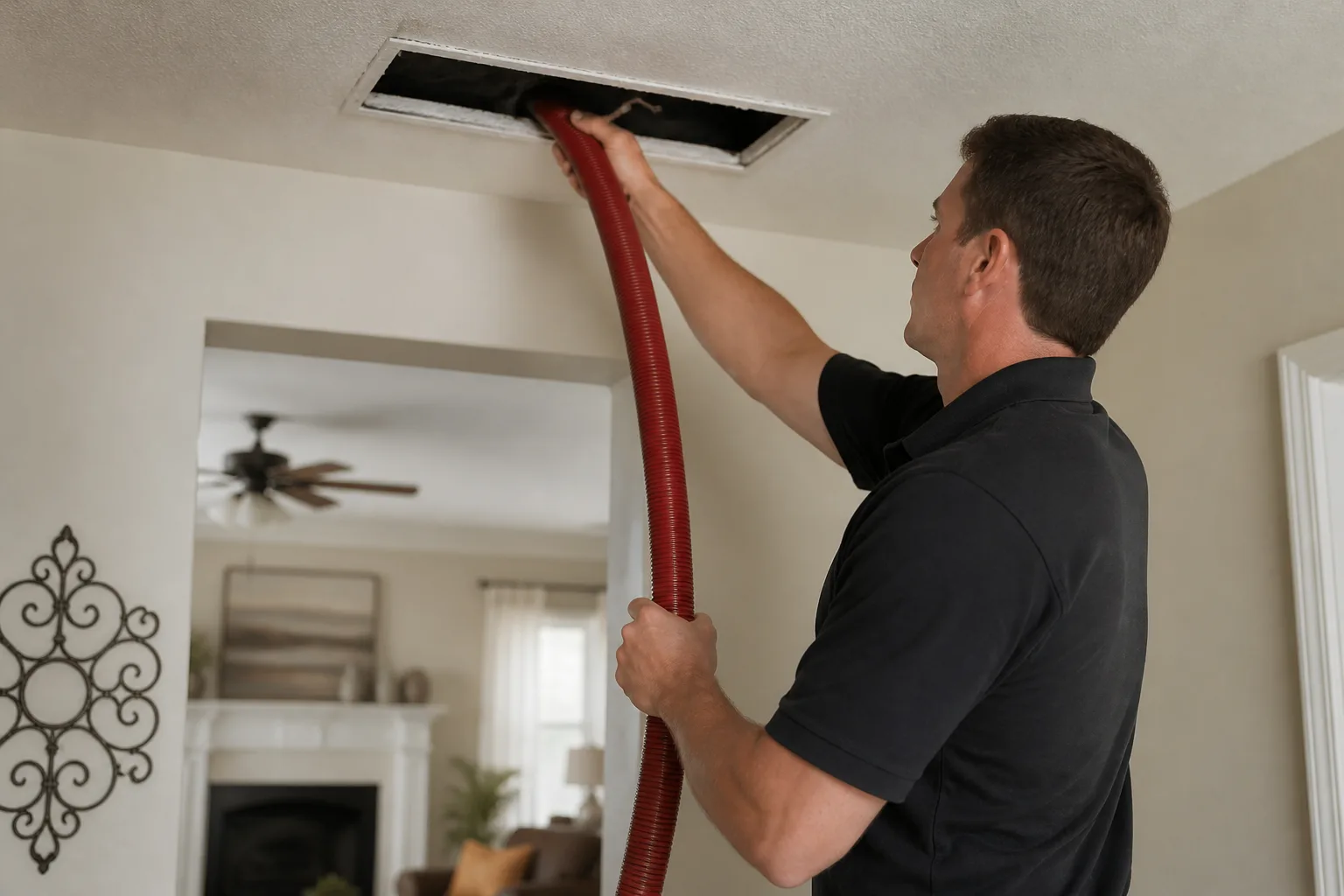
Negative-air extraction means the vacuum creates lower pressure inside your duct system than in the room around it. Air flows toward the collection point instead of escaping into your home. A technician connects a high-powered vacuum unit to a dedicated access point, seals it to the duct, and runs the system while a separate tool agitates debris off the duct walls. Because the duct is under negative pressure, loosened dust travels toward the vacuum, not outward through supply registers. The vacuum’s HEPA filter then traps particles at the exhaust end so they don’t just relocate to the room where the unit sits.
This is the engineering difference a Nikro system represents. A brush-and-shop-vac approach agitates debris but has no pressure plan. The debris goes wherever physics takes it, which usually means into the air stream and out through the nearest open register. In High Point’s older housing stock, where original galvanized ductwork and long return runs are common, that displacement can be significant. The whole point of a contained extraction system is that your home stays out of the debris path, not part of it.
Why HEPA filtration matters in homes with asthma or allergies
A vacuum’s collection bag is only half the story. What matters is the filtration on the exhaust. A HEPA filter captures particles down to 0.3 microns at 99.97% efficiency, which is the standard that separates professional IAQ equipment from a wet/dry vac with a long hose. Nikro units are built around HEPA filtration because the exhaust from a duct cleaning vacuum passes back into the living space, and that air needs to be cleaner than the air that went in.
For a household in High Point with an asthma sufferer or a family member with seasonal allergies, this isn’t a technical nicety. It’s the difference between a cleaning that reduces airborne particulate and one that spikes it for a few hours. MERV ratings on the exhaust filtration during an active Nikro job are designed to exceed what a standard HVAC filter can handle, because the vacuum is moving a far greater volume of contaminated air than your furnace ever sees. If someone in your home reacts to dust, ask about the exhaust filtration spec before you book anyone.
When is Nikro the right tool, and when is Rotobrush the better choice?
Reports that treat these as competing brands miss the point. They’re different tools for different stages of the same job.
- Nikro negative-air extraction is the right specification for heavy contamination: a system that has never been cleaned, a home recovering from renovation dust, or a property with a mold or odor concern. The sealed extraction and HEPA filtration control the debris load from start to finish.
- Rotobrush contact cleaning is the right primary tool for the agitation phase in most residential jobs. The rotating brush whip physically contacts duct walls, which is what actually dislodges adhered dust. Negative pressure alone without contact agitation leaves the caked layer behind.
- Abatement Technologies equipment comes into play when contamination control needs to go beyond a standard cleaning: negative air pressure machines and filtration units that isolate a workspace while the ducts are opened for repair. That capability matters when duct repair and cleaning overlap.
A shop that carries both Nikro and Rotobrush is telling you something about how it thinks. The right combination depends on the condition of your system, and a contractor with only one tool will use it whether or not it fits. Our technicians have up to experience reading those conditions before the first piece of equipment comes off the vehicle.
What does the setup look like in a High Point home?
The pre-seal step is the first honest indicator of whether a contractor knows what they’re doing. Here’s what a credible setup looks like, generally:
- Locate access points. Most homes have service access at the air handler, the main trunk line, and often at return drops. Some setups require cutting a small access port, which a qualified technician explains before doing it.
- Seal the system before starting. Registers and return grilles are covered and taped, and the vacuum connection is sealed to the duct so negative pressure holds. If the seal leaks, the pressure differential fails and the extraction plan fails with it.
- Confirm pressure before agitating. A technician should verify the vacuum is pulling before any brush touches the inside of the duct. Agitating before the system is under negative pressure is exactly how debris gets distributed through a house.
- Agitate, then inspect. Contact cleaning runs through the branches and trunk, and the technician inspects a sample of the duct interior after. We show you what we find, including photos of the ductwork before and after, so the work is verifiable.
If a crew arrives in High Point, hooks up a hose, and starts brushing without sealing anything first, that’s your answer about the rest of the job. The setup is the process.
What to ask any company about their vacuum and filtration
You don’t need to become an equipment expert to spot a weak operation. You need four questions, and you need the answers to be specific.
- “What’s the CFM rating on your vacuum?” Cubic feet per minute measures air volume. A system rated for residential duct cleaning should move enough air to maintain negative pressure through the trunk and branches simultaneously, not just at one register at a time.
- “What’s the exhaust filtration spec?” If the answer is a bag or a MERV-8 filter, ask whether the exhaust passes into the living space and how. HEPA filtration on the exhaust is the standard to look for.
- “How do you seal the system before you start?” Listen for the word “seal” and specifics about which access points get covered. A vague answer here is the most common tell.
- “Can I see the equipment before you begin?” A serious shop is happy to show it. Brand names like Nikro, Rotobrush, and Abatement Technologies are visible on the units, and you can verify what’s actually in the vehicle.
In our experience across High Point, the contractors who can answer these questions without hesitation are the ones whose jobs hold up to scrutiny. The ones who can’t are usually relying on a price the other answers can’t justify.
When to call a pro
Some duct conditions are worth watching and some need a professional assessment. Call a technician if you notice visible dust blowing from registers after cleaning, a persistent musty odor when the system runs, a rise in allergy symptoms that tracks with HVAC operation, or a damaged or disconnected duct section. Leaking ducts pull in unconditioned air from unconditioned spaces, which is a contamination and efficiency problem cleaning alone can’t fix. That’s where air duct cleaning and duct cleaning in High Point connect to structural repair: if the ductwork is compromised, it needs repair, not just a cleaning. Dryer vents are a separate concern worth the same attention. Lint buildup in a dryer vent is a fire hazard and a documented cause of house fires, and it’s why dryer vent cleaning is a dedicated service for us, not an add-on. If you’re not sure whether your system qualifies for a professional cleaning or just needs eyes on it, call us and describe what you’re seeing.
The Bottom Line
Nikro’s negative-air system is worth understanding because the equipment tells you the process. Sealed extraction with HEPA filtration controls where dislodged debris goes. Rotobrush contact cleaning handles the agitation that negative pressure alone can’t. Abatement Technologies equipment steps in when contamination needs to be isolated. A contractor who carries all three and can explain when each applies is a different kind of contractor than one with a single vacuum and a coupon. If you’re in High Point and need help, Duct Cleaning High Point offers free estimates. Call (888) 804-6957. We answer 24/7. Fast dispatch from 7am to 7pm, Sunday through Friday.
Frequently Asked Questions
Nikro air duct cleaning is a method that uses a Nikro negative-air pressure vacuum with HEPA filtration to extract debris from ductwork under controlled conditions. The sealed system keeps loosened dust moving toward the vacuum instead of into your living space. It’s professional IAQ equipment, not consumer-grade. Call (888) 804-6957 for an exact quote, estimates are free.
Ask to see the vacuum unit and its CFM and filtration specs before work starts. A real negative-air system has a visible brand on the housing, a rated CFM figure, and a HEPA exhaust filter. A shop-vac with a long hose doesn’t. If the answer is vague, keep looking. Call (888) 804-6957 if you’d like us to walk through what our setup includes.
Yes, it’s one of the more meaningful differences. HEPA filters capture particles down to 0.3 microns, which keeps fine dust from passing back into the room through the exhaust. In a home with asthma or allergy occupants, that’s the difference between a cleaning that helps and one that temporarily worsens the air. Call (888) 804-6957 to ask about filtration specs on a quote.
Because the two do different jobs. Rotobrush provides the physical contact needed to break adhered dust off duct walls. Nikro provides the sealed extraction and HEPA filtration that controls where that dust ends up. A contractor with only one tool uses it regardless of what the system actually needs. Call (888) 804-6957 for an honest read on what your High Point ductwork calls for. Estimates are free.
Written by the team at Duct Cleaning High Point.
Need Air Duct Cleaning Help?
Call Duct Cleaning High Point - licensed & insured, with free written estimates in High Point.
(888) 804-6957